
Scaling a recipe comes down to one formula: Desired yield ÷ Original yield = Conversion factor, then multiply every ingredient by that number. Measure by weight with a kitchen scale whenever you can, since cups and spoons compress and settle in ways that throw off consistency at larger volumes. The one catch: salt, spices, and leavening don’t scale in a straight line, so add those incrementally and taste as you go rather than trusting the math blindly.
TL;DR:
- Weight-based measurements are more accurate than volume, especially when scaling large recipes, to prevent ingredient variance issues.
- Use a conversion factor derived from desired divided by original servings to multiply each ingredient, but adjust salt, spices, and leavening incrementally and taste as you go.
- Baking times do not scale linearly because larger batches have different heat transfer properties, requiring early testing and possible adjustments.
- For doughs, the 3-2-1 ratio measured by weight offers a reliable method to scale consistently across batch sizes.
- Scale fermented ingredients like sourdough starter and yogurt carefully, monitoring fermentation times and adjusting for heat retention, rather than relying solely on ratios.
Table of Contents
- How Do You Calculate the Conversion Factor to Scale Recipes?
- Why Should You Measure by Weight When You Scale Recipes?
- What Ingredients Don’t Scale in a Straight Line?
- How Do You Adjust Pan Size When You Scale a Recipe?
- Why Doesn’t Cook Time Scale the Same Way Ingredients Do?
- What Is the 3-2-1 Rule for Scaling Baking Recipes?
- Two Worked Examples: Lasagna and Cake Pan Conversion
- How Do Apps and Scales Make Scaling Recipes Reliable?
- Does Doubling a Recipe Change How Ingredients Actually Behave?
- What Equipment Helps You Scale Recipes Accurately?
- What Are the Most Common Mistakes When Scaling Recipes?
- Can You Scale Recipes With Sourdough Starter or Yogurt Cultures?
- When to Test vs. When to Make and Freeze
- Turn a Scaled Recipe Into a Ready Shopping List With Homecooked
- Sources
- FAQ
How Do You Calculate the Conversion Factor to Scale Recipes?
Start with two numbers: how many servings the recipe currently makes, and how many you need. Divide the second by the first, and you’ve got your conversion factor.
Say your favorite chili recipe serves 6, but you’re feeding 20 people at a game night. That’s 20 ÷ 6 = 3.33. Every single ingredient in that recipe gets multiplied by 3.33, from the ground beef to the cumin (with a caveat on spices we’ll cover shortly).
Here’s the process, step by step:
- Confirm the original yield stated in the recipe (check the headnote, not just your gut estimate of “serves a few”).
- Divide your desired yield by that number to get the conversion factor.
- Multiply each ingredient quantity by the factor.
- Round to a measurement you can actually use. A precise weight like 340 grams of flour is fine on a scale, but 3.33 tablespoons of vanilla extract is not something anyone can measure by eye.
This exact formula comes from culinary school scaling technique methodology, and it holds whether you’re doubling a soup or scaling a wedding cake by a factor of eight. When a number gets awkward on a measuring cup, switch that ingredient to weight. It’s almost always cleaner.
Why Should You Measure by Weight When You Scale Recipes?
Volume measurements lie to you. A cup of flour can weigh anywhere from 120 to 150 grams depending on how it’s scooped, and that variance multiplies right along with your recipe. Scale a recipe by a factor of four using inconsistent cup measurements, and you can end up 100+ grams off on flour alone, which is enough to turn a tender cake into a dense brick.
NIST’s guidance on kitchen measurement treats weighing ingredients on a digital scale as the standard for accuracy and repeatability, and that matters more, not less, as batch size grows.
A few practical habits make this painless:
- Tare your scale after placing an empty bowl on it, so you’re weighing only the ingredient, not the container.
- Switch the scale to grams for baking. It’s more forgiving than ounces because you’re not dealing with fractions.
- Buy a scale with at least a 5,000 gram (about 11 pound) capacity if you plan to scale recipes for a crowd regularly.
- Weigh liquids too when precision matters; 1 gram of water equals roughly 1 milliliter, which makes cross-checking volume easy.
Quick fact: a scale eliminates the scoop-and-level guesswork that causes most flour measurement errors in home baking, according to NIST’s metric kitchen program.
What Ingredients Don’t Scale in a Straight Line?
Multiply your protein, your vegetables, your base liquids by the conversion factor without a second thought. Salt, spices, extracts, and leavening agents play by different rules, and treating them like everything else is the fastest way to end up with an oversalted stew or a loaf that tastes like a chemistry experiment.
- Add salt and ground spices at roughly 75% of the calculated amount, then taste and build up from there.
- Reduce leavening (baking soda, baking powder, yeast) slightly in large batches. Too much lift in a bigger mass of dough can cause a bitter or metallic aftertaste.
- Test leavening changes with a small batch bake before committing a full scaled recipe to the oven.
- For eggs, whisk the total needed in a bowl and portion by weight (about 50 grams per large egg) so you’re not stuck cracking “2.33 eggs.”
Pro Tip: Keep a small notebook or note on your phone tracking exactly how much you adjusted salt or leavening on a scaled batch. That single habit turns your first attempt at scaling a recipe into a reliable formula for every batch after.
How Do You Adjust Pan Size When You Scale a Recipe?
Depth matters as much as volume. Pour the same batter into a shallower, wider pan and it bakes faster but drier; pour it into a deeper one and the center may stay raw while the edges overcook. The fix is calculating actual pan volume, not just guessing based on diameter.
- Calculate round pan volume with πr²h (radius squared, times pi, times height).
- Calculate rectangular pan volume with length × width × height.
- Divide your target pan’s volume by your original pan’s volume to get a pan factor, and multiply your ingredients by that number.
- Confirm capacity by taring an empty pan on your scale, filling it with water to the rim, and reading the weight in grams. Since 1 gram equals about 1 milliliter, that number tells you exactly how much batter the pan holds.
This volume-ratio approach is standard cake math from culinary instructors, and it works for casserole dishes and bread pans just as well as it does for layer cakes.
Why Doesn’t Cook Time Scale the Same Way Ingredients Do?
Double the ingredients and you might assume double the time. It rarely works that way, because heat has to travel through more mass, and as batch size grows, the surface-area-to-volume ratio drops. A thick pot of soup for twenty loses heat and gains heat far slower at the center than the same soup made for four, even though the ratio of ingredients stayed identical.
- Check doneness 15 to 20% earlier than the original recipe suggests, then keep testing in small increments.
- Cook high-heat dishes like stir-fries or seared proteins in batches instead of one giant pan; overcrowding drops the pan’s temperature and steams food instead of searing it.
- Rely on a thermometer and sensory cues (color, puff, internal set) rather than the clock, since surface-area effects on heat transfer shift real cook time even when the recipe’s ratios stay the same.
- For a scaled stir-fry, working a dish like a chicken and edamame stir-fry in two batches instead of one keeps the vegetables crisp rather than watery.
What Is the 3-2-1 Rule for Scaling Baking Recipes?
Ratio-based baking sidesteps the whole scaling problem by working in parts instead of fixed quantities. The 3-2-1 dough ratio is the clearest example: 3 parts flour, 2 parts fat, 1 part liquid or sugar, all measured by weight.
- Pick a base flour weight (say, 300 grams) and the rest follows automatically: 200 grams of fat, 100 grams of liquid.
- The same ratio scales a single pie crust or a batch of ten, since you’re just multiplying three numbers instead of converting a whole ingredient list.
- Common uses include pie dough, shortbread, and biscuit bases, anywhere a consistent fat-to-flour texture matters more than exact flavor tuning.
Quick fact: because the ratio is expressed in weight rather than volume, 3-2-1 dough scaling produces the same texture at any batch size, which is why professional bakers lean on ratios instead of standard recipes for laminated and short doughs.
Two Worked Examples: Lasagna and Cake Pan Conversion
Scaling lasagna from 6 to 12 servings. Your conversion factor is 12 ÷ 6 = 2. If the original calls for 1 pound of ground beef, 2 cups of ricotta, and 1 teaspoon of salt, here’s the math:
- Ground beef: 1 pound × 2 = 2 pounds.
- Ricotta: 2 cups × 2 = 4 cups (or weigh it, roughly 900 grams, for more consistency).
- Salt: 1 teaspoon × 2 = 2 teaspoons on paper, but start with 1.5 teaspoons and taste the sauce before adding more.
- Pan: move from an 8x8 dish to a 9x13, and check for doneness about 10 minutes earlier than a straight-scaled time would suggest.
Converting four 8 inch round cake pans to one 9x13 pan. Four 8 inch rounds at 2 inches deep total roughly 6,434 cubic centimeters of volume (πr²h × 4). A 9x13 pan at 2 inches deep holds about 4,787 cubic centimeters. Divide 4,787 by 6,434 and you get a pan factor of about 0.74, meaning you’d scale the batter recipe down to about three quarters of its original amount to fill the rectangular pan at the same depth. Because that pan is denser and deeper in the center than a thin round layer, pan conversion guidance recommends checking for doneness a few minutes past when a toothpick would normally come out clean in the rounds.
Before committing either dish to a dinner party, run a quick checklist: confirm the conversion factor, weigh what you can, check pan depth matches the original, and taste-test the seasoning before the final bake or simmer.
How Do Apps and Scales Make Scaling Recipes Reliable?
A repeatable workflow beats doing math on a sticky notepad every time. It looks like this: plan your target serving count, compute the conversion factor, convert key ingredients to weight, weigh and prep, cook while checking doneness early, then adjust seasoning at the end.
- A pantry-first planning app can hold the scaled quantities and turn them into a shared grocery list automatically, so you’re not manually retyping “2.33 cups” into a shopping app.
- Guided, timed recipe steps remove some of the guesswork around adjusted cook times when you’ve changed pan size or batch volume.
- Keeping notes on what worked (how much you cut the salt, how early you checked the oven) turns one successful scaled batch into a formula for every repeat.
Does Doubling a Recipe Change How Ingredients Actually Behave?
Multiplying numbers is the easy part. What catches people off guard is that some ingredients behave differently once you change the mass and surface area around them, not just the total quantity.
Emulsification is a good example. A vinaigrette or mayonnaise depends on slowly working fat into liquid so the mixture holds together instead of separating. Double the batch and you’re asking the same amount of egg yolk or mustard (the emulsifiers) to stabilize twice the oil, which can break the emulsion if you don’t also increase the emulsifying agent or slow down how fast you add the fat.

Gelatinization, the process that thickens sauces and custards as starch absorbs liquid and heat, is similarly sensitive to mass. A larger pot of gravy takes longer to reach the temperature where cornstarch or flour actually thickens it, and that extended time at a lower temperature can let flavors mute or scorch on the bottom before the center ever catches up.
Yeasted doughs run into a related issue: a bigger mass of dough retains heat differently during proofing, which can spur fermentation faster in the middle of the mass than at its edges. That’s part of why scaling technique from professional kitchens treats testing as part of the process, not an optional step. Rich sauces, custards, and yeasted breads all reward a small test batch before you commit a scaled version to a dinner table full of guests.

What Equipment Helps You Scale Recipes Accurately?
A digital kitchen scale is the single highest-value tool for scaling, and a decent one costs less than a dinner out. Look for a model with at least a 5,000 gram capacity, 1 gram precision, and a tare function, since you’ll be zeroing out bowls constantly.
Beyond the scale, a few other tools earn their space in the kitchen. Liquid measuring cups with clear metric markings save you from converting milliliters in your head. An oven thermometer catches the gap between what your dial says and what your oven actually does, which matters more when a scaled dish needs precise timing. A kitchen calculator or notes app with saved conversion factors means you’re not redoing 20 ÷ 6 math every single time you cook for a crowd.
For pans, having a couple of standard sizes on hand, an 8x8, a 9x13, and a few round cake pans, makes volume math predictable, since you’re always working from known dimensions rather than eyeballing an unfamiliar dish. A meal-prep-focused approach to batch cooking also tends to favor a small set of go-to pans and containers for exactly this reason: familiarity with your own equipment removes one more variable when you’re scaling for a holiday crowd or a week of prepped lunches.
None of this requires a professional kitchen setup. A scale, a thermometer, and two or three pans you know well will cover the vast majority of scaling situations a home cook runs into.
What Are the Most Common Mistakes When Scaling Recipes?
The most frequent error is treating every ingredient as if it scales identically. Salt, cayenne, and baking soda do not behave like carrots and chicken thighs, and multiplying them by the same factor as everything else is the number one reason scaled recipes taste off.
Skipping the taste-test is a close second. A recipe that’s perfectly balanced at 4 servings can taste flat or overly intense at 16, simply because your palate perceives concentration differently at different volumes, and because ingredient behavior shifts with mass as covered above.
Ignoring pan depth causes a lot of ruined bakes. Pouring a scaled batter into whatever pan happens to be clean, without checking that its depth is close to the original, leads to burnt edges with a raw center, or a dry, overbaked result if the pan is too shallow.
Sticking rigidly to the original cook time is another trap. As covered earlier, larger volumes change how heat moves through food, so a scaled casserole or stew almost always needs more time, while a scaled batch of cookies spread thin on a sheet pan might need less. When something goes wrong, the fix is usually to isolate the variable: check your weights first, then your pan depth, then your timing, rather than assuming the whole recipe failed. Extension guidance on halving recipes recommends reducing oven temperature by about 25°F when using glass or dark metal pans and checking reduced recipes earlier than the original time suggests, a rule that applies in reverse when you’re scaling up into a similarly dark or glass vessel.
Can You Scale Recipes With Sourdough Starter or Yogurt Cultures?
Live cultures complicate the math because you’re not just scaling inert ingredients, you’re scaling a living population of bacteria or yeast that has its own timeline. Doubling a sourdough starter’s flour and water doesn’t double its activity on the same schedule; a larger mass of starter can actually take longer to fully ripen because it retains heat and moisture differently than a small jar does.
For sourdough bread specifically, scale the starter, flour, water, and salt by the same conversion factor, but expect the bulk fermentation and proof times to shift. A larger dough mass often ferments a bit faster in its interior due to retained heat, while the exterior may lag, so watch for visual cues (dome shape, jiggle test) rather than a fixed clock time.

Yogurt cultures behave similarly. Scaling up a homemade yogurt batch means more milk needs to reach and hold the right temperature for the culture to activate, and a bigger volume takes longer to cool to the ideal incubation range. Test a small batch first if you’re scaling yogurt or a sourdough starter for the first time, since the incubation window matters more than the ingredient ratios themselves.
The safest approach with any fermented or cultured recipe is to scale gradually. Try 1.5 times a starter recipe before jumping straight to triple, and keep notes on how fermentation time shifted, since that data becomes genuinely useful once you’re scaling the same recipe for future batches.
When to Test vs. When to Make and Freeze
Baking and anything built on an emulsion deserves a small test batch first. Cake batters, custards, and sourdough starters are unforgiving when scaled blind.
Hearty stews, casseroles, and braises are far more forgiving. Scale those with confidence and freeze portions for later.
Whatever you scale, jot down what you adjusted. Future you (or whoever cooks from your notes) will thank you.
— 0xmaglev
Turn a Scaled Recipe Into a Ready Shopping List With Homecooked
Once you’ve done the math, the tedious part starts: converting a scaled ingredient list into something you can actually shop for and cook from without losing track of quantities. Homecooked handles that gap. Instead of manually retyping “3.33 cups of flour” into a notes app, you build a meal plan around your health goals and portion needs, and the app turns those quantities into an automated shopping list that matches what’s already in your pantry.
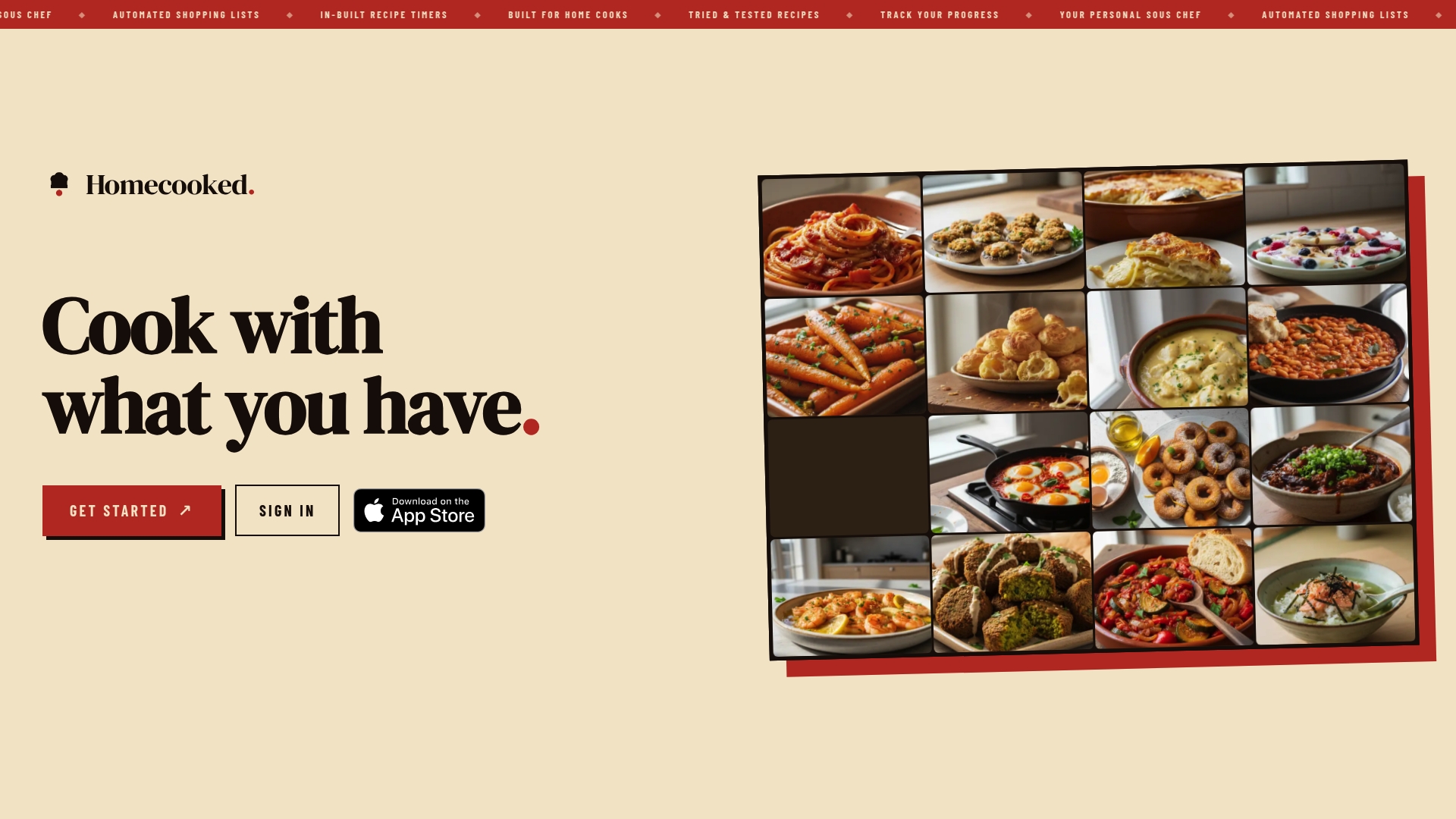
The workflow mirrors what this guide just walked through. Set your desired servings, follow guided recipe steps with built-in timers that account for adjusted cook times, and let the pantry-aware system flag what you already have on hand versus what needs to go on the list. Recipes like the Butadon show how a single dish scales cleanly through the app’s guided format, timers included. If you’re tired of doing conversion math on a sticky note every time you cook for a bigger crowd, start a plan on the Homecooked landing page and let the app carry the arithmetic for you.
Sources
- Cooking for a Crowd: Techniques for Scaling Recipes
- Metric kitchen: culinary measurement tips (NIST)
- Cooking basics: reducing a recipe (KSU Snap-Ed MF3531)
- All about cake math | Institute of Culinary Education
- 3-2-1 pie crust
FAQ
What Is the Formula to Scale a Recipe?
The formula is Desired yield ÷ Original yield = Conversion factor, and you multiply every ingredient quantity by that factor. For example, scaling a recipe from 6 servings to 20 gives a factor of 3.33, which you apply to each ingredient before adjusting salt and leavening to taste.
What App Can I Use to Scale Recipes?
Some apps build scaled quantities directly into meal plans and turn them into an automated shopping list, so you don’t have to do the conversion math by hand. They pair guided recipe steps with timers, which helps account for the cook time adjustments that come with a larger batch.
Can You Scale a Recipe for Me?
The math itself is straightforward: divide your desired servings by the original serving count to get your conversion factor, then multiply every ingredient. Where it gets more personal is seasoning, pan size, and timing, which depend on your specific dish and equipment, so treat the formula as your starting point and taste-test from there.
What Is the 3-2-1 Rule for Baking Dough?
The 3-2-1 rule is a weight-based ratio for dough: 3 parts flour, 2 parts fat, 1 part liquid or sugar, all measured by weight rather than volume. Pick a base flour weight, and the rest of the ratio scales with it, which makes it one of the simplest systems for scaling pie crust, shortbread, or biscuit dough to any batch size.
Should I Weigh Ingredients or Use Cups When I Scale a Recipe?
Weighing is more reliable, especially as batch size grows, because volume measurements like cups vary with how ingredients are packed or scooped. NIST’s kitchen measurement guidance treats a digital scale as the standard for consistent results, particularly in baking where small errors compound across a larger recipe.