Seasonal meal planning means building your menus around the produce that is at its best right now, then adjusting the plan as the months change. The simplest way to do it is to start from what is in season and what is already in your kitchen, then choose recipes that fit your health goals and your schedule. That is the idea Homecooked is built on: a plan shaped by your goals, your preferences and your pantry, so the seasons become a head start instead of one more thing to track.
TL;DR
- Seasonal meal planning means choosing recipes around produce that is currently in season, and refreshing the plan a few times a year.
- Start with vegetables, then add protein and whole grains, and check your pantry and freezer before you write the list.
- Frozen produce is nutritionally comparable to fresh in-season produce, so you can stretch a season without losing nutrition.
- Use USDA and university extension resources to see what is in season where you live, since the calendar differs by region.
- Keep a short rotation of meals per season rather than planning every week from scratch.
Table of Contents
- What seasonal meal planning actually is
- Why plan around the seasons
- How to find out what’s in season where you live
- How to build a seasonal meal plan, step by step
- What to cook in each season
- Stretch the season with your freezer
- Seasonal planning for different households
- Put your seasonal plan on autopilot
- Our perspective
- FAQ
- Sources
What seasonal meal planning actually is
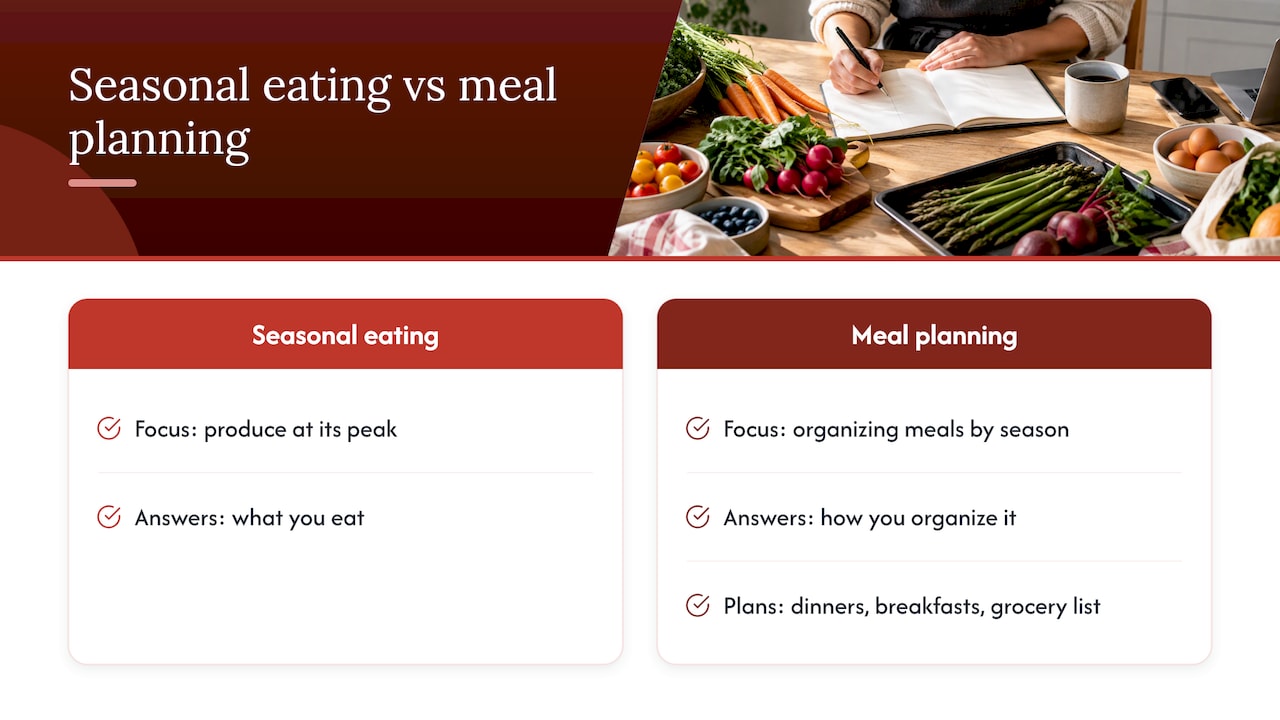
There are two ideas that often get blended together. A seasonal eating plan is about what you eat: leaning on produce when it is at its peak. Seasonal meal planning is about how you organize it: a repeatable system that decides your dinners, your breakfasts and your grocery list with the season in mind.
In practice, the two work together. You pick a handful of meals that suit the time of year, rotate them, and let the shopping list follow. Some cooks plan a whole season at a time and treat it as a reference list. Others plan week by week and simply start each plan from the produce aisle. Both work. The point is to cut down on the daily “what’s for dinner” decision while eating food at its best.
If you already plan weekly, seasonal planning is a layer on top. Our guide to weekly meal planning covers the weekly routine, and if you prefer to think further ahead, monthly meal planning shows a longer-range system for busy families.
Why plan around the seasons
The case is practical, not dogmatic. The American Heart Association notes that seasonal foods can taste better and sometimes cost less. Its meal-planning toolkit also says seasonal produce is often more affordable, which helps when you are building a weekly budget.
There are a few other everyday payoffs:
- Better flavor. A tomato in August and a butternut squash in October need very little help. Simple recipes taste more finished.
- Natural variety. The calendar rotates your menu for you, which keeps meals from going stale.
- Fewer decisions. A short list of meals for each season means you are choosing from a set you already like.
- Easier shopping. In-season produce is often abundant or on sale, as Healthline’s seasonal eating guide points out.
Keep expectations realistic. The American Heart Association also notes that some supermarkets keep prices steady all year and that access to fresh produce is not equal everywhere. Treat the season as a guide for choosing, not a rule you have to follow perfectly. That is why a flexible plan beats a rigid one.
How to find out what’s in season where you live
A calendar that works in Maine will not match one in Georgia or Arizona. Three places help you check your own region:
- USDA resources. Nutrition.gov’s food shopping and meal planning page points to USDA’s Seasonal Produce Guide. Healthline’s guide also recommends the USDA Local Food Directories for finding farmers markets.
- The people who grow it. Healthline suggests asking market growers what is ready now and what is coming soon, because they see how produce shifts week to week.
- A farm share. The University of Maine Cooperative Extension describes a CSA as a farm share that supplies a variety of foods through a season. Offerings and payment arrangements vary by farm, so look at what your local farms provide.
If you shop at a farmers market, our piece on farmers market meal planning explains the shop-first, plan-second approach, which suits seasonal cooking well.
For a rough sense of the range, the University of Maryland Extension’s seasonal produce examples list berries, leafy greens, herbs, onions, garlic, scallions and beets in spring. Summer brings summer squash, corn, green beans, tomatoes, peaches and peppers. Fall brings apples, pears, winter squash, broccoli, carrots and beets. Treat these as examples from one state’s guidance, then check your own region.
How to build a seasonal meal plan, step by step
Here is a routine you can run at the start of each season and refresh weekly. At each step, the weak spot is usually the same: the plan looks good on paper and then stalls against a busy week or a full fridge.
1. Start with what you already have
The University of Maine Cooperative Extension recommends checking the refrigerator and pantry first, especially ingredients that need using before they spoil, and then planning with what is in season. The University of Washington’s budgeting lesson gives the same advice: plan around food on hand and sale items, and reuse ingredients across meals.
Where it goes wrong: you write a plan from inspiration, then buy duplicates of things you already own. Homecooked is built pantry-first, with pantry tracking so your plan starts from what is in your kitchen. If you want to see how that works in a simple case, read about turning what you have into dinner.
2. Pick your produce, then build the plate
The American Heart Association toolkit recommends starting with vegetables, then adding protein and whole grains. In November that might mean roasted carrots and squash as the base, a protein such as chicken or beans, and a whole grain such as farro or brown rice. In July the base is tomatoes, corn and zucchini.
Where it goes wrong: choosing the protein first and forcing vegetables around it. Starting with the vegetable keeps the plan seasonal and the shopping cheaper.
3. Match meals to your real week
The University of Maine Cooperative Extension says quick meals can reduce kitchen time and planning stress and make healthy eating easier to fit into a busy schedule. Budget Bytes suggests reviewing your schedule, ingredients and store sales before choosing recipes. So look at the calendar first: which nights are tight, and which have time for a braise?
Homecooked plans around your health goals and dietary preferences, and its guided recipes use step-by-step instructions with integrated timers, so a weeknight dinner stays manageable even when you are juggling several pans.
4. Write the list with quantities
The American Heart Association toolkit advises making a weekly plan and a list with quantities, checking the pantry and freezer, and staying flexible for unexpected sale items. The University of Washington lesson adds that keeping a list limits impulse purchases.
Where it goes wrong: a list built by hand from five recipes, with the same ingredient written three times in different amounts. Homecooked generates automated shopping lists from your meal plan, so you do not have to add it all up yourself. For the method, see how to build a smart, zero-waste grocery list, or grab the printable 7-day meal plan grocery list. If you shop at more than one store, organizing a list by store saves a lap around the aisles.
5. Keep it loose, then rotate
Plan three or four dinners rather than seven, and leave room for a sale or a market find. At the end of the season, keep the meals that worked and swap the rest. After a year, you have four short lists you can reuse, which is the “reference guide” many seasonal planners describe.
What to cook in each season
USDA’s America’s Harvest seasonal page offers a useful starting set of ideas: pasta primavera and asparagus in spring, grilled vegetable packets and fruit pops in summer, butternut squash and apple soup in fall, and vegetable chili or stew in winter. Use them as a seed, then add your own.
Spring
Think lighter and greener: leafy greens, herbs, scallions and berries. A pasta with spring vegetables, a big salad with a protein, or eggs with herbs and greens all come together quickly. Spring is also a good time to reset your list after heavier winter meals.
Summer
Do less at the stove. Tomatoes, corn, peppers, green beans and peaches need little cooking. Grilled vegetables, grain salads and fruit for dessert keep the kitchen cool. Buy only what you will eat in a few days, since peak-season produce goes fast.
Fall
Apples, pears, winter squash, broccoli and carrots take over. This is the season for soups, sheet-pan roasts and make-ahead breakfasts. A good example is a batch of pumpkin walnut overnight oats, which turns a fall ingredient into a grab-and-go morning meal. The University of Maine Cooperative Extension lists late-fall produce in Maine as pumpkins, apples, squash, potatoes, beets, carrots, cabbage, parsnips and turnips. That is a Maine example rather than a national calendar, but it shows how hearty the fall basket gets.
Winter
Roots, cabbage and storage crops carry the plate, and the cooking goes slow. Vegetable chili, stews and braises stretch a few ingredients across several meals and reheat well. Winter is also where your freezer earns its place.
Stretch the season with your freezer
Seasonal planning does not mean you only eat a food for a few weeks. The American Heart Association describes frozen produce as nutritionally comparable to fresh in-season produce, with the note that thawed fruit may be less crisp or juicy. That makes frozen fruit a good fit for smoothies, oats and baking.
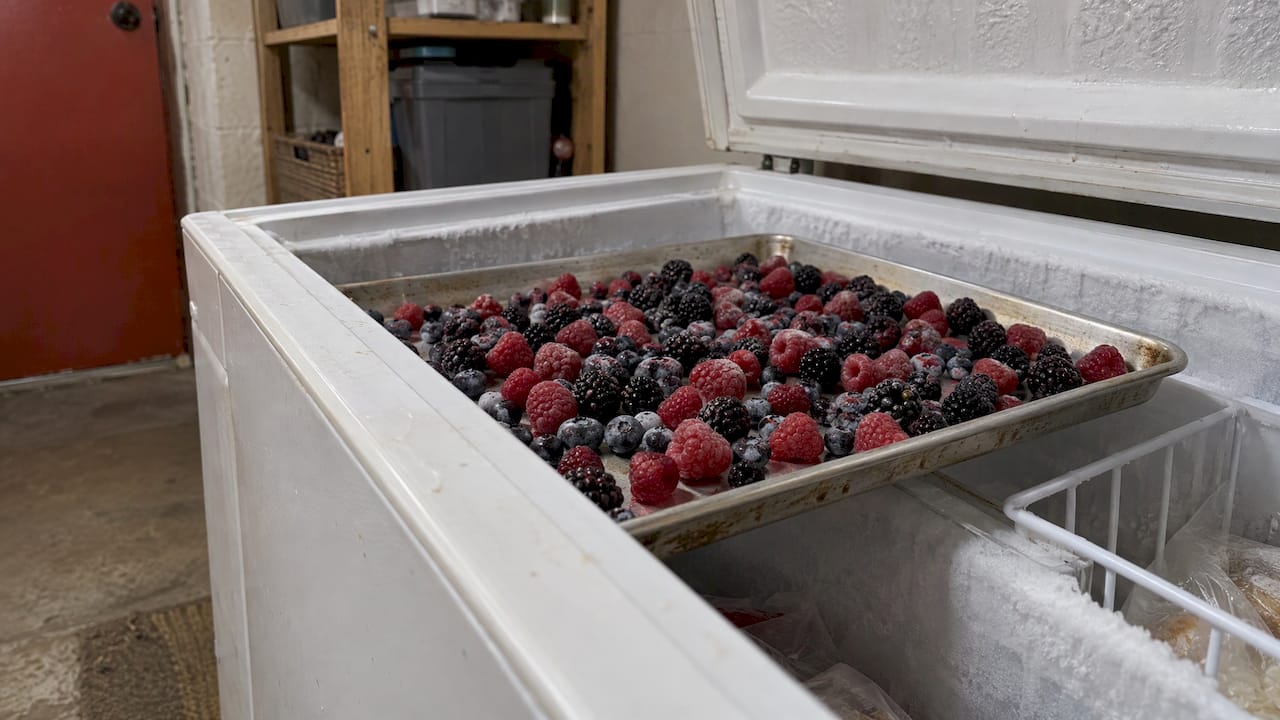
The University of Maryland Extension recommends planning weekly meals and snacks around seasonal produce and preserving some for later. Its guide suggests flash-cooking and freezing vegetables, or freezing fruit in a single layer on a baking sheet before moving it to a labeled freezer container. It also advises labeling and dating what you freeze, and gives storage of up to six months for the methods it describes.
To make this work in a plan, write frozen items into your pantry list so they show up when you build next week’s meals. Otherwise they sit at the back of the freezer.
Seasonal planning for different households
One or two people. Buying less of a perishable ingredient matters more than the plan itself. Plan overlapping meals so a half-bunch of herbs or a squash gets used twice. Our meal planning for two guide walks through a weekly system sized for it.
Families. A seasonal rotation of a dozen reliable dinners per season removes most of the weekly debate. Let each person pick one meal from the season’s list.
Health goals. Seasonal produce is a way to get more variety of vegetables and fruit on the plate, not a diet by itself. If you are working toward a specific nutrition goal, or you manage a condition or allergy, talk with your doctor or a registered dietitian about what to eat. Then use your plan to put that advice into practice.
Put your seasonal plan on autopilot
If you would rather not rebuild the plan by hand every season, Homecooked makes personalized meal plans from your health goals and dietary preferences. It adds automated shopping lists, pantry tracking, step-by-step guided recipes with live timers, progress tracking and AI-powered cooking assistance. You can start with a free trial, and Homecooked Pro is the paid subscription after that. Try Homecooked and build this season’s plan around the ingredients you already have.
Want to see how a guided recipe reads before you plan? The home-style chicken curry is a good cold-weather dinner, ready in about 40 minutes.
Our perspective
Most seasonal meal plans fail for one reason: they are a nice list that never meets the actual week. A pretty fall menu does not know that you already have half a bag of carrots, that Wednesday is a late night, or that you are aiming for more fiber.
We built Homecooked to close that gap. Our approach is pantry-first: the plan begins with what is in your kitchen and is tailored to both your health goals and your flavor preferences. Then the shopping list follows from the plan, and the guided recipe, with live timers and parallel workflows, helps you finish dinner without watching three clocks.
Seasonal eating is a good habit because it gives you a natural rhythm. We think the best way to keep a habit is to take the friction out of it. Planning, listing, cooking and tracking in one place does exactly that, and it is why we believe a plan shaped around you will outlast any generic calendar.
0xmaglev
FAQ
What is the seasonal eating plan?
It is an approach to eating that centers on produce while it is in season in your region. In practice, you choose fruits and vegetables that are at their peak, build meals around them, and rotate as the months change. Frozen produce can fill the gaps between seasons.
How do you plan a seasonal menu?
Start with what you already have, then choose in-season vegetables and add protein and whole grains. Match the meals to your week, write a list with quantities, and leave room for sales or market finds. Refresh the list each season and keep the meals that worked.
What are the 5 rules in planning meals?
There is no official set, but five habits cover most of the advice in the research: check the pantry and freezer first, start with vegetables, fit meals to your schedule, shop from a list with quantities, and stay flexible. Together they reduce waste and impulse buying.
Is seasonal eating always cheaper?
Not always. Seasonal produce can cost less, and it is often abundant or on sale, but some supermarkets keep prices steady year-round. Comparing prices at a farmers market, a farm share and your regular store tells you where the savings are in your area.
Sources
- The ripe stuff: Why seasonal eating can be a healthy delight (American Heart Association)
- Add Color with Fruits and Vegetables toolkit (American Heart Association)
- Plan, Shop and Eat Smart: Enjoy More Fruits and Veggies (University of Maryland Extension)
- How to Eat Seasonally: A Complete Guide (Healthline)
- Food Shopping and Meal Planning (Nutrition.gov)
- Cooking for Busy Families: Using Local Ingredients (University of Maine Cooperative Extension)
- Quick, Healthy Meals Using Seasonal Produce (University of Maine Cooperative Extension)
- Food Budgeting and Meal Planning, Lesson 8 (University of Washington Cooking for Health)
- Seasonal Celebrations (USDA America’s Harvest)
- Pumpkin walnut overnight oats