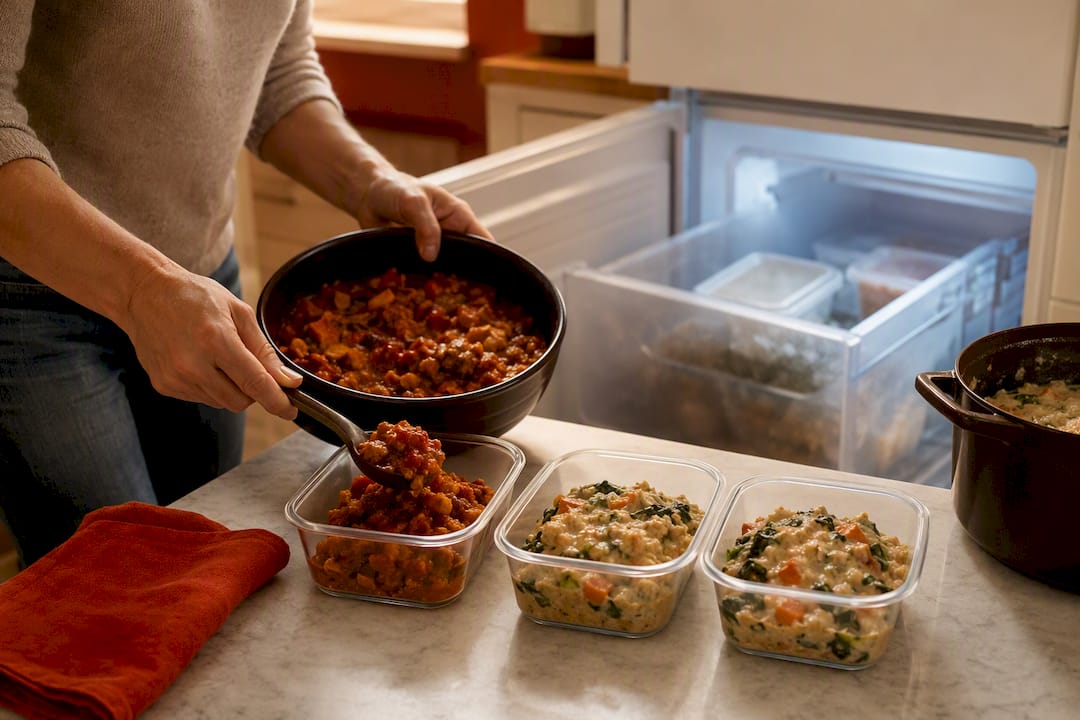
The single most effective habit for cooking for one is making every homemade meal yield a ready-to-freeze extra portion. Cook twice as much rice, roast a bigger tray of vegetables, simmer a double batch of chili, then bag half before you sit down to eat. It cuts waste, trims your grocery bill, and means dinner on a tired Wednesday takes five minutes instead of forty. Homecooked builds this exact rhythm into its plans, so you never have to think about the math yourself.
TL;DR:
- Making extra portions to freeze reduces waste, grocery costs, and simplifies weeknight dinners, especially when cooking in bulk for two meals.
- Planning around three cooked dinners with leftover portions and two low-effort meals limits daily decision fatigue and increases efficiency.
- Checking pantry and freezer stocks before shopping prevents duplicates, cuts waste, and enables precise purchasing with loose produce and single-serve proteins.
- Freezing meals like soups, stews, and grains in portioned containers ensures they last two to three months and reheat easily without soggy ingredients.
- Transforming leftovers into new dishes through strategic portioning maximizes variety, minimizes waste, and avoids meal fatigue for solo cooks.
Table of Contents
- Your Single Person Meal Planning Template for One Week
- Shopping the Kitchen First: The Audit Every Solo Cook Skips
- How Should You Batch-Cook and Freeze for One Person?
- Turning One Cooked Meal Into Three Different Dinners
- A Repeatable Weekly Routine You Can Actually Keep
- Why This Approach Holds Up
- What Most Meal-Planning Advice Gets Backwards
- Let Homecooked Handle the Planning for One
- Sources
Your Single Person Meal Planning Template for One Week
Single person meal planning gets a lot easier once you stop treating every night as a fresh decision. Build the week around three cooked dinners and two low-effort ones, and let breakfast and lunch run on autopilot.
Three cooked dinners (each makes two servings, so you freeze one):
- Sheet-pan chicken thighs with roasted broccoli and sweet potato
- Turkey and black bean chili
- Baked salmon with lemon and a big pot of farro
Two low-effort nights:
- A frozen portion from a previous week, reheated with a squeeze of lime and fresh herbs
- Eggs and toast, or a can of beans over greens
Breakfast and lunch don’t need daily planning at all. Rotate three templates: overnight oats with whatever fruit is ripest, baked egg muffins you make once and eat all week, and a grain bowl built from the farro and roasted vegetables above.
Here’s a shopping list organized the way the store actually works:
- Produce: broccoli, sweet potato, one lemon, one lime, mixed greens, whatever fruit is on sale
- Protein: chicken thighs, ground turkey, one salmon fillet, a dozen eggs
- Pantry: farro, black beans, canned tomatoes, rolled oats, olive oil
- Dairy/frozen: Greek yogurt, shredded cheese
Swapping diets is simple. Vegetarian? Replace the chicken and salmon with lentils and tofu. Low-carb? Skip the farro and double the broccoli. Gluten-free? Everything on this list is already naturally gluten-free except toast, so swap in a gluten-free loaf or rice cakes.
Shopping the Kitchen First: The Audit Every Solo Cook Skips
Failing to check what you already own before shopping is the most common mistake solo cooks make, according to nutritionists who study household food waste patterns. It sounds obvious. It rarely happens.
Do this before you write a single grocery item down. Open the fridge and pull everything to the front, checking dates as you go. Open the freezer and take inventory of what’s frozen and forgotten. Check the pantry for shelf-stable staples you already have duplicates of, like the third half-used bag of rice hiding behind the flour.
Once you know what’s on hand, shop with these rules in mind:
- Buy produce loose, not in bags, so you get exactly two onions instead of a five-pound sack
- Ask the butcher counter for one or two pieces of meat rather than grabbing a family pack
- Prefer frozen single-serve proteins like individually wrapped salmon fillets or pre-portioned chicken breasts
- Stock shelf-stable staples (rice, pasta, canned beans, olive oil) since they don’t have a waste clock ticking
For quantities, plan on roughly one pound of protein split across two meals per week, plus one or two heads of produce that overlap across recipes. Spend Smart Eat Smart recommends this same kitchen-first approach as the foundation of any single-person plan.
Pro Tip: Keep a running list on your phone of ingredients you’re low on the moment you notice, not the moment you run out. It turns shopping into a five-minute errand instead of a guessing game.
Once your audit is done, you can build a smart, zero-waste grocery list directly from whatever you’re missing.
How Should You Batch-Cook and Freeze for One Person?
Cook-once-eat-twice should be your default, not your exception. Every time you make a full recipe, you’re feeding two future meals instead of one, and your freezer becomes a second pantry stocked with dinner you’ve already decided on.
Portion into single-serving containers the moment food cools, not the next day when you’re less motivated. Label each container with the contents and the date, using a system as simple as masking tape and a marker. Most cooked proteins and grains hold well in the freezer for two to three months, though Foodsafety are worth checking for exact timelines by food type.
Meals that freeze and reheat well:
- Soups, stews, and chili
- Braised meats and shredded chicken
- Cooked grains like rice, farro, and quinoa
- Sauced pasta dishes (though pasta itself is best slightly undercooked before freezing)
Skip freezing anything with fresh greens, mayonnaise-based dressings, or fried coatings; they turn watery or soggy on reheat.
Household-level waste reduction has a measurable dollar and environmental cost attached to it, according to EPA research on food waste, which makes freezer batching one of the few habits that pays you back twice, in your wallet and in your trash can.
Reheat frozen portions gently, either in a covered pan with a splash of water or in the microwave at 50% power, so the food doesn’t dry out or overcook at the edges.
Turning One Cooked Meal Into Three Different Dinners
Leftover fatigue is what kills most solo meal plans, not lack of time. The fix is transforming one base ingredient into dishes that don’t taste like reruns.
- Roast chicken → tacos. Shred the meat, warm tortillas, add salsa and lime.
- Roast chicken → grain bowl. Layer over farro with roasted vegetables and a drizzle of tahini.
- Roast chicken → flatbread. Top naan with the meat, melted cheese, and arugula, then broil for two minutes.
- Chili → baked potato topping. Split a potato, spoon chili over it, add cheese.
- Chili → nachos. Layer over tortilla chips with whatever cheese is in the fridge.
- Salmon → salad. Flake over greens with a mustard vinaigrette.
- Farro → breakfast bowl. Reheat with a fried egg and hot sauce.
- Roasted vegetables → frittata. Fold into whisked eggs and bake.
The trick that makes these transforms fast is portioning smart from the start. Freeze grains and proteins separately from sauces and fresh greens, so reheating doesn’t leave you with soggy lettuce or mushy rice. A handful of fresh herbs, a squeeze of citrus, or a crunchy topping like toasted nuts changes the whole feel of a dish without any real cooking.
A Repeatable Weekly Routine You Can Actually Keep
A realistic weekly rhythm takes less time than most people assume once you’ve done it a few times.
- Audit (10 minutes): Check the fridge, freezer, and pantry before you plan anything.
- Plan (10 minutes): Pick three cooked dinners and two low-effort backups using the overlap-ingredient approach.
- Shop (30 to 45 minutes): One trip, organized by store section, using loose produce and single-serve proteins.
- Batch cook (60 to 90 minutes): Prep on one day, usually a weekend, and portion immediately.
Prep full meals for dinners you’ll eat within four days; prep components (cooked grains, roasted vegetables) for anything further out, since they hold up better and give you more flexibility. Build one guilt-free night off into every week, where you either order in or eat a frozen portion without a second thought.
Pro Tip: Cook three different dinners across two weekend sessions, and by the third week you’ll typically have six to eight meals sitting in the freezer, which is the point where meal planning stops feeling like a chore.
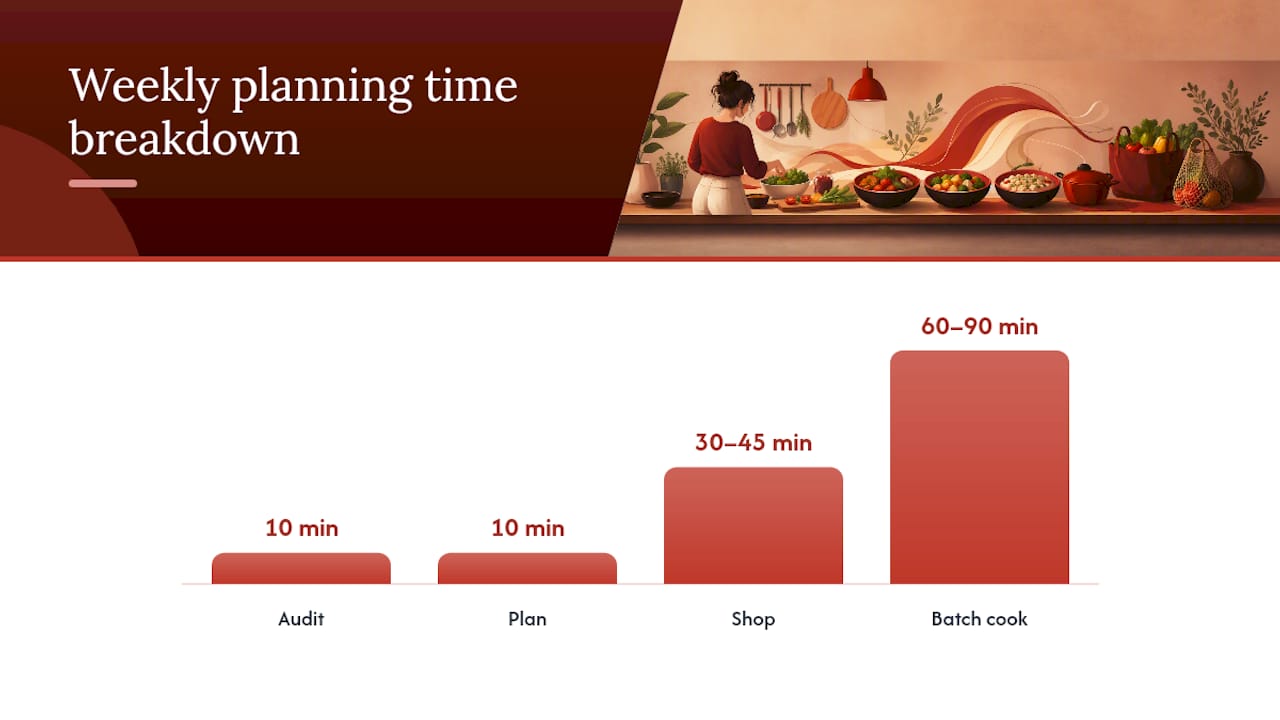
Your copy-paste weekly checklist: audit the kitchen, plan three cooked meals plus two backups, shop once, batch cook on a set day, portion and label immediately, freeze half. For nights when even that feels like too much, one-pot meals are a solid fallback that skips several of these steps entirely.
Why This Approach Holds Up
Homecooked’s workflow mirrors this exact routine, step for step:
- Personalized plans that default to yield-two-portions recipes
- Automated grocery lists generated straight from your weekly plan
- Pantry tracking that replaces the manual audit
- Step-by-step guided recipes with built-in timers for hands-off batch cooking
For the research backing all of it, see PLOS ONE’s studies on household food waste reduction and The Kitchn’s meal prep plan for one.
What Most Meal-Planning Advice Gets Backwards
Most guides aimed at solo cooks lead with recipes. That’s backwards. The recipe is the easy part; the failure point is almost always the shopping trip, where a five-pound bag of onions or a family pack of chicken thighs quietly guarantees waste before you’ve cooked a single meal.
The advice that actually moves the needle is boring: audit before you shop, buy loose, freeze in singles. Complex spreadsheets and elaborate seven-day color-coded plans look impressive but rarely survive contact with a real week, since simple purchasing rules consistently outperform complicated systems for people cooking alone.
If you take one thing from this guide, prioritize the freezer habit over the recipe hunt. A rotating stock of six to eight single-serve meals solves more weeknight problems than any new dish you could learn. Variety matters, but it comes from transforming what you already have, not from constantly sourcing new ingredients.
The conventional wisdom treats meal planning as a discipline problem. It’s actually a systems problem, and once the system is built, the discipline takes care of itself.
— 0xmaglev
Let Homecooked Handle the Planning for One
Homecooked is built around exactly the habits this guide describes: yield-two-portions recipes, automated grocery lists, and pantry tracking that removes the manual audit step entirely. Instead of building your own overlap-ingredient spreadsheet, you tell the app your goals and dietary preferences, and it hands you a week already structured around freezer-forward cooking.
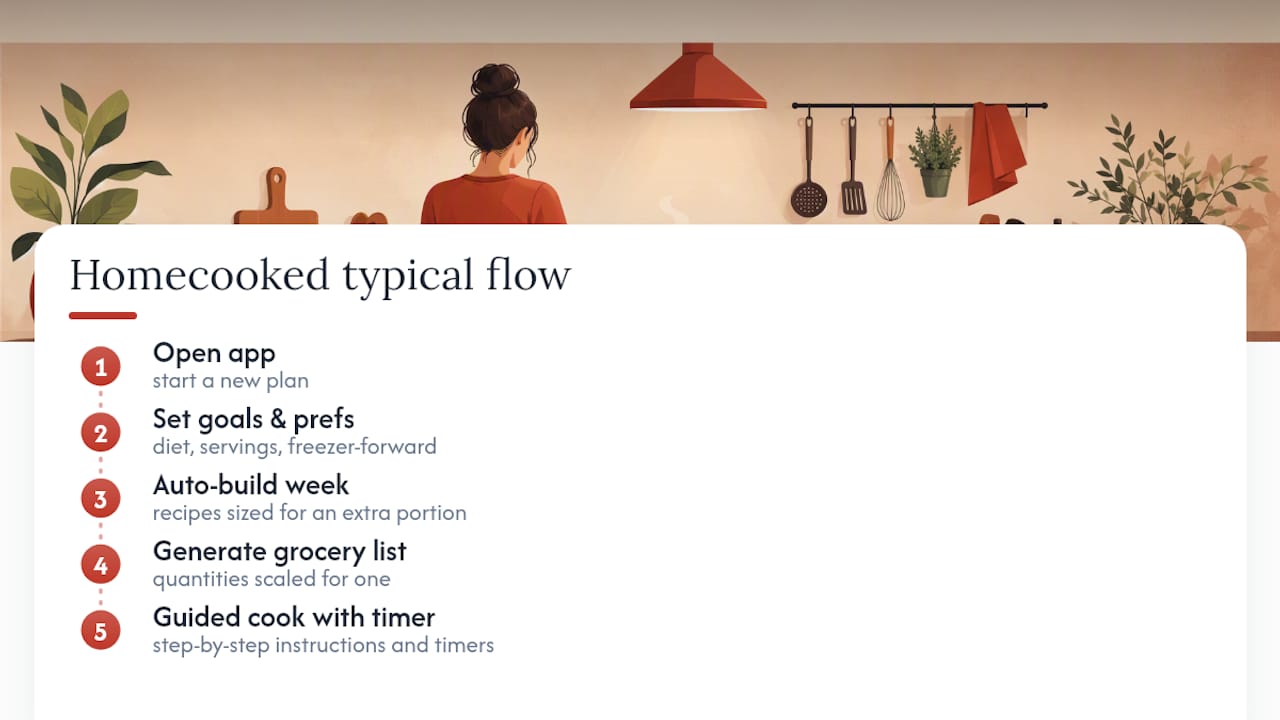
A typical flow looks like this: Homecooked suggests a bibimbap recipe sized to make an extra portion, generates the grocery list automatically with quantities scaled for one, and walks you through each step with a built-in timer so you’re not guessing when the rice is done. Want something quicker for lunch? The cottage cheese protein bowl recipe takes under ten minutes and slots straight into the breakfast-lunch rotation described earlier in this guide.
For more prep-ahead thinking, the batch-baking approach behind Homecooked’s apple pie recipe also works well for stocking breakfasts for the week, and Wild Foodz’s holiday meal prep guide offers a useful outside take on repurposing prepped components.
Open the app, set your goals, and let this week’s plan build itself.
Sources
- Foodsafety
- EPA — Estimating the cost of food waste to American consumers
- Spend Smart Eat Smart — Meal Planning for One