Smart meal planning is a short, repeatable weekly system, plan, shop, prep, built around your actual health goals instead of guesswork. It works because it front-loads the thinking into one focused session, so the rest of your week runs on autopilot: less time cooking, less money wasted on forgotten produce, and meals that actually support what you’re trying to do, whether that’s more protein, fewer carbs, or just getting dinner on the table by 6:30. Below you’ll find a copy-ready seven-day menu and the exact workflow to turn it into a grocery list.
TL;DR:
- Planning with recipe overlap reduces waste and saves time by using the same ingredients twice, especially for herbs or vegetables.
- Building a grocery list from multiple recipes and sorting it by store sections minimizes backtracking during shopping trips.
- Starting prep with the longest-cooking items ensures efficiency and prevents skipping crucial steps like roasting or simmering.
- Adjusting meal plans based on actual goals and real-time feedback improves adherence and prevents frustration from overly rigid schedules.
- Keeping a well-stocked pantry of staples and batch-cooking leftovers effectively lowers grocery costs and reduces impulse buys.
Table of Contents
- A Sample Week You Can Copy and Adapt
- The Three Moves That Make a Meal Plan Actually Work
- Making the Plan Fit Your Actual Goals
- How Planning Ahead Cuts Your Grocery Bill
- Storing Prepped Food Safely Without Losing Track of It
- Tools That Actually Reduce the Weekly Workload
- Why Flexibility Beats a Perfect Plan
- Put Your Weekly Plan on Autopilot With Homecooked
- Where to Learn More
- Sources
- FAQ
A Sample Week You Can Copy and Adapt
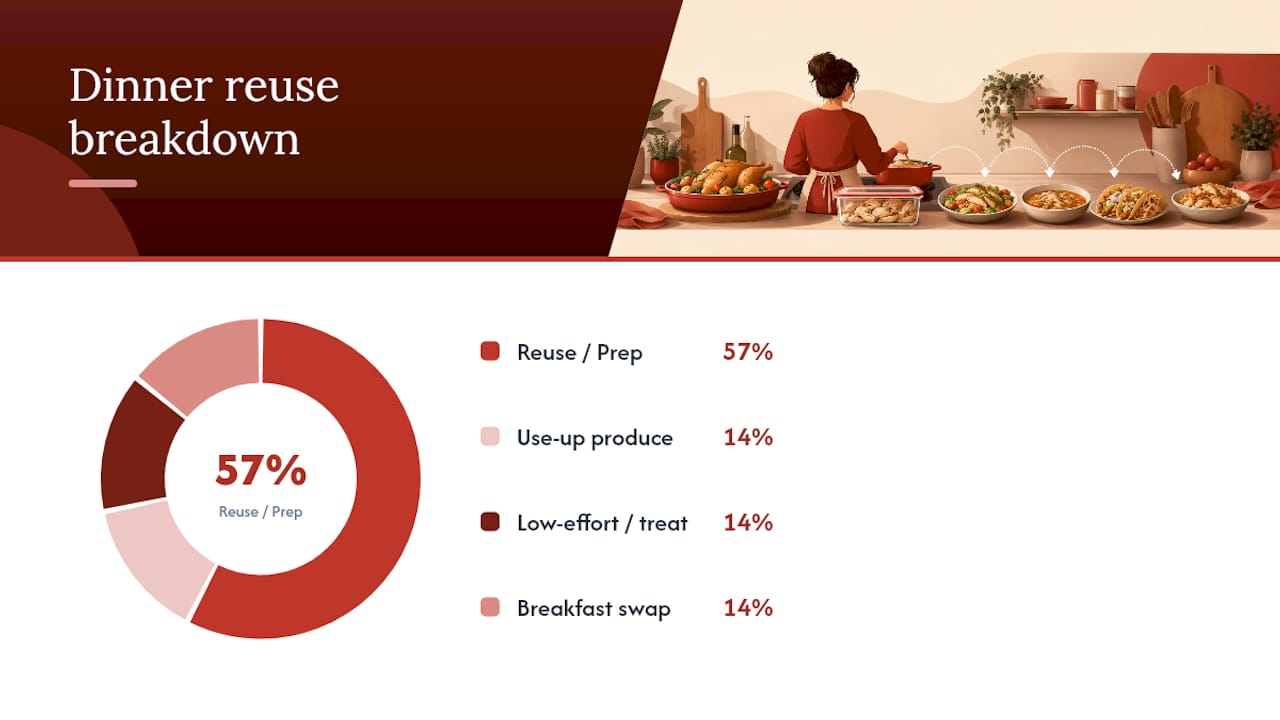
A good weekly menu leans on repetition, not variety for its own sake. Here’s a simple dinner-first structure with built-in reuse:
- Monday: Sheet-pan chicken thighs with roasted broccoli and rice (make extra rice)
- Tuesday: Bean and veggie tacos using Monday’s rice as a side
- Wednesday: Big salad with Monday’s leftover chicken, diced
- Thursday: Stir-fry using whatever produce is closest to spoiling
- Friday: Homemade pizza night, low effort, high morale
- Saturday: Slow-cooker chili (freeze half)
- Sunday: Breakfast-for-dinner with eggs and roasted potatoes
Breakfasts and lunches can rotate through overnight oats, egg muffins, or leftover dinner portions instead of getting their own separate plan. For vegetarian swaps, sub tofu or lentils wherever chicken appears; for higher protein, add a scoop of cottage cheese or Greek yogurt to lunches; for low-carb weeks, skip the rice and double the vegetables.
To convert this into a shopping list, run a quick three-step check: scan your fridge and pantry for what you already have, build an ingredient master list from the week’s recipes, then sort that list by grocery store aisle. Nutrition offer a free template if you want a starting structure rather than building one from scratch.
The Three Moves That Make a Meal Plan Actually Work
Every functional meal plan comes down to three moves, and doing them in the right order saves the most time. The Kitchn’s beginner framework describes this as select, shop, prep, and it holds up well in practice.
- Choose recipes with overlap in mind. Pick two meals you already know well and one new recipe to try, and look for ingredient overlap (one bunch of cilantro used twice beats two bunches half-wasted).
- Build an ingredient master list, then a store-sorted list. Combine every recipe’s ingredients into one list first, so duplicate items merge, then reorder that list to match how your grocery store is laid out.
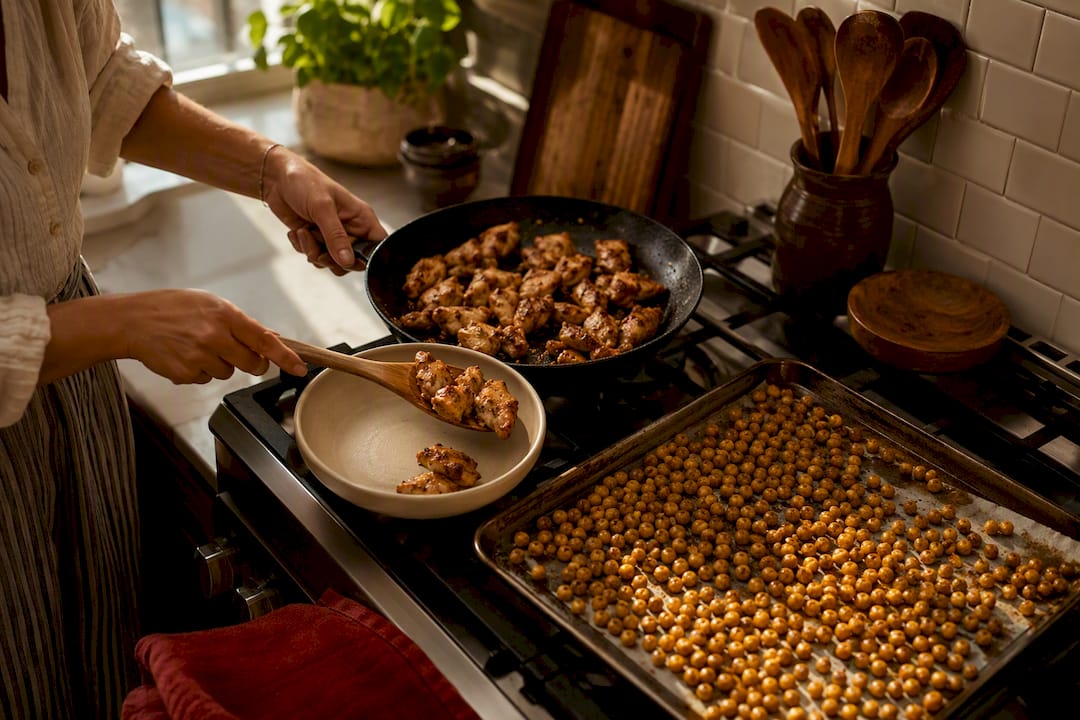
- Prep in order of cook time, not convenience. Start whatever takes longest, a pot of grains, a tray of roasted chicken, then use that waiting time to wash and chop produce for the rest of the week.
This sequencing matters more than people expect. Starting with the 10-minute task first feels productive, but it leaves your longest-cooking items stranded at the end of prep day, when you’re most likely to skip them entirely.
Pro Tip: Prep two proteins at once, one on the stovetop and one in the oven, so you’re not standing around waiting on a single pan.
Making the Plan Fit Your Actual Goals
A meal plan only works if it reflects what you’re actually trying to achieve, not a generic template pulled off the internet. Translate your goal into two or three simple rules instead of a rigid diet.
- Weight management: Build every dinner around a palm-sized protein portion and fill the rest of the plate with vegetables before adding starch.
- Muscle gain: Cook a larger protein portion at dinner and set half aside as tomorrow’s lunch protein, which keeps prep effort flat while raising your daily intake.
- Food sensitivities: Keep a running list of safe substitutes (tamari for soy sauce, almond flour for wheat) so you’re not re-solving the same swap every week.
- Limited time or cooking skill: Cap your “new recipe” slot at one per week and lean on the other two known meals to keep the whole plan low-stress.
The Whole Foods Market guide to getting started makes a point worth repeating: plan two or three days first, not a full month. Try it for that short stretch, note where it felt clunky, whether a recipe took longer than expected, whether you forgot an ingredient, and adjust before scaling up.
How Planning Ahead Cuts Your Grocery Bill
Grocery costs drop fastest when your pantry does some of the planning for you. Keep whole grains, canned beans, jarred sauces, and a stock of frozen vegetables on hand, and buy more of them specifically when they go on sale rather than only when you run out, a strategy the Academy of Nutrition and Dietetics points to as one of the more reliable ways to lower weekly spending.
- Group your list by store section so you’re not backtracking across the aisles.
- Batch-cook a double portion of at least one meal each week and freeze the extra for a night you don’t want to cook.
- Build one “leftovers night” into every plan instead of treating leftovers as a fallback.
Meal prep in general improves diet quality and lowers grocery costs largely because it prevents the impulse buys and the forgotten produce that quietly drain a grocery budget. A rough gut check: if you’re regularly tossing wilted greens or a forgotten half onion at the end of the week, that’s the plan telling you to buy smaller quantities or use that ingredient earlier in the rotation.
Storing Prepped Food Safely Without Losing Track of It
Prepped food only saves you time if it’s still good, and still visible, when you need it. Cooked meats, casseroles, and most cooked grains hold up in the refrigerator for three to four days, and many dishes freeze well beyond that if wrapped properly.
| Food type | Fridge | Freezer |
|---|---|---|
| Cooked meat or chicken | 3–4 days | 2–3 months |
| Cooked grains and rice | 3–4 days | 2–3 months |
| Soups, chilis, casseroles | 3–4 days | 3–6 months |
| Chopped raw vegetables | 3–5 days | Not recommended raw |
| Cooked beans and legumes | 3–5 days | 4–6 months |
Label every container with the date it was made, and keep a rough “use by” estimate written on the lid so rotation becomes automatic instead of a guessing game. Put the oldest containers at the front of the fridge, at eye level, since anything buried in the back gets forgotten and thrown out. Raw chopped vegetables and delicate greens don’t freeze well, so plan those into the current week rather than stocking them ahead.
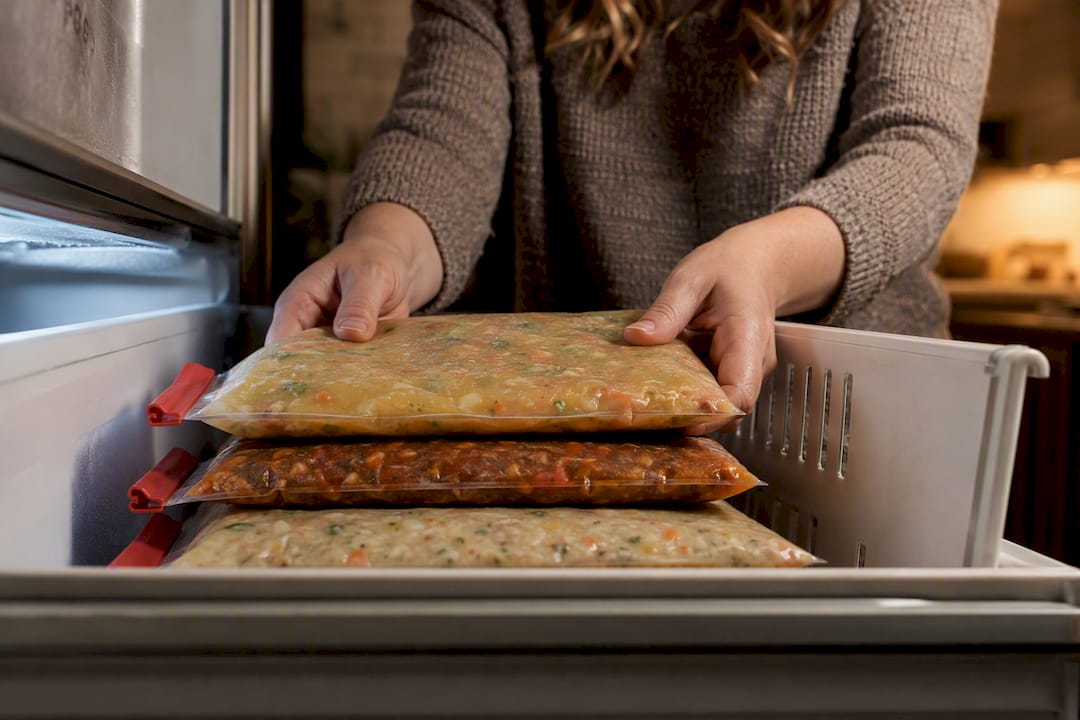
Pro Tip: Freeze soups and chilis flat in labeled bags instead of upright containers. They thaw faster and stack like books in your freezer door.
Tools That Actually Reduce the Weekly Workload
The right tool matters less for the recipes themselves and more for how it handles the boring parts: shopping lists, pantry inventory, and remembering what you already have open in the fridge. Look for three things when evaluating any meal-planning app: does it turn a plan into a shopping list automatically, does it track pantry items so you’re not rebuying spices you already own, and does it offer a calendar view so the week is visible at a glance.
A realistic weekly workflow takes 20 to 30 minutes total:
- Five minutes reviewing what’s already in your fridge and pantry
- Ten minutes picking meals (two familiar, one new) and letting the app or your own list generate ingredients
- Ten minutes sorting that list by store section and setting a prep-day order
Some meal-planning apps aim to build this exact workflow into one place. They generate meal plans around your specific health goals, turn those plans into a sorted shopping list automatically, track your pantry to avoid rebuying items you already have, and guide you through recipes with built-in timers so prep day stays on schedule.
Why Flexibility Beats a Perfect Plan
Most people abandon meal planning not because the system fails, but because they try to plan a perfect month instead of a workable week. Starting small and adjusting after two or three days builds the habit faster than any elaborate spreadsheet ever will. Treat the plan as a draft you revise weekly based on what actually happened, not a contract you have to follow exactly. That’s the same principle behind how Homecooked adjusts your plans over time, and it’s the difference between a system you keep using and one you quietly abandon by March.
— 0xmaglev
Put Your Weekly Plan on Autopilot With Homecooked
Some apps aim to support the workflow described above: pick meals, get a sorted shopping list, prep with guided timers, and adjust as your goals shift. Instead of juggling a notes app, a grocery app, and a separate pantry list, these tools keep personalized plans, automated shopping lists, pantry tracking, and step-by-step guided recipes in one place, so the 20 minutes of weekly planning can stay at 20 minutes.
If you want a protein-first dinner to slot into your own weekly rotation, the cottage cheese protein bowl is a solid place to start; it’s the kind of make-ahead, high-protein recipe that fits neatly into a goal-based plan without extra prep steps. Try building one sample week inside Homecooked and see whether the shopping list and pantry tracker save you the trip back to the store for a forgotten ingredient.
Where to Learn More
- Meal prep guide, Harvard T.H. Chan School of Public Health
- Nutrition
- Printable 7-day grocery list template, Homecooked
- Turn your meal plan into a smart grocery list, Homecooked
- Holiday meal prep tips for busy home cooks, Wild Foodz
Sources
- Meal prep guide • Harvard T.H. Chan School of Public Health
- Nutrition
- 9 tips to make meal planning easier • Whole Foods Market
- The beginner’s guide to meal planning • The Kitchn
FAQ
What Is the 3-3-3 Rule for Meals?
There’s no single agreed-upon definition of a “3-3-3 rule” in nutrition guidance, so treat any version you see online with caution. If your goal is portion balance, a more reliable rule of thumb is building each plate around a protein portion, a vegetable portion, and a starch portion.
What Is the 5-4-3-2-1 Rule for Groceries?
This isn’t a standardized guideline from a nutrition authority, so definitions vary widely depending on the source. A more dependable approach is the pantry-staples method: keep whole grains, canned beans, frozen vegetables, healthy oils, and spices stocked, then shop fresh produce and proteins weekly around whatever’s on sale.
What Is the Best Free Meal Planning App?
The right free option depends on whether you need a shopping list generator, a pantry tracker, or a calendar view, so it’s worth testing a couple before settling. Homecooked offers a free trial that includes personalized meal plans and automated shopping lists, which covers most of what a free planning tool needs to do.
How Can I Spend Only $50 a Week on Groceries?
Lean heavily on pantry staples like beans, rice, and frozen vegetables, plan every meal around one sale-priced protein, and build at least one leftovers night into the week to avoid buying extra food you won’t use. Batch-cooking a double portion of your cheapest meal and freezing half stretches that budget even further across the following week.