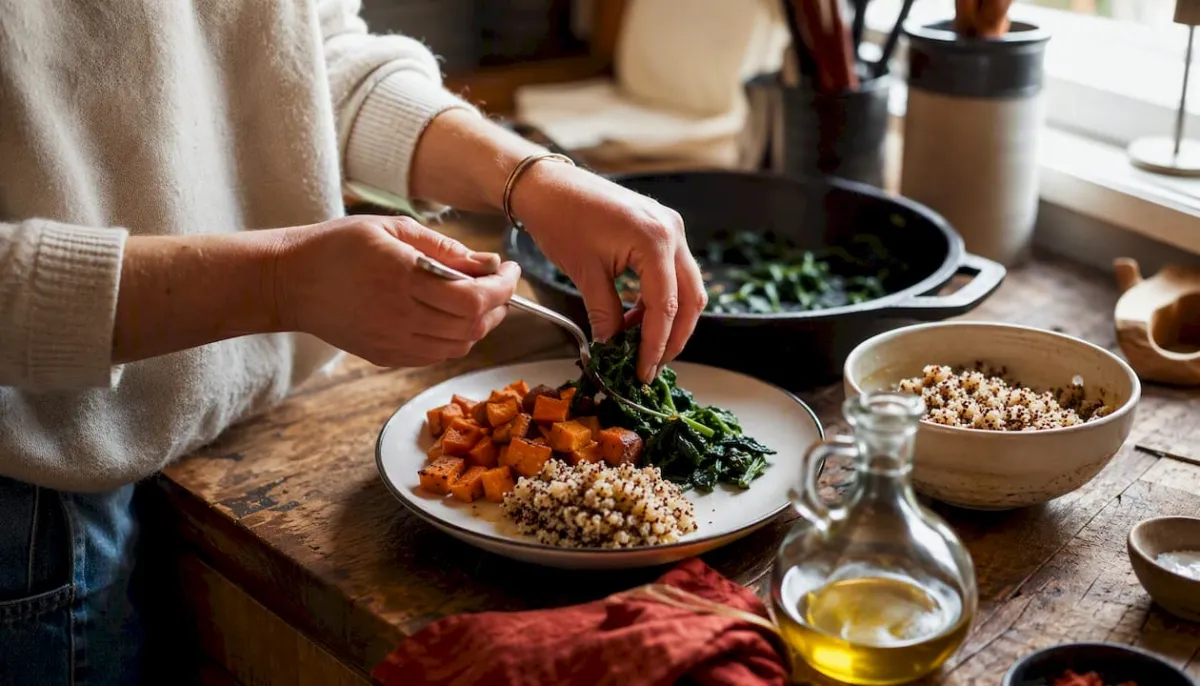
The single most useful thing you can do for your thyroid at mealtime is build meals around whole foods in a Mediterranean-style pattern, keep your levothyroxine timing consistent, and get your labs checked before you add any new supplement. That’s thyroid friendly meal planning in one sentence. Everything else, the fish, the fiber, the timing windows around your medication, are detail work in service of that one rule.
Here’s what to do right now, before you read another paragraph:
- Take levothyroxine on an empty stomach, then wait 30 to 60 minutes before eating, according to the NIDDK.
- Build meals around vegetables, lean protein, whole grains, and olive oil rather than any single “miracle” ingredient.
- Hold off on iodine, selenium, or kelp supplements until you’ve discussed your labs with your clinician.
- Cook your cruciferous vegetables instead of avoiding them.
- Pick one recipe from the 7-day plan below and batch-cook it this weekend.
There is no single “thyroid diet” that reverses hypothyroidism or Hashimoto’s. What actually helps is a consistent, nutrient-dense eating pattern paired with correctly timed medication and testing before you supplement anything. If you take one thing from this article, take that.
Key Takeaways
Thyroid-friendly meal planning works when a nutrient-dense Mediterranean-style pattern is paired with correct levothyroxine timing and lab-driven, not guesswork, supplementation.
| Point | Details |
|---|---|
| No single thyroid diet exists | Focus on balanced, whole-food eating rather than chasing elimination diets or superfoods. |
| Time your medication precisely | Take levothyroxine on an empty stomach and keep a four-hour gap from calcium or iron. |
| Test before you supplement | Check labs for selenium, iodine, vitamin D, and B12 status before adding any supplement. |
| Use the 7-day plan as a starting template | Rotate the sample week, batch-cook proteins on Sunday, and adjust swaps to your dietary pattern. |
| Personalize with the right tools | Homecooked’s pantry tracking and automated grocery lists help you maintain swaps and timing notes without manual rework. |
Table of Contents
- What Is Thyroid-Friendly Meal Planning, Exactly?
- Key Nutrients for Thyroid Health, and Where to Get Them
- How Do You Build a Thyroid-Friendly Meal Plan Day to Day?
- A 7-Day Hypothyroidism Meal Plan You Can Start This Week
- Turning the 7-Day Plan Into a Realistic Grocery Routine
- Getting Levothyroxine Timing Right Around Meals
- Making the Plan Actually Yours
- What People Get Wrong About Thyroid Diets
- Let Homecooked Handle the Planning So You Can Focus on the Adjusting
- Frequently Asked Questions
- Sources
What Is Thyroid-Friendly Meal Planning, Exactly?
Thyroid-friendly meal planning means structuring your meals around foods that support thyroid hormone production and reduce inflammation, while actively avoiding the specific timing mistakes that block your medication from working. It is not a restrictive diet, and it does not involve cutting out entire food groups on faith. A clinician survey and evidence review found that many popular thyroid diet claims are overstated. The real, defensible guidance is much simpler: eat a balanced, whole-food pattern, and reserve elimination or supplementation for cases where testing actually supports it, such as confirmed celiac disease or a diagnosed nutrient deficiency.
Foods to build meals around
Certain foods show up again and again in clinical nutrition guidance for hypothyroidism and Hashimoto’s, not because they’re magic, but because they consistently support the metabolic and anti-inflammatory needs of someone managing thyroid disease.
- Fatty fish (salmon, sardines, mackerel) for omega-3 fats that help modulate inflammation.
- Extra-virgin olive oil and avocados for anti-inflammatory monounsaturated fat, the backbone of the Mediterranean diet that clinicians most often recommend.
- Brazil nuts, eggs, and legumes in modest amounts for selenium, which supports the conversion of T4 into active T3.
- High-fiber vegetables like leafy greens, squash, and carrots, which support digestion and help offset the constipation many hypothyroid patients experience.
- Fermented foods like yogurt, kefir, and sauerkraut for gut support, since thyroid medication absorption depends on a functioning gut.
Foods and habits to limit
- Ultra-processed foods high in refined sugar and sodium, which drive inflammation without offering the micronutrients your thyroid needs.
- Raw cruciferous vegetables in very large quantities. Broccoli, cabbage, and kale contain goitrogenic compounds that can interfere with iodine uptake, but cooking deactivates most of these compounds, so a normal cooked serving is not a problem, according to research on cruciferous vegetables and thyroid health.
- Kelp, sea moss, and other seaweed supplements. These can deliver wildly inconsistent and sometimes unsafe iodine doses, a concern flagged directly by the British Thyroid Foundation.
- Excess iodine supplementation. Iodine need depends heavily on where you live and how iodine-sufficient your diet already is; supplementing blindly in an iodine-replete area can actually worsen thyroid function, per research on iodine status and thyroid outcomes.
- High-dose biotin supplements, which can distort thyroid lab results and make your levothyroxine dose look wrong when it isn’t.
Soy deserves a specific note. It doesn’t need to be eliminated, but soy protein can blunt levothyroxine absorption if you eat it too close to your dose, an issue that mostly affects people who are under-treated or inconsistent with timing. Dairy carries a similar caution: calcium interferes with absorption directly, and if you’re also lactose intolerant, unmanaged GI symptoms can affect how consistently your medication gets absorbed at all.
Pro Tip: Don’t declare a food “off-limits” just because it appears on a goitrogen list. Cook your broccoli, eat your soy a few hours from your pill, and move on. The elimination-diet spiral is where a lot of well-meaning thyroid patients accidentally create nutrient gaps.
Key Nutrients for Thyroid Health, and Where to Get Them
Seven nutrients matter most for thyroid function, and knowing their food sources beats guessing with a supplement bottle every time.
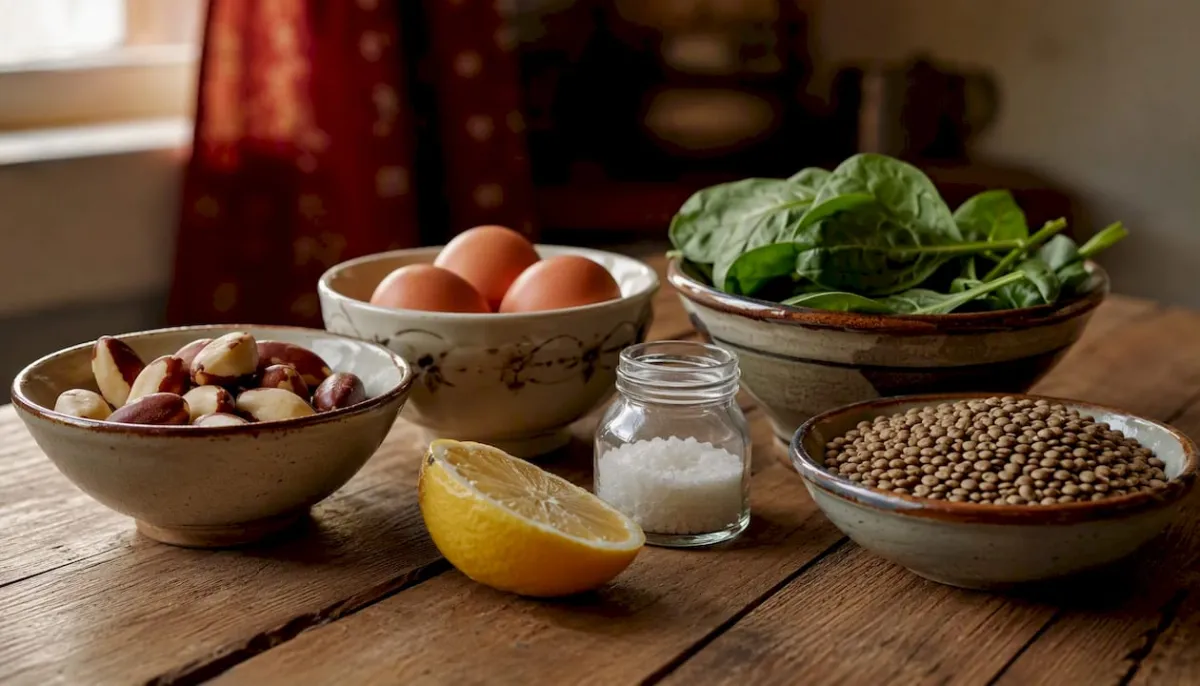
| Nutrient | Role | Best Food Sources | Testing/Supplement Note |
|---|---|---|---|
| Iodine | Raw material for thyroid hormone | Iodized salt, dairy, eggs, seafood | Needs vary by region; don’t supplement without testing |
| Selenium | Converts T4 to active T3 | Brazil nuts, tuna, eggs, legumes | Keep supplement intake under 200 mcg/day |
| Iron | Supports thyroid enzyme function | Red meat, lentils, spinach, fortified cereal | Deficiency is common in hypothyroidism; ask for a ferritin check |
| Vitamin D | Immune modulation, relevant in Hashimoto’s | Fatty fish, fortified milk, sunlight | Low levels are common; test before high-dose supplementing |
| B12 | Energy metabolism, often low in autoimmune thyroid disease | Meat, eggs, dairy, fortified nutritional yeast | Test before supplementing, especially if vegetarian |
| Zinc | Supports hormone conversion | Oysters, beef, pumpkin seeds | Rarely needs supplementation from a varied diet |
| Magnesium | Supports enzyme activity and energy | Almonds, spinach, black beans | Can help with constipation; food sources preferred |
Selenium gets the most attention, and for good reason: it’s essential for converting T4 into the active T3 hormone your cells actually use. But more isn’t better. The NIH Office of Dietary Supplements and the Linus Pauling Institute both caution against exceeding safe upper limits, since excess selenium carries its own toxicity risk. A handful of Brazil nuts a few times a week covers most people’s needs without any supplement at all.
Iodine is trickier because your need depends entirely on your baseline status, something a supplement bottle can’t tell you. Population data on iodine and thyroid outcomes shows that both too little and too much can disrupt thyroid function, which is exactly why testing comes before supplementing, not after.
Pro Tip: If you’re about to start a new supplement, time your bloodwork first. Biotin, in particular, can throw off thyroid panel results for days, so stop biotin at least 48 to 72 hours before a lab draw if your clinician hasn’t already told you otherwise.
How Do You Build a Thyroid-Friendly Meal Plan Day to Day?
A thyroid-friendly plate follows a simple ratio: roughly a quarter lean protein, a quarter whole grain or starchy vegetable, and half non-starchy vegetables, finished with a source of healthy fat. That template holds up whether you’re eating breakfast or dinner, and it removes the guesswork of “what am I even supposed to eat” that derails most attempts at dietary change.
A typical day might look like this, including practical ideas from the guide on pairing protein snacks with prepped meals:
- Breakfast: Greek yogurt with berries, chia seeds, and a drizzle of honey, paired with black coffee (skip the milk if it’s close to your levothyroxine dose).
- Lunch: A grain bowl with quinoa, roasted vegetables, chickpeas, and tahini dressing.
- Dinner: Baked salmon with roasted broccoli and a side of brown rice.
- Snack: An apple with almond butter, or a small handful of walnuts.
Swapping the template for different dietary needs is straightforward:
- Vegetarian: Replace fish and meat with lentils, tofu, tempeh, or eggs for protein.
- Gluten-free: Swap wheat-based grains for quinoa, rice, or certified gluten-free oats.
- Dairy-free: Use coconut or almond yogurt, and get calcium from leafy greens or fortified plant milk instead, keeping it well away from your medication window.
A few operating rules make this sustainable rather than another diet you abandon in three weeks. Keep protein at every meal, since it steadies energy and helps offset the fatigue common in hypothyroidism. Space your biggest meal away from your medication window rather than around it. And track something simple, energy levels, digestion, or the number on the scale, weekly rather than daily, so you’re watching a trend instead of chasing noise.
Pro Tip: Change one meal a week instead of overhauling your entire diet on day one. Swapping breakfast first, since it’s usually the easiest meal to standardize, tends to stick far longer than a full seven-day rebuild attempted cold.
A 7-Day Hypothyroidism Meal Plan You Can Start This Week
This plan follows the Mediterranean-style pattern clinicians most consistently recommend for hypothyroidism and Hashimoto’s, and every day includes a vegetarian, gluten-free, or dairy-free swap so you’re not stuck reworking the whole week around one dietary need.
Day 1: Greek yogurt with walnuts and berries; lentil soup with a side salad; grilled chicken with roasted sweet potato and asparagus. Snack: carrot sticks with hummus.
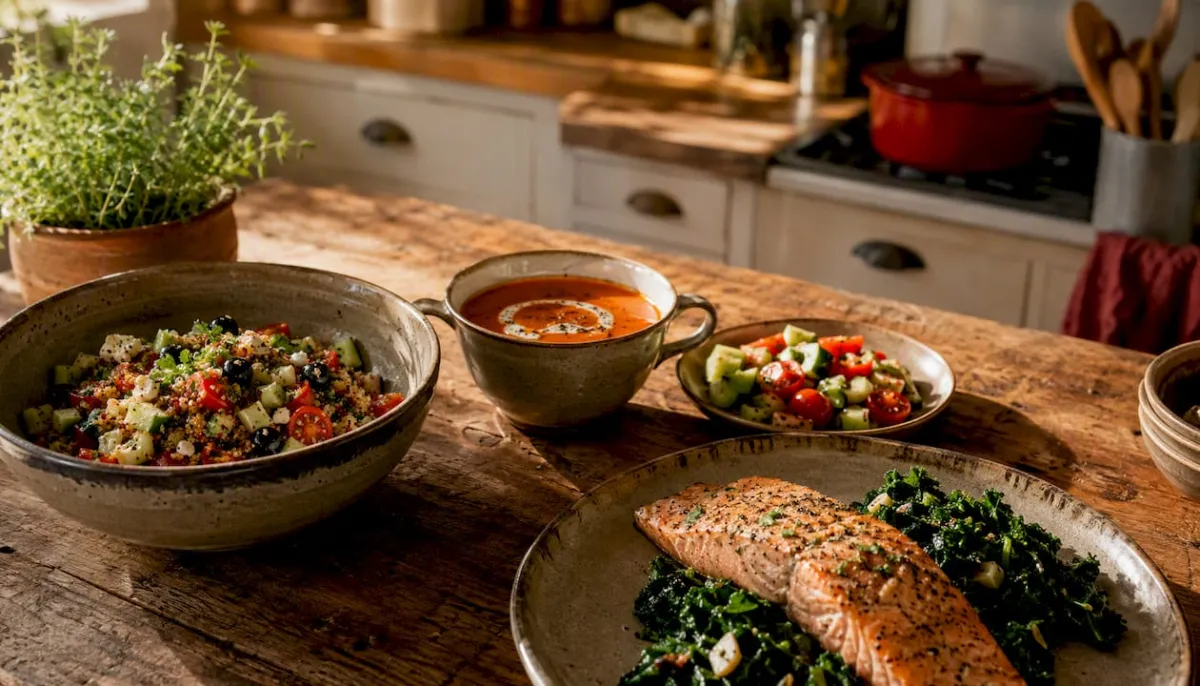
Day 2: Veggie omelet with spinach and feta; quinoa salad with chickpeas, cucumber, and lemon dressing; baked cod with roasted Brussels sprouts. Swap: use tofu scramble instead of eggs for a vegetarian version.
Day 3: Overnight oats with chia seeds and sliced banana; turkey and avocado wrap on a whole grain tortilla; shrimp stir-fry with brown rice and bok choy. Gluten-free swap: use a corn tortilla or lettuce wrap.
Day 4: Smoothie with spinach, frozen berries, almond butter, and unsweetened almond milk; grilled salmon salad with mixed greens and olive oil dressing; lentil and vegetable curry with basmati rice.
Day 5: Cottage cheese with pineapple and pumpkin seeds; leftover lentil curry; baked chicken thighs with roasted carrots and quinoa. Dairy-free swap: use coconut yogurt instead of cottage cheese.
Day 6: Whole grain toast with avocado and a poached egg; tuna salad with white beans, olives, and arugula; beef and vegetable stir-fry with brown rice.
Day 7: Chia pudding with mango; leftover beef stir-fry; sheet-pan salmon with roasted zucchini and farro. Gluten-free swap: swap farro for quinoa.
Quick snack recipe: Mix a tablespoon of almond butter with a cup of plain yogurt, a pinch of cinnamon, and a few chopped walnuts for a protein-and-selenium snack that takes ninety seconds to make.
These ranges assume moderate activity and can be adjusted up or down depending on your calorie needs, which your clinician or a registered dietitian can help you calculate based on your labs and goals. For more built-out Mediterranean templates you can rotate into future weeks, the 7-day Mediterranean diet meal plan and Mediterranean meal planning guide are both good starting points.
Batch-cook the lentil soup and the chicken thighs on Sunday. Both hold well in the fridge for four days and freeze cleanly for up to three months, which covers you for at least two meals midweek without extra cooking.
Turning the 7-Day Plan Into a Realistic Grocery Routine
A plan only works if the shopping list behind it is manageable, and this one breaks cleanly into five categories.
Produce: Spinach, mixed greens, broccoli, Brussels sprouts, asparagus, zucchini, carrots, cucumber, avocado, berries, banana, mango, pineapple, lemon.
Proteins: Salmon, cod, shrimp, chicken thighs and breast, lean beef, turkey, eggs, Greek yogurt, cottage cheese, lentils, chickpeas, white beans, tofu.
Pantry staples: Quinoa, brown rice, farro, whole grain bread, oats, chia seeds, walnuts, almond butter, tahini, olive oil, canned tomatoes.
Frozen: Mixed berries, mango chunks, frozen spinach for backup smoothies.
Herbs and spices: Garlic, ginger, cumin, curry powder, cinnamon, black pepper.
Here’s how to make the week actually happen without living in the kitchen:
- Shop once, on a set day, using the categorized list above so you’re not making three trips.
- Batch-cook the lentil soup, chicken thighs, and a full pot of quinoa on Sunday.
- Portion proteins into containers immediately after cooking rather than after they’ve cooled uncovered on the counter.
- Freeze half the lentil soup right away if you’re cooking for one or two people, since it holds better frozen than sitting in the fridge past day four.
- Prep raw vegetables (washed, chopped) the same day you shop so weeknight cooking is closer to assembly than actual cooking.
A full week of groceries for this plan typically runs somewhere in the range of a standard grocery bill for two people eating mostly at home, and prep time comes to roughly two to three hours on a single weekend day if you batch-cook the proteins and grains together. Keeping costs down without losing nutrient density usually comes down to buying frozen fish and produce out of season, and leaning on canned beans and lentils instead of fresh, which are just as nutritious and last far longer in the pantry. For more batching strategies that extend beyond this specific week, the weekly meal planning guide and meal planning for busy people cover additional shortcuts.
Getting Levothyroxine Timing Right Around Meals
Levothyroxine is famously particular about what it shares a stomach with, and getting the timing wrong is one of the most common, and most fixable, reasons a “correct” dose stops working.
- Take levothyroxine on an empty stomach, first thing in the morning, then wait 30 to 60 minutes before eating breakfast, per the NIDDK.
- Alternatively, some people take it at night, at least three to four hours after their last meal, which works just as well if mornings are chaotic.
- Keep a four-hour gap between your dose and any calcium or iron supplement, or calcium-fortified foods like fortified orange juice, since both measurably blunt absorption according to research on levothyroxine absorption interactions.
- Space soy-heavy meals a few hours from your dose rather than eating them right alongside it.
- If you’re taking a high-dose biotin supplement, stop it 48 to 72 hours before any thyroid lab draw, since biotin is known to distort thyroid assay results and can make an accurate dose look wrong on paper.
Roughly four hours is the standard buffer clinicians cite for separating levothyroxine from calcium or iron, and it’s worth writing that number on your fridge if you take a daily multivitamin. Lactose intolerance adds another wrinkle: unmanaged GI symptoms can affect how consistently the medication gets absorbed in the first place, so if you’re both lactose intolerant and hypothyroid, that’s worth flagging to your clinician directly rather than assuming it’s unrelated.
Making the Plan Actually Yours
A template is only a starting point. Turning it into something that fits your body means working through a short sequence of decisions rather than eating the 7-day plan verbatim forever.
- Review your latest labs with your clinician, specifically TSH, free T4, ferritin, vitamin D, and B12, before assuming you need any supplement at all.
- Identify your actual gaps. If your ferritin or vitamin D came back low, that’s a food-source (and possibly supplement) conversation worth having, not a guess.
- Set a realistic calorie or weight goal if that’s part of your picture, ideally with a dietitian’s input rather than a generic online calculator.
- Choose your dietary pattern and swaps (vegetarian, gluten-free, dairy-free) and lock those into every meal going forward instead of re-deciding daily.
- Rebuild your grocery list around your actual pattern, using the categorized list above as a starting skeleton.
This is where a tool built for exactly this kind of personalization earns its place. Homecooked’s meal templates let you filter for your dietary pattern once, and the app carries that preference through every future plan automatically, so you’re not manually re-checking every recipe for dairy or gluten. Pantry tracking flags what you already have before you shop again, and the automated grocery list updates itself the moment you swap a recipe, which removes the single most tedious part of sticking with any structured plan.
Know when this stops being a meal-planning problem and becomes a clinical one. If your levothyroxine dose keeps climbing without explanation, if you have persistent GI symptoms that suggest celiac disease, or if fatigue and weight changes continue despite a stable dose and a solid diet, that’s a conversation for your endocrinologist or a registered dietitian, not something to solve with another supplement.
What People Get Wrong About Thyroid Diets
The wellness industry has sold thyroid patients a lie for years: that the right combination of superfoods can substitute for correctly dosed medication, or that eliminating gluten, dairy, or nightshades will “heal” Hashimoto’s. It won’t. The clinician survey on thyroid diet claims makes this explicit: most patients pursuing restrictive diets aren’t doing so because their clinician told them to. They’re doing it because a blog post or a supplement company told them a food group was the enemy.
What actually moves the needle is far less dramatic than an elimination protocol. It’s eating consistently, timing your medication correctly, and closing real nutrient gaps that show up on bloodwork, not gaps you assumed exist because a symptom checklist matched. Selenium is a good example of how this plays out. It’s genuinely important, and a handful of Brazil nuts a few times a week covers most people. But the supplement aisle sells it in doses that flirt with toxicity, marketed to people who never had their selenium status checked in the first place.
The other overlooked piece is that diet doesn’t work in isolation. Sleep debt and chronic stress both raise cortisol, and elevated cortisol interferes with the same T4 to T3 conversion pathway that selenium supports, meaning a person eating a flawless thyroid-friendly diet while sleeping five hours a night is fighting themselves. Exercise matters too, though intensity is worth watching, since some people with Hashimoto’s find that very high-intensity training worsens fatigue rather than improving it, at least until their levels stabilize. None of this replaces medication. All of it either supports or undermines what your medication is trying to do.
If there’s a single myth worth retiring, it’s that thyroid health is primarily a food problem. It’s a systems problem, medication, sleep, stress, and food working together, and food is the piece you have the most daily control over. That’s worth taking seriously. It’s not worth treating as the whole solution.
Let Homecooked Handle the Planning So You Can Focus on the Adjusting
Building a thyroid-friendly week from scratch every Sunday is where most people’s good intentions quietly die, not because the food is hard to find, but because rebuilding the grocery list and rechecking every recipe for dairy, gluten, or timing conflicts eats the same twenty minutes over and over.
Homecooked was built to remove exactly that friction. Set your dietary preferences (vegetarian, gluten-free, dairy-free) once, and every recipe suggestion respects them automatically instead of forcing you to re-scan ingredient lists every week. The app’s automated grocery list rebuilds itself the moment you swap a meal, so a Tuesday change doesn’t mean rewriting Sunday’s shopping trip by hand. Pantry tracking flags what you already have on hand before you add it to the list again, and guided recipes with built-in timers make batch-cooking Sunday’s lentil soup or chicken thighs closer to following along than improvising.
If you want to start with something concrete rather than an empty template, try the cottage cheese protein bowl recipe, a high-protein, selenium-friendly option that takes about ten minutes and fits straight into the plan above. Homecooked’s free trial gives you enough time to build a full week and see whether the personalization actually reduces your planning time before you commit to a subscription. As always, bring your personalized plan to your clinician or dietitian before adding any new supplement or making a major dietary shift, especially if you’re adjusting selenium, iodine, or calcium intake around your medication.
Frequently Asked Questions
Is there one specific diet that cures hypothyroidism or Hashimoto’s? No. Clinical guidance consistently points to balanced, whole-food eating, most often Mediterranean-style, rather than any single curative diet, according to the Cleveland Clinic. Hormone replacement therapy remains the primary treatment for most patients.
Can I eat broccoli and kale if I have Hashimoto’s? Yes, as long as you cook them. Cooking deactivates most of the goitrogenic compounds in cruciferous vegetables, making them safe and valuable sources of fiber in typical serving sizes.
How long should I wait to eat after taking levothyroxine? Most clinicians recommend waiting 30 to 60 minutes after your morning dose before eating, or taking it three to four hours after your last meal at night if mornings don’t work for your schedule.
Should I take an iodine or selenium supplement for my thyroid? Not without testing first. Iodine needs vary by region and existing diet, and selenium carries toxicity risk above certain doses, so a clinician should confirm you actually need a supplement before you start one.
Can diet alone fix my thyroid symptoms if I’m already on medication? Diet supports how well your medication works and how you feel day to day, but it does not replace levothyroxine or other prescribed treatment for most people with hypothyroidism.
This article is general information, not a substitute for advice from a qualified doctor. Consult a qualified healthcare professional about your own circumstances before acting on anything here.
Sources
- Diet in Thyroid Disorders: A Survey among Clinicians and a Review of the Current Perspective — PMC
- Selenium — Health Professional Fact Sheet | NIH ODS
- Diet for Hypothyroidism: What To Eat and Avoid | Cleveland Clinic
- Hypothyroidism | NIDDK