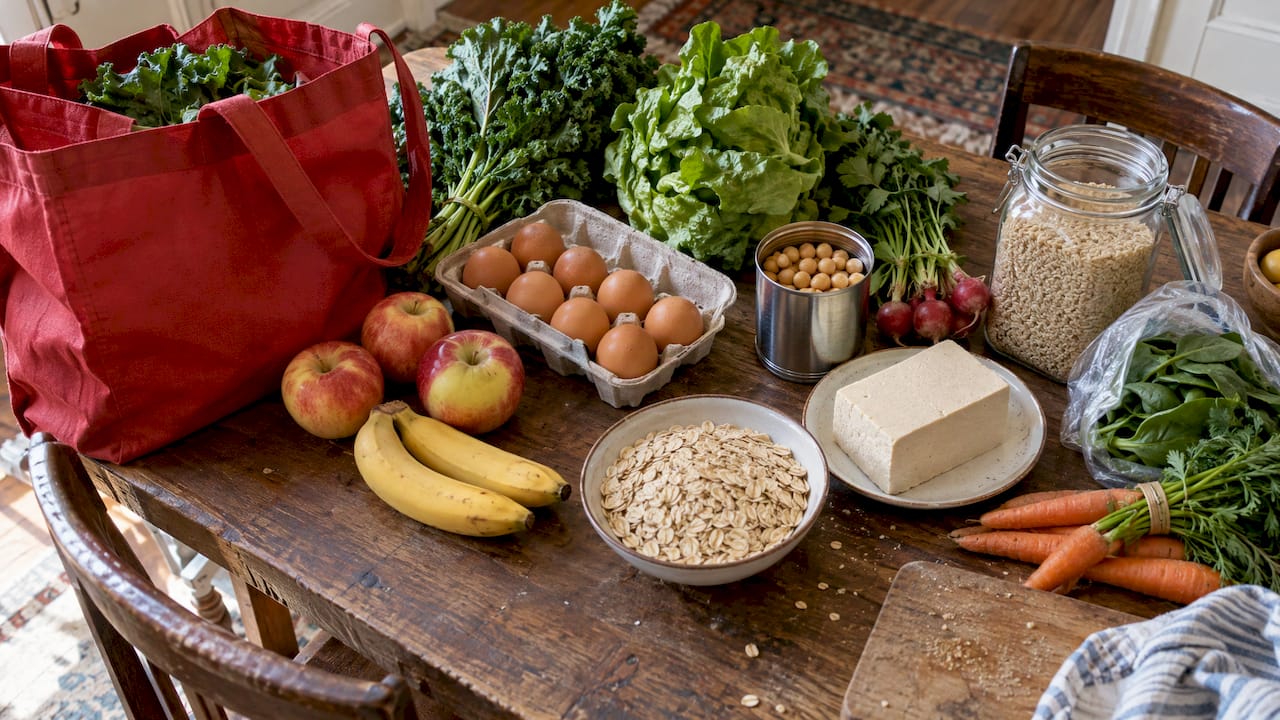
A good Trader Joe’s list isn’t a pile of trendy snacks. It’s a short set of staples you can mix into meals all week: beans and lentils, tofu, frozen vegetables, whole grains, a few ready-to-eat shortcuts. The harder part is turning those items into dinners you actually cook. That’s where we built Homecooked to help: it turns your goals and preferences into a plan, a shopping list and guided recipes with timers. Below is the list, the label checks that matter, and how to put it all to work.
TL;DR
- Build the cart around vegetables, beans, whole grains, lean protein and low- or nonfat dairy, then fill gaps with frozen and packaged shortcuts.
- Read three things on any packaged item: serving size, added sugar and sodium. “Organic” or “plant based” on the front doesn’t tell you the meal is balanced.
- Frozen entrées work best as a base. Add a vegetable or a protein when the box is mostly starch.
- Vegan and gluten-free picks exist in every aisle, but check the label on each product.
- A list only helps if it becomes meals. Plan five dinners before you shop, then buy for those.
Table of Contents
- How to think about a “healthy” Trader Joe’s list
- Proteins: beans, lentils, tofu and eggs
- Produce: fresh, bagged and frozen
- Whole grains and pantry staples
- Snacks that earn their place
- The three label checks that matter
- Vegetarian, vegan and gluten-free shoppers
- A sample list by meal
- Turning the list into dinners
- Where Homecooked fits
- Our perspective
- FAQ
- Sources
How to think about a “healthy” Trader Joe’s list
There’s no single official definition of “clean eating,” and you don’t need one. A practical version is the pattern a Clean Plates guide to Trader Joe’s lays out: fruits and vegetables, nuts, beans, seeds, whole grains, lean proteins and low- or nonfat dairy. Everything below fits that pattern.
The store’s appeal for home cooks is that many staples come cooked, washed or frozen. That saves time on weeknights, and saved time is what keeps most people cooking instead of ordering out.
A balanced plate is simple to describe. Clean Plates’ dietitian guidance on frozen meals suggests a main meal built from protein, vegetables or other carbohydrates, and some healthy fat. Keep that in mind as you read the list: each category exists to fill one part of the plate.
Proteins: beans, lentils, tofu and eggs
Protein is where a Trader Joe’s list can quietly go wrong, because the convenient options are often processed. These are the plain, flexible ones.
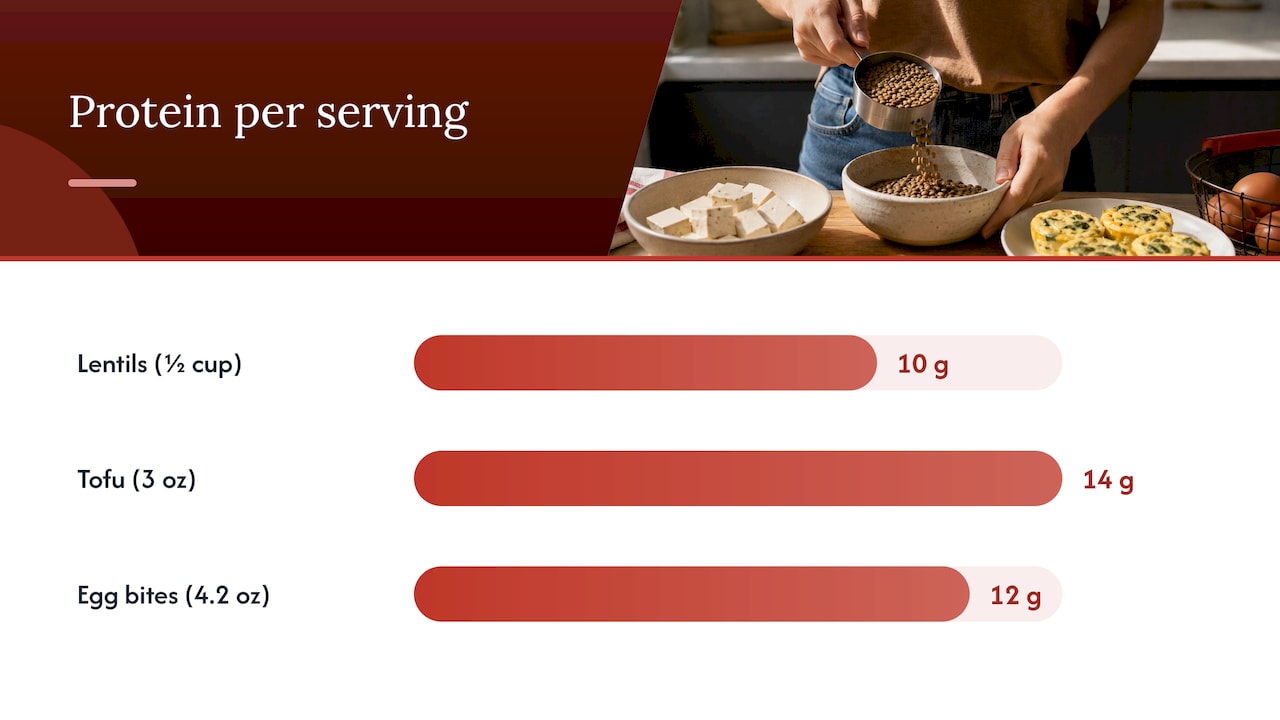
Steamed lentils. These are precooked, so they go straight into salads, tacos, stuffed peppers or chili. Health reports that a half-cup serving has 10 grams of protein and more than 20% of the Daily Value for fiber. The Daily Value is the benchmark percentage printed on every nutrition label.
High Protein Organic Tofu. According to the same Health guide, a 3-ounce serving has 14 grams of protein, 15% of the Daily Value for iron and 3 grams of total carbohydrate. It crisps well in a hot pan or the oven.
Organic Silken Tofu. It is listed at $2.49 for 16 ounces and made from water, organic soybeans, calcium sulfate and magnesium chloride. Trader Joe’s suggests it for spicy soups. Blend it into sauces and smoothies as well.
Canned garbanzo beans. A dietitian’s picks in Business Insider point to chickpeas for salads, grain bowls, soups, air-fried snacks and sauces. They’re also the base of several recipes we like: crispy roasted chickpeas, a chickpea, lemon and herb salad and a chickpea and tuna lunch salad.
Egg white bites. Trader Joe’s lists Harvest Vegetable Hash Egg White Bites at $3.79 for 4.2 ounces, made with egg whites, cottage cheese, cheese and vegetables. The package lists 140 calories and 12 grams of protein. Good for a fast breakfast.
Tofu is mild on its own, so seasoning decides whether you enjoy it. A guide to the best spices for tofu covers blends and ratios if you’re stuck in a plain-and-bland rut.
Produce: fresh, bagged and frozen
Produce is the cheapest way to raise the quality of every meal. Clean Plates names broccoli slaw, cruciferous crunch, jicama wraps, cauliflower slims, unsweetened freeze-dried fruit and unsweetened mango among its produce picks.
Two practical additions:
- Ready Veggies. Listed at $2.99 for 12 ounces, the bag holds broccoli florets and stalks, Brussels sprouts, red cabbage, kale, carrots and snow peas. Stir-fry it, roast it or add it to a frozen entrée.
- Frozen vegetables and fruit. They keep for months, which cuts waste. Keep a few bags on hand as your “add a vegetable” fix.
Prices on Trader Joe’s product pages can change and vary by store, so treat any number here as a snapshot and check the page or your store.
Whole grains and pantry staples
The Clean Plates list names farro, quinoa, oats and whole-grain breads as base options. Grains are the part of the plate that makes a meal filling, so stock two or three.
Gluten Free Organic Rolled Oats with Ancient Grains & Seeds. Trader Joe’s lists it at $4.99 for 24 ounces. It contains organic oats, amaranth, quinoa, chia and flax. A 45-gram serving has 180 calories, 5 grams of fiber, 8 grams of protein and no added sugar.
Frozen rice medley. The Business Insider dietitian notes it can be microwaved in its pouch for three minutes, then paired with curries, stir-fries or roasted vegetables. That’s a three-minute base for a dinner.
Cauliflower gnocchi. The product page lists a 12-ounce bag at $3.49, made in Italy with about 75% cauliflower, cassava flour, potato starch, extra-virgin olive oil and sea salt. It’s a quick pan-crisped side or base.
Organic virgin coconut oil. Listed at $4.99 for 16 fluid ounces, it’s cold-pressed and filtered without solvents or additives, and suited to cooking and baking.
Snacks that earn their place
Snacks are where marketing gets loudest. A dietitian snack guide republished by Yahoo says to judge packaged snacks by whole-food ingredients and reasonable added sugar and sodium, and to inspect ingredients rather than trust health-sounding claims.
Simple, dependable options:
- Hummus with mini cucumbers. Business Insider’s dietitian calls it a no-prep snack, and hummus also works as a spread, dip or dressing. If you’d rather make it, try our classic hummus or edamame hummus.
- Unsweetened dried or freeze-dried fruit. Sweet without added sugar.
- Roasted chickpeas. Make a batch at home from canned garbanzos.
- Nuts and seeds. Keep portions in mind, since they’re calorie-dense.
The three label checks that matter
You don’t need a nutrition degree. For any packaged item, check:
- Serving size. The numbers on the front of the label are per serving, and a box may hold more than one.
- Added sugar. It’s listed separately from total sugar. Oats with no added sugar, like the one above, are a good benchmark for what “none” looks like.
- Sodium. Clean Plates’ frozen-meal guide advises watching it, and notes that a higher-sodium meal can be balanced by choosing lower-sodium foods the rest of the day.
The same guide makes a point worth remembering: claims like “organic” or “plant based” alone don’t establish nutritional quality. The ingredient list and the balance of the meal do.
Vegetarian, vegan and gluten-free shoppers
USC’s WorkWell Center Trader Joe’s guide says its packaged meal and snack selections include vegan and/or gluten-free options in each section. That means you can usually stay within your preferences without leaving the store’s regular aisles.
Still read the label on each product. Recipes and suppliers change, and a gluten-free oat is only gluten-free if the package says so. If you have celiac disease or an allergy, confirm ingredients on the package, and ask your doctor or registered dietitian about your specific needs.
For a plant-forward template, USC’s EatWell recipe guide offers a vegan grain bowl made from frozen grains, edamame, mushrooms and greens, with optional tofu or chicken for extra protein. Its recipes generally aim for about five ingredients plus seasonings, with room to substitute.
A sample list by meal
| Meal | What to buy | Quick way to use it |
|---|---|---|
| Breakfast | Rolled oats with ancient grains, egg white bites, unsweetened frozen fruit | Oats with fruit, or bites with a piece of fruit |
| Lunch | Steamed lentils, canned garbanzo beans, bagged greens, mini cucumbers | Lentil salad or a chickpea bowl |
| Dinner | Ready Veggies, frozen rice medley, tofu, cauliflower gnocchi | Stir-fry over rice, or crisped gnocchi with vegetables |
| Snacks | Hummus, cucumbers, unsweetened mango, nuts | Dip and crunch, or fruit and a handful of nuts |
Treat this as a starting point. Swap anything that doesn’t fit your goals or your allergies.
Turning the list into dinners
A list of staples is the easy part. The failure point is Wednesday at 6 p.m., when you have a bag of lentils, half a bag of vegetables and no plan. Three habits prevent that.
Plan five dinners, not seven. Leave room for leftovers and one flexible night.
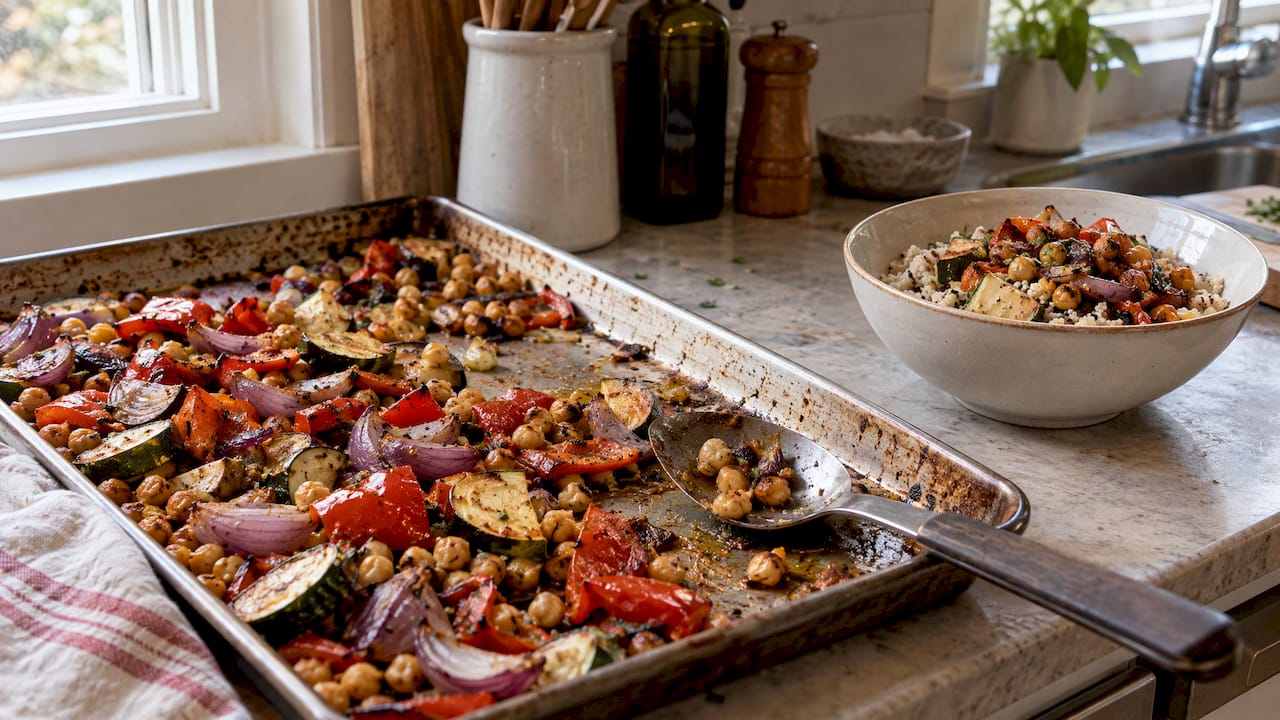
Cook one base, use it twice. A pot of grains or a tray of roasted vegetables carries two meals. Our roasted Mediterranean vegetables with chickpeas works as dinner one and a grain-bowl topper the next day.
Fix the frozen entrée. Following the Clean Plates advice, if a frozen meal is mostly starch, add a handful of vegetables or a lean protein. Ready Veggies or a scoop of lentils does the job.
If you want a ready-made week, see our Trader Joe’s meal plan with easy, healthy dinners. For a comparable big-box approach, our Costco healthy grocery list and weight loss grocery list follow the same logic.
Where Homecooked fits
We built Homecooked for exactly this gap between a list and dinner. The app makes personalized meal plans based on your health goals and dietary preferences, then builds an automated shopping list from them. It also tracks your pantry, so you plan around what you already have. When you cook, step-by-step guided recipes include integrated timers, and an AI cooking assistant is there if you get stuck. You can also track your progress along the way.
Try it on your next Trader Joe’s run: set your goals, let it draft the week, and shop from the list it produces. Homecooked offers a free trial, and Homecooked Pro is the paid subscription. Start at homecooked.fun.
Our perspective
Most healthy grocery lists fail at the same point: they tell you what to buy and stop. A cart of lentils, tofu and frozen vegetables is a good cart, but ingredients aren’t meals.
That’s why we think about shopping as the middle of the process, not the start. A plan comes first, shaped by your health goals and by what you like to eat, because a plan you enjoy is one you follow. The shopping list comes from the plan. Your pantry then keeps you from buying what you already own.
Cooking is the last piece. Guided steps with live timers make it easier to get several things done at once, so a weeknight dinner doesn’t feel like a project. Our approach is pantry-first and built around both health and flavor, and the Trader Joe’s staples in this list are a natural fit for it.
0xmaglev
FAQ
What are the best healthy items at Trader Joe’s?
Start with staples that cover the plate: steamed lentils, canned garbanzo beans, tofu, frozen vegetables, a frozen rice medley and rolled oats. Dietitian roundups from Health and Business Insider keep returning to lentils, tofu and chickpeas because they’re versatile and high in protein or fiber.
Is there a Trader Joe’s clean eating list?
There’s no single definition of clean eating, so build your own from whole-food ingredients, short ingredient lists and a balanced plate. Use the produce, beans, grains and lean proteins above. Check the label for added sugar and sodium rather than relying on front-of-package claims.
Are Trader Joe’s frozen meals healthy?
Some can be a solid base. Check serving size, added sugar and sodium, then add vegetables or protein if the entrée lacks them. Treat the box as one part of the meal, not the whole of it.
How do I plan meals from a Trader Joe’s list?
Pick five dinners first, then list only the ingredients they need. Reuse one base, such as grains or roasted vegetables, in two meals. Homecooked can build the plan and the shopping list from your goals and preferences.
Sources
- The Healthy Trader Joe’s Shopping List, Clean Plates
- Trader Joe’s Frozen Meals, Clean Plates
- 9 Healthy Trader Joe’s Foods To Buy, Health
- What I Buy at Trader Joe’s for Easy Meals, Business Insider
- The 20 healthiest snacks at Trader Joe’s, Yahoo
- Organic Silken Tofu, Trader Joe’s
- Harvest Vegetable Hash Egg White Bites, Trader Joe’s
- Ready Veggies, Trader Joe’s
- Gluten Free Organic Rolled Oats with Ancient Grains & Seeds, Trader Joe’s
- Cauliflower Gnocchi, Trader Joe’s
- Organic Virgin Coconut Oil, Trader Joe’s
- Trader Joe’s Healthy Meals and Groceries Guide, USC WorkWell
- EatWell Recipes Using Trader Joe’s Ingredients, USC WorkWell