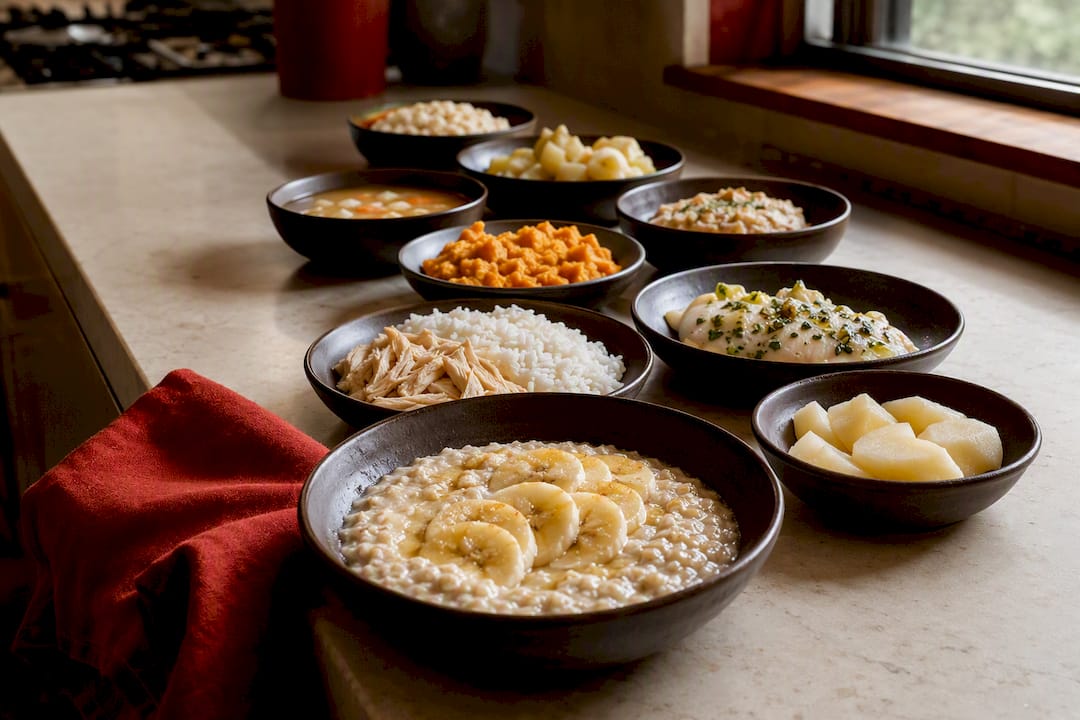
A practical, evidence-informed ulcerative colitis meal plan is below, built around the priorities NIDDK and the IBD Food Pyramid recommend rather than a rigid list of forbidden foods. Follow the day-by-day menus, use the swap notes when symptoms flare, and track what actually works for your gut. If you want the plan personalized without the trial-and-error, Homecooked can build one around your triggers automatically.
TL;DR:
- During flare-ups, switch to low-residue, soft foods, and reduce fats and lactose to minimize gut irritation and symptom severity.
- Reintroduce foods gradually after a flare, carefully monitoring tolerance, especially for previously well-tolerated items, with 48 to 72 hours between new additions.
- Track food intake and symptoms daily to identify personal triggers, as individual responses vary markedly and generic plans are ineffective.
- Maintain a pantry with low-additive staples like canned pumpkin, plain oats, and white rice, and batch prepare easy, gut-friendly meals to reduce decision fatigue.
- During active disease, prioritize high-calorie liquids such as broths and smoothies to ensure nutrition when solid foods cause discomfort.
Table of Contents
- UC Nutrition Basics: What to Prioritize in Remission vs Flare
- Before You Start: Safety Checks, Staging Foods, and Portioning
- Your 7-Day Ulcerative Colitis Meal Plan, Day by Day
- Flare-Friendly Modifications and Emergency Meals
- Grocery List and Weekend Prep Plan
- Nutrient Gaps to Watch and When to Test for Them
- Why Personalization Beats a One-Size-Fits-All Plan
- A Real Week: Applying the Plan Day to Day
- Start Your Personalized UC Meal Plan Today
- Sources
UC Nutrition Basics: What to Prioritize in Remission vs Flare
There’s no single “ulcerative colitis diet” that works for everyone with UC. Clinical guidance from the National Institute of Diabetes and Digestive and Kidney Diseases is blunt about this: management has to be individualized, and figuring out your own triggers through tracking beats blanket restriction every time. That’s frustrating if you want a simple rulebook, but it’s also good news. It means you’re not stuck avoiding entire food groups forever just because a blog post said so.
What does hold up across most guidance is a preference for nutrient-dense, home-cooked meals over packaged convenience food. Harvard Health points to a Mediterranean-style pattern as a reasonable baseline, with a specific caution: minimize preservatives and emulsifiers like carrageenan, carboxymethylcellulose, and polysorbate-80, which some research links to worse gut inflammation. That’s one of the strongest arguments for cooking at home more often. You control exactly what goes into the pot.
The remission-versus-flare split matters more than any single ingredient list.
- In remission: widen your variety. Add legumes, whole grains, raw vegetables, and fatty fish like salmon back in gradually.
- In a flare: shift toward low-residue, softer-textured foods, and dial back fat and lactose if you notice they trigger symptoms.
- Always: favor whole, minimally processed ingredients over shelf-stable packaged foods.
A food diary is the single most useful tool you’re probably not using yet. Track what you eat, when, and how you feel over the next two to four weeks, and patterns start to surface that no generic meal plan could predict for you.
Pro Tip: Log your meals and symptoms on your phone right after eating, not at the end of the day. Same-day recall is far more accurate than trying to reconstruct three meals from memory at 9 p.m.
One data point worth sitting with: dietary reviews on inflammatory bowel disease consistently identify reduced processed-food exposure and texture modification, not elimination diets, as the practical levers that actually reduce symptom burden during flares.
Before You Start: Safety Checks, Staging Foods, and Portioning
Before you touch a grocery list, run through a quick safety check. Unintentional weight loss, blood in your stool that isn’t resolving, fever, or a sudden spike in urgency and pain aren’t things to diet your way through. Call your clinician or a registered dietitian first. A meal plan is a tool for managing a chronic condition day to day, not a substitute for medical care when something’s actively wrong.
Once you’re cleared to experiment, stage new foods deliberately instead of throwing your whole diet open at once:
- Introduce one new food at a time, in a small portion.
- Wait 48 to 72 hours before adding another new item, so you can actually pin the cause if something reacts.
- Write down what you ate, how much, and any symptoms that followed.
- If a food causes no issues after two or three exposures, treat it as tolerated for now.
- Reintroduce cautiously after any flare. What you tolerated in remission may need a break during active symptoms.
On portioning: many people with UC do better on smaller, more frequent meals spread through the day rather than fewer large ones. Smaller volumes put less mechanical and digestive load on your gut at once, and Healthline’s practical meal-planning guidance backs this same frequent, smaller-meal approach, particularly if you’re recovering from weight loss during a flare.
Stock your pantry with a few low-additive staples before the week starts: canned pumpkin, plain oats, low-fat Greek yogurt, canned wild salmon, white rice, and a good instant-read thermometer for soft-cooking proteins. Half the battle with any diet for ulcerative colitis is not scrambling for options at 6 p.m. on a bad-symptom day.
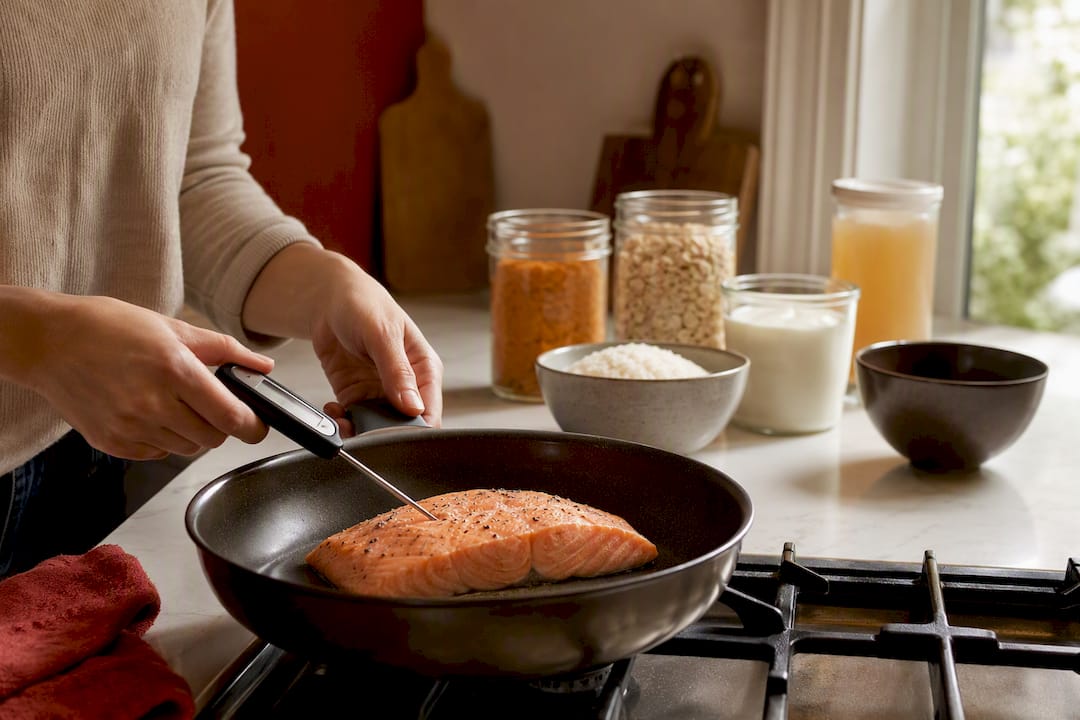
Pro Tip: Keep a “flare shelf” stocked separately: white rice, canned soup, applesauce, and broth. You shouldn’t have to think hard about food choices on your worst days.
Your 7-Day Ulcerative Colitis Meal Plan, Day by Day
This week follows the IBD Food Pyramid’s priorities: plenty of fruits and vegetables, resistant starches and legumes as tolerated, homemade meals, varied protein sources, and healthy fats. Each day includes a remission-first version and a flare-friendly swap, so you’re not starting over if symptoms shift mid-week.
Day 1 Breakfast is a soft oatmeal bowl made with rolled oats, mashed ripe banana, and a spoonful of smooth almond butter. Lunch is a protein bowl built on cottage cheese, soft-cooked quinoa, and roasted zucchini. Dinner is baked cod with mashed sweet potato and steamed, peeled carrots. Snack on a ripe pear or a smoothie with peeled cucumber and spinach. Flare swap: skip the almond butter, use white rice instead of quinoa, and puree the carrots.
Day 2 Start with scrambled eggs and white toast. Lunch is a make-ahead turkey and rice soup, thinned with extra broth if your gut is sensitive. Dinner is grilled chicken thigh with roasted, peeled butternut squash and well-cooked green beans. Snack on a ripe banana or plain low-fat yogurt. Flare swap: remove the toast crust, and blend the soup smooth.
Day 3 Breakfast is a smooth banana and oat smoothie. For lunch, lean on gut-friendly recipes built around white rice, shredded chicken, and steamed carrots. Dinner is baked salmon (remission-first, for the omega-3 fats) with mashed potato and peeled, cooked zucchini. Snack on applesauce or a rice cake with a thin layer of nut butter. Flare swap: swap salmon for a milder white fish like tilapia if fattier fish feels heavy.
Day 4 Breakfast is soft polenta with a drizzle of honey. Lunch is a bibimbap-style rice bowl, built loosely on Homecooked’s bibimbap recipe, using well-cooked vegetables and thinly sliced beef instead of raw or pickled toppings. Dinner is turkey meatballs in a mild tomato sauce over white pasta. Snack on a peeled, ripe peach. Flare swap: drop the sesame oil and any spicy gochujang, and steam the vegetables until very soft.
Day 5 Breakfast is a soft scramble with spinach and a slice of sourdough toast. Lunch is one of the make-ahead options from Homecooked’s lunch meal prep guide, adapted with peeled vegetables and skinless chicken. Dinner is baked tilapia with white rice and pureed carrot soup. Snack on a small portion of low-fat cottage cheese with canned peaches. Flare swap: use plain white rice instead of any seeded grain bread.
Day 6 Breakfast is oatmeal cooked with lactose-free milk and cinnamon. Lunch is a leftover-friendly turkey and rice bowl. Dinner leans into resistant starch: cook white rice or potatoes the night before, refrigerate, and reheat before serving. Cooling and reheating starches this way creates resistant starch that feeds beneficial gut bacteria in people who tolerate fermentable fiber well, though it’s one to introduce carefully during remission, not mid-flare. Snack on a ripe banana. Flare swap: skip the cooled-starch approach during an active flare and serve the rice fresh and soft instead.
Day 7 Breakfast is a soft baked apple, made using peeled apples for easier digestion, similar to the prep used in Homecooked’s apple pie recipe, minus the crust. Lunch is a simple chicken and rice soup. Dinner is a sheet-pan meal of baked chicken breast, mashed potato, and well-cooked, peeled green beans. Snack on plain yogurt with a spoonful of honey.
| Day | Remission-first swap | Flare-friendly swap |
|---|---|---|
| 1 | Quinoa, almond butter | White rice, no nut butter, pureed carrots |
| 2 | Whole soup with vegetable chunks | Blended smooth soup |
| 3 | Baked salmon | Baked tilapia or cod |
| 4 | Bibimbap with sesame oil, gochujang | Steamed vegetables, no oil or spice |
| 6 | Cooled and reheated rice (resistant starch) | Fresh, soft-cooked rice |
Cooling and reheating grains isn’t just a texture trick. It changes the starch structure enough to matter for gut bacteria, but that’s a remission-phase experiment, not a flare-week strategy.
Flare-Friendly Modifications and Emergency Meals
When symptoms flare, the goal shifts from variety to digestibility. A handful of texture changes do most of the work: peel fruits and vegetables, remove seeds, puree soups and sauces until smooth, and overcook vegetables well past the “crisp-tender” point most recipes call for. Clinical guidance on IBD diet management consistently backs these modified-texture techniques as a way to keep eating well without triggering more irritation.
Category swaps you can make on the fly:
- Fruits: swap raw apples or berries for applesauce, ripe banana, or canned peaches in juice.
- Vegetables: swap raw salad or broccoli for peeled, well-cooked carrots, zucchini, or squash.
- Proteins: swap fatty cuts or fried preparations for baked chicken breast, white fish, or eggs.
- Grains: swap whole wheat or seeded bread for white rice, white bread, or plain pasta.
- Fats: swap fried food or heavy cream sauces for a small amount of olive oil or a thin broth-based sauce.
On the worst days, when even soft solid food feels like too much, high-calorie liquids can carry you through: bone broth, protein-fortified smoothies with peeled fruit, or a nutrition shake your dietitian has approved. These aren’t meant to replace meals long-term, just to bridge a rough 24 to 48 hours without losing ground nutritionally.
Pro Tip: Batch a smooth, low-fiber soup on a good day and freeze it in single-serving portions. Future-you, mid-flare, will not want to cook from scratch.
Know your red flags: rectal bleeding that worsens, fever, dehydration signs like dizziness or dark urine, or an inability to keep food or liquids down for more than a day. Those call for your clinician, not another recipe swap.
Grocery List and Weekend Prep Plan
Turning this into a low-effort week comes down to one grocery trip and roughly 90 minutes of prep on a Sunday.
Grocery list, organized by use:
- Proteins: eggs, chicken breast and thighs, ground turkey, cod, tilapia, salmon, canned wild salmon
- Produce: bananas, pears, peaches, apples, spinach, zucchini, carrots, butternut squash, green beans
- Grains and starches: rolled oats, white rice, white pasta, sourdough bread, polenta, potatoes
- Dairy and pantry staples: low-fat Greek yogurt, cottage cheese, lactose-free milk, smooth almond butter, olive oil, canned tomatoes, honey, broth
Weekend prep checklist:
- Cook a large batch of white rice; refrigerate half for resistant-starch dinners later in the week.
- Roast and peel a tray of carrots, zucchini, and squash to reheat as needed.
- Portion and season raw chicken and fish so weeknight cooking is just “cook, don’t prep.”
- Make one big pot of soup or sauce and freeze it in individual containers.
- Wash, peel, and portion fruit for grab-and-go snacks.
Ideas like these overlap closely with general holiday and weekday meal-prep strategies that busy home cooks already use, just filtered through a lower-fiber, lower-additive lens.
Store prepped food in shallow containers so it cools fast and reheats evenly; uneven reheating can leave cold spots in proteins, which matters more than usual when your gut is already sensitive. If manually building a shopping list and tracking what’s already in your fridge sounds like the part you’d skip, that’s exactly the friction Homecooked’s automated shopping list and pantry tracking are built to remove.
Nutrient Gaps to Watch and When to Test for Them
Ulcerative colitis, especially with a history of flares or bowel resection, raises the risk of a few specific deficiencies. Iron often runs low from chronic blood loss. Vitamin B12 and calcium can drop if the ileum is affected or if dairy has been restricted for a stretch. Vitamin D deficiency shows up often in IBD generally, partly from reduced sun exposure during flares and partly from the inflammation itself. Protein needs also climb during active disease, when your body is working harder to repair gut tissue.
Food-first fixes for each:
- Iron: lean red meat, eggs, and iron-fortified cereals, paired with vitamin C for absorption.
- B12: eggs, fish, and fortified nutritional yeast if dairy is limited.
- Vitamin D: fatty fish and fortified milk, alongside safe sun exposure.
- Calcium: lactose-free dairy or calcium-set tofu if dairy triggers symptoms.
- Protein: eggs, fish, poultry, and Greek yogurt spread across smaller, frequent meals.
Ask your clinician for a basic panel, iron studies, B12, vitamin D, and a complete blood count, especially after a flare or any period of restricted eating. Don’t start supplements on your own without checking for interactions, particularly iron, which can worsen GI discomfort at high doses. If you’ve been avoiding entire food groups for months, a registered dietitian can help you rebuild variety safely instead of guessing.
Why Personalization Beats a One-Size-Fits-All Plan
The 7-day plan above is a strong starting framework, but your triggers aren’t identical to anyone else’s. That’s where personalization stops being a nice extra and starts doing real work.
Homecooked builds meal plans around your specific goals and restrictions, not a generic template, and a few features map directly onto what this article just walked through:
- Anti-inflammatory and Low FODMAP templates you can start from instead of building a plan from scratch.
- Step-by-step recipes with built-in timers, useful when you’re soft-cooking vegetables past the usual doneness point.
- Automated shopping lists and pantry tracking, so the grocery list above updates itself as your plan changes.
- Progress tracking that works alongside a food diary, not instead of one.
None of that replaces a clinician or dietitian, especially if you’re managing complex restrictions or a recent flare. Think of Homecooked as the tool that removes the busywork so you can focus on the tracking and decisions that actually need your attention.
— 0xmaglev
A Real Week: Applying the Plan Day to Day
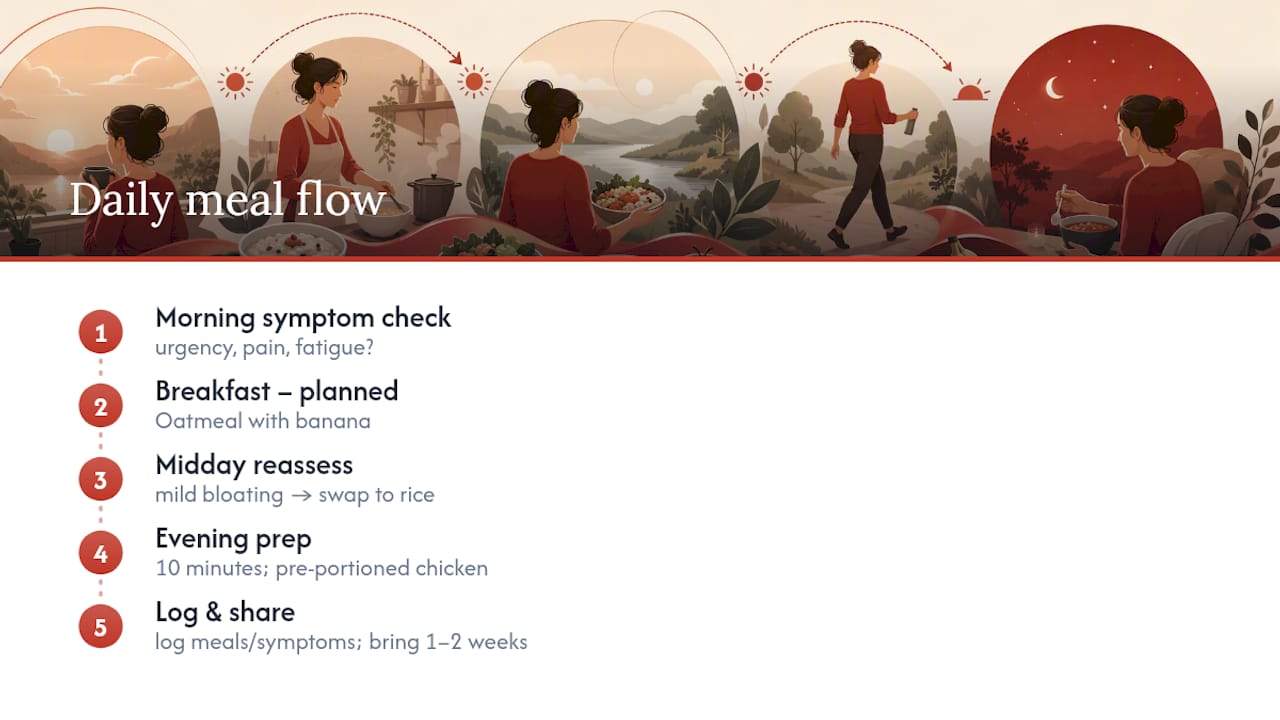
Here’s how one day might actually run. Morning starts with a quick symptom check: any urgency, pain, or fatigue before breakfast? Oatmeal with banana goes down easy, so lunch stays on plan. By midday, mild bloating pushes dinner toward the flare-friendly swap, softer rice instead of quinoa. Evening prep takes ten minutes since the chicken was portioned Sunday. Track symptoms, meals, and swaps in your food diary, then bring a week or two of notes to your next appointment. Patterns your clinician can act on beat guesswork every time.
Start Your Personalized UC Meal Plan Today
Reading a 7-day template is one thing. Living on it for weeks without it feeling stale or triggering a flare is another. That’s the gap Homecooked is built to close for people managing ulcerative colitis day to day, not with a rigid diet, but with a plan that adjusts as your tolerance does.
Getting started takes a few minutes. Sign up, tell Homecooked your health goals and any foods you’re currently avoiding, and choose an anti-inflammatory or Low FODMAP template as your baseline instead of starting from a blank plan. From there, you can adjust meals in real time as your symptom tracking reveals new patterns, the same way the food diary approach in this guide works, just automated.
Want to see it in action before committing to a full week? Add the cottage cheese protein bowl recipe to a plan. It’s gentle, high in protein, and easy to adapt for a flare or remission day, and Homecooked will generate the shopping list for it automatically. That one small step is usually enough to show whether the app fits how you actually cook.
Sources
- Eating, Diet, & Nutrition for Ulcerative Colitis - NIDDK
- Dietary changes to help reduce ulcerative colitis symptoms - Harvard Health
- PMC article on dietary management in IBD
- 7-Day Meal Plan for Ulcerative Colitis · The Crohn’s & Colitis Dietitians