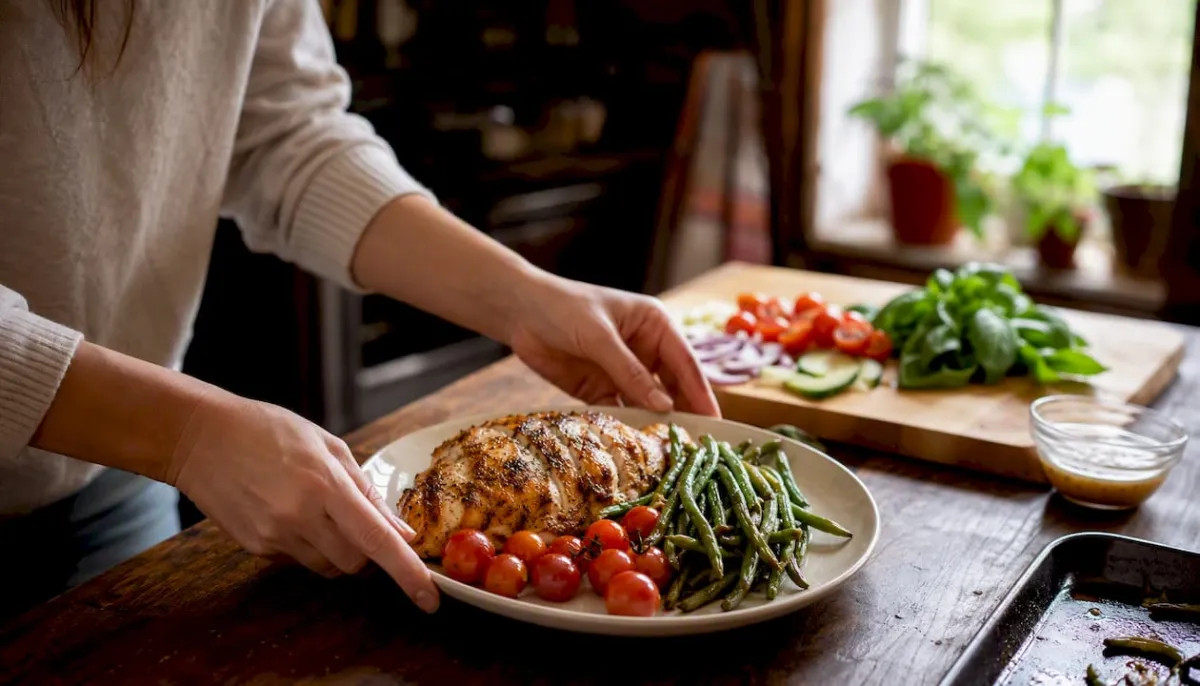
Whole30 meal planning comes down to one formula: protein + vegetables + healthy fat at every meal, a handful of emergency snacks, and a working 3–7 day menu you can shop from before Day 1. The official Whole30 plate template keeps it that simple. Here is a sample day you can copy right now:
Breakfast: scrambled eggs with sautéed spinach and avocado | Lunch: leftover sheet-pan chicken thighs over roasted sweet potato | Dinner: ground beef stir-fry with broccoli in coconut aminos | Snack: hard-boiled egg + a handful of olives
To get started in under 30 minutes, work through this checklist:
- Pick a planning style (calendar, template, or app-based)
- Build a 3–7 day menu, filling dinners first, then lunches and breakfasts
- Buy your pantry staples (ghee, coconut aminos, canned fish, compliant broth)
- Prep one batch-cook item before Day 1 (a tray of roasted vegetables or a pot of pulled chicken)
That is genuinely all you need to begin. Everything below makes it faster, cheaper, and easier to sustain for 30 days.
Key Takeaways
Whole30 meal planning succeeds when you combine a simple plate formula, a copied 7-day template, a stocked pantry, and one batch-cook session before the week begins.
| Point | Details |
|---|---|
| Use the plate formula | Build every meal around protein + vegetables + healthy fat; add fruit optionally. |
| Copy the 7-day template | Fill dinners first, double portions for lunch, and rotate sauces to avoid boredom. |
| Stock pantry staples | Ghee, coconut aminos, full-fat coconut milk, and canned fish cover most recipes. |
| Batch-cook on prep day | Two to three hours on Sunday reduces weeknight cooking to 15 minutes or less. |
| Automate with Homecooked | The app generates a personalized plan, shopping list, and step-by-step cook guidance. |
Table of Contents
- What meal-planning style works best for your Whole30?
- A simple plate template and a copyable 7-day Whole30 meal plan
- What should you buy for a Whole30 shopping list?
- How to build a Whole30 meal-prep schedule that keeps you compliant
- Three reusable Whole30 recipe blueprints to rotate all month
- How to adapt Whole30 for plant-based eaters and food allergies
- How to avoid and fix the most common Whole30 mistakes
- How Homecooked automates your Whole30 meal plan
- The part of Whole30 nobody talks about enough
- Homecooked builds your Whole30 plan so you don’t have to
- Sources
What meal-planning style works best for your Whole30?
Not every approach fits every schedule, and the one you will actually stick with beats the theoretically perfect one every time.
Calendar-based planning means sitting down once a week, opening your calendar, and filling in meals around your real commitments. You check which nights you have 45 minutes to cook versus 15, then assign recipes accordingly. This works well for families and anyone who cooks for more than two people, because you can plan a Sunday roast that feeds Tuesday lunch and Wednesday dinner. The weekly time cost is roughly 30–45 minutes of planning plus one longer prep session.
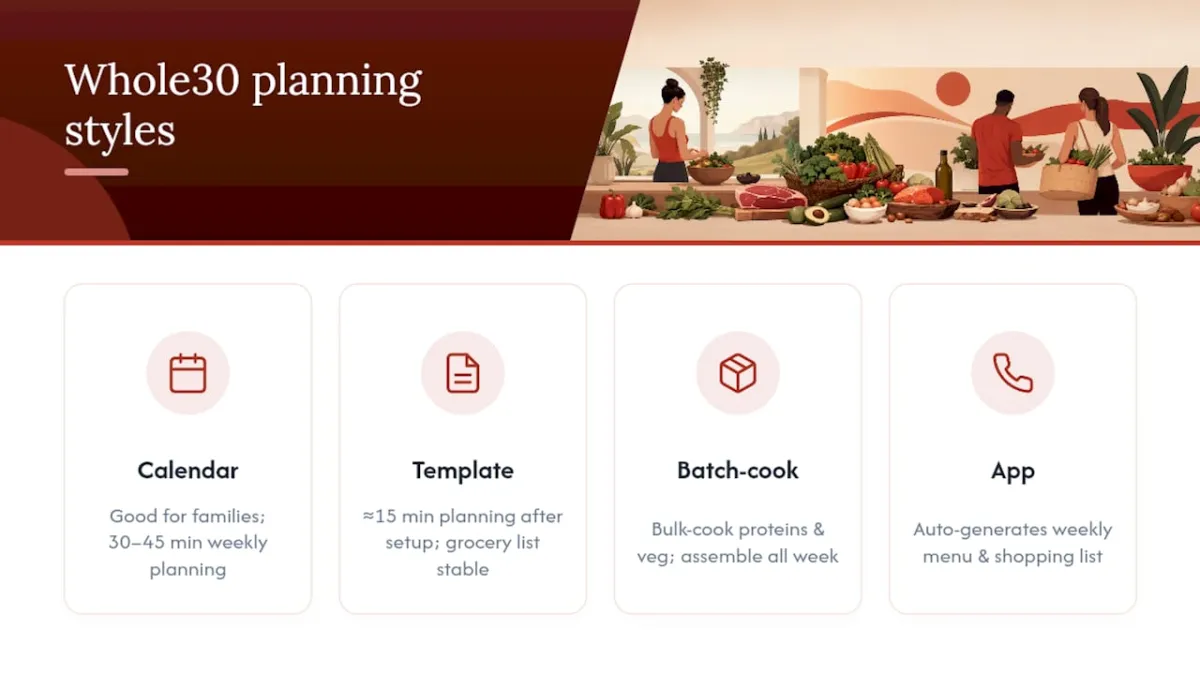
Template or blueprint planning skips the calendar and instead gives you a repeating structure: Monday is always a sheet-pan protein, Tuesday is always a skillet meal, Wednesday is always a slow-cooker dump. You rotate ingredients within the template rather than hunting for new recipes each week. Solo cooks and frequent travelers love this because the grocery list barely changes week to week. Planning time drops to roughly a quarter of an hour once the template is set.
Batch-cook and ingredient-meal planning is the most flexible approach. You cook proteins and vegetables in bulk without committing to specific recipes, then assemble plates based on what sounds good. Roast a whole chicken, cook a pound of ground beef, and steam two trays of vegetables on Sunday. The rest of the week is assembly, not cooking. The ingredient-meal mindset reduces waste and increases flexibility compared with rigid daily recipes.
App or automated planning hands the scheduling work to software. You enter your preferences, dietary needs, and schedule, and the app generates a weekly menu with a shopping list. This suits people who find blank-page planning stressful or who want to adapt Whole30 for a household with mixed dietary needs.
Delivery and emergency backstops are not a full planning style, but every plan needs one. Keep two or three compliant emergency options on hand (canned wild salmon, compliant jerky, a bag of plantain chips) for days when the plan falls apart.
Pro Tip: If you have fewer than 45 minutes to cook on most weeknights, the template or batch-cook approach will serve you better than calendar-based planning. Rigid daily recipes become a liability when your schedule shifts.
A simple plate template and a copyable 7-day Whole30 meal plan
The Whole30 plate formula
Every compliant meal follows the same structure: a palm-sized portion of protein, at least two types of vegetables filling most of the plate, and a thumb-sized serving of healthy fat. Fruit is optional and works best as a side rather than a centerpiece. Sauces and dressings add flavor but require label scrutiny — coconut aminos, ghee, and compliant olive oil are safe defaults. Watch for hidden sugar in curry pastes, hot sauces, and even spice blends.
Your 7-day Whole30 weekly menu
This plan is built around a practical 7-day dinner model that beginners can follow without burnout. Dinners are doubled so lunch the next day is already handled.
| Day | Breakfast | Lunch | Dinner | Snack |
|---|---|---|---|---|
| 1 | Scrambled eggs, spinach, avocado | Tuna salad lettuce wraps | Sheet-pan chicken thighs + roasted broccoli + sweet potato | Hard-boiled egg + olives |
| 2 | Sweet potato hash with ground beef | Leftover sheet-pan chicken | Beef and vegetable stir-fry with coconut aminos | Compliant jerky + apple |
| 3 | Egg muffins with peppers and onions | Leftover stir-fry | Slow-cooker pulled pork + roasted cabbage | Almond butter + celery |
| 4 | Banana + almond butter + hard-boiled eggs | Pulled pork lettuce cups | Salmon with asparagus and lemon ghee | Plantain chips + guacamole |
| 5 | Leftover egg muffins | Salmon and roasted veg bowl | Ground turkey taco bowl (no tortilla) | Handful of mixed nuts |
| 6 | Coconut milk chia pudding (no oats) | Turkey taco bowl leftovers | One-skillet sausage and peppers | Sliced cucumber + compliant ranch |
| 7 | Veggie scramble with ghee | Sausage and pepper hash | Whole roasted chicken + mashed cauliflower | Compliant deli turkey + avocado |
Swap options: For Day 1 chicken, substitute salmon fillets or pork tenderloin. For Day 3 pulled pork, use slow-cooker chicken thighs or beef chuck. For Day 5 turkey bowl, ground beef or shrimp work equally well. Every dinner here doubles cleanly into the next day’s lunch, which is the core time-saving mechanic.
What should you buy for a Whole30 shopping list?
Weekly grocery checklist
Organize your cart by department to move faster and avoid impulse buys.
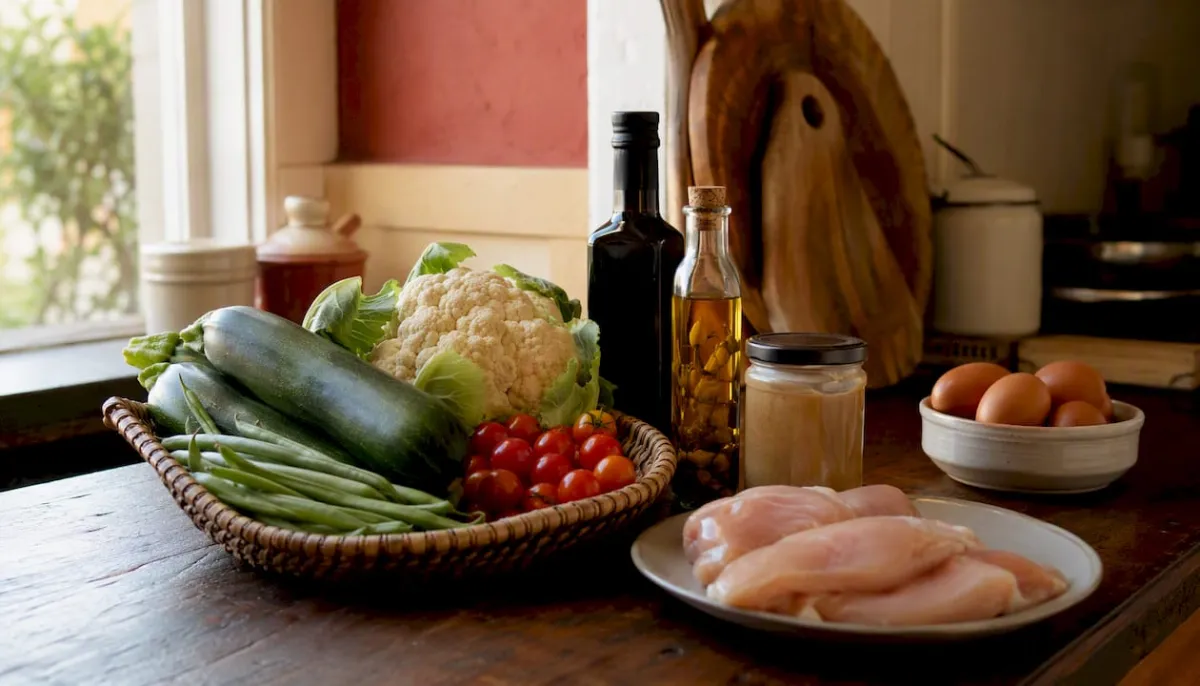
Produce: sweet potatoes, broccoli, cauliflower, spinach, kale, bell peppers, onions, garlic, cabbage, asparagus, zucchini, avocados, bananas, apples, lemons, limes, celery, cucumber
Protein: chicken thighs (bone-in or boneless), ground beef, ground turkey, salmon fillets, pork shoulder or tenderloin, compliant sausage (check labels), eggs (2 dozen minimum), canned wild-caught tuna or salmon
Canned and jarred: full-fat coconut milk, coconut aminos, compliant chicken or beef broth, diced tomatoes (no added sugar), olives, artichoke hearts, canned wild salmon
Fats and oils: ghee or clarified butter, extra-virgin olive oil, avocado oil, coconut oil, almond butter (no added sugar or oil), guacamole (check ingredients)
Herbs, spices, and condiments: compliant hot sauce (Cholula original is generally accepted, but verify), apple cider vinegar, balsamic vinegar, dried herbs (cumin, paprika, garlic powder, onion powder, Italian seasoning), sea salt, black pepper
Emergency items: compliant jerky, plantain chips, mixed nuts (no peanuts), compliant deli turkey, hard-boiled eggs (pre-cooked)
Pantry staples every Whole30 kitchen needs
Coconut aminos replace soy sauce in virtually every Asian-inspired dish. Full-fat canned coconut milk builds creamy sauces and curries without dairy. Ghee handles high-heat cooking better than most oils and adds a rich, buttery flavor. Canned wild-caught fish gives you a no-cook protein for emergency meals. Quality vinegars (apple cider, balsamic, red wine) form the base of most compliant dressings. Keep a compliant broth on hand for braising, soups, and deglazing pans.
Label-reading tips
Sugar hides under more than 60 names on ingredient labels. Watch for it in packaged bacon (most brands add sugar to the cure), spice blends (many contain maltodextrin or dextrose), hot sauces, and pre-made guacamole. The rule is simple: if any form of sugar, alcohol, grain, legume, or dairy appears in the ingredient list, the product is out.
Buying seasonal produce cuts costs without sacrificing compliance. Seasonal vegetables tend to be cheaper, more flavorful, and more nutritious than out-of-season imports. Budget-conscious shoppers can also buy proteins in bulk and freeze portions, and choose frozen vegetables over fresh when the price gap is significant — frozen vegetables with no added ingredients are fully compliant.
Pro Tip: Convert your 7-day menu into a smart grocery list by grouping every ingredient by department before you leave the house. You will cut your shopping time roughly in half and avoid the “did I already grab that?” loop.
How to build a Whole30 meal-prep schedule that keeps you compliant
Batch-cooking and repurposing leftovers are the habits that separate people who finish Whole30 from people who quit by Day 10. The goal is to spend two to three hours on one prep day so that weeknight cooking takes 15 minutes or less.
A recommended prep-day schedule
Hour 1: Season and roast two sheet pans of vegetables (sweet potatoes, broccoli, and cauliflower work well together). While those roast, hard-boil a dozen eggs and set them aside to cool.
Hour 2: Brown a pound of ground beef with onion and garlic. Season half as taco meat, leave the other half plain for egg scrambles. Simultaneously, start a slow-cooker pulled protein (chicken thighs or pork shoulder) so it cooks while you do other things.
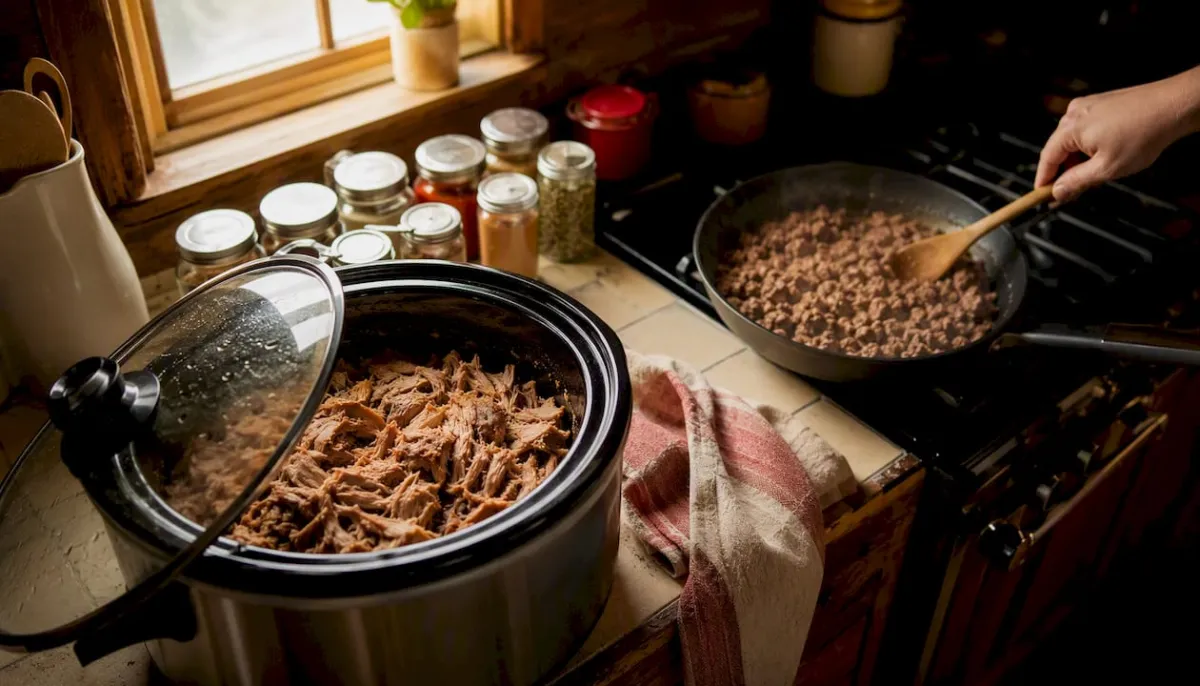
Hour 3: Make one large batch of a compliant sauce (a coconut aminos and ginger sauce, or a simple lemon-herb vinaigrette). Portion roasted vegetables and proteins into containers. Store sauces separately to prevent soggy leftovers and to keep flavor control in your hands.
Refrigerate anything you will eat within four days. Freeze the rest in labeled portions. Pulled proteins freeze exceptionally well and reheat in 10 minutes.
Batch-cook formats that work on Whole30
Sheet-pan dinners are the easiest format to scale. One pan feeds two people; two pans feed a family of four with leftovers. Toss protein and vegetables in avocado oil, season generously, and roast at 400°F for 25–35 minutes.
One-skillet meals (sausage and peppers, egg roll in a bowl, ground meat hash) come together in under 20 minutes and reheat without losing texture.
Slow-cooker pulled proteins require almost no active time. A pork shoulder with compliant broth and spices cooks for 8 hours on low and yields enough protein for four to five meals.
Roasted vegetable trays are the backbone of the ingredient-meal approach. Roast a variety on Sunday, and you have a side dish, a bowl base, or a hash ingredient ready all week.
For holiday or high-volume cooking periods, doubling every batch and using the freezer aggressively is the most reliable way to stay compliant when your schedule gets unpredictable.
Adjusting portions for activity level
Active individuals and those doing strength training typically need larger protein portions (6–8 oz per meal rather than 4–5 oz) and more starchy vegetables to support recovery. If you feel fatigued or hungry between meals, increase your fat serving first, then your protein. Whole30 does not require calorie counting, but listening to hunger signals and adjusting portion sizes accordingly is encouraged.
Three reusable Whole30 recipe blueprints to rotate all month
The blueprint approach treats every recipe as a formula: one protein + one cooking method + one sauce. Swap any element and you have a new meal without a new recipe.
Blueprint formula: protein (chicken, beef, salmon, pork) + cooking method (roast, sear, slow-cook, stir-fry) + sauce (coconut aminos-based, lemon-herb, tomato-based, or coconut milk curry)
Three example recipes
-
Sheet-pan chicken and sweet potato (prep: 10 minutes, cook: 30 minutes): Toss bone-in chicken thighs and cubed sweet potato in avocado oil, smoked paprika, garlic powder, and salt. Roast at 400°F. Batches well for four to six servings; leftovers hold for four days refrigerated.
-
One-skillet egg roll in a bowl (prep: 10 minutes, cook: 15 minutes): Brown ground pork or beef with shredded cabbage, carrots, garlic, and ginger. Finish with coconut aminos and a splash of rice vinegar. Doubles easily; reheats in two minutes. This is one of the highest-satisfaction weeknight meals in the Whole30 rotation.
-
Deconstructed Dumpling Bake (prep: 15 minutes, cook: 35 minutes): The Whole30 Deconstructed Viral Dumpling Bake layers ground pork, cabbage, and a coconut aminos-sesame sauce in a baking dish. It captures the comfort of dumplings without any wrapper, batches for six servings, and freezes well. Reheat individual portions from frozen in about 12 minutes.
Scaling for families versus solo cooks
For a family of four, double every recipe and plan for one batch-cook session per week. For solo cooks, a single batch of any recipe above yields three to four meals, which covers most of a workweek. Freeze anything beyond four days rather than letting it sit in the refrigerator.
How to adapt Whole30 for plant-based eaters and food allergies
Standard Whole30 excludes legumes, grains, dairy, and soy, which removes most plant-based protein sources. The official Plant-Based Whole30 variation reintroduces tofu, tempeh, and edamame to make the program accessible without legumes for everyone else.
| Standard Ingredient | Plant-Based Whole30 Swap | Nut-Free Swap | Egg-Free Breakfast Swap |
|---|---|---|---|
| Ground beef | Tempeh (crumbled) | Sunflower seed butter | Coconut milk chia pudding |
| Chicken thighs | Extra-firm tofu (baked) | Pumpkin seeds | Sweet potato hash (no egg) |
| Eggs (scrambled) | Silken tofu scramble | Omit nut-based sauces | Avocado + compliant turkey |
| Almond butter | Sunflower seed butter | Tahini (sesame paste) | Banana + compliant jerky |
| Ghee (dairy-free) | Coconut oil | Avocado oil | Avocado oil |
For vegan meal planning that overlaps with Whole30 principles, the key is building every meal around a complete protein source and a fat that keeps you satiated between meals.
If you have a diagnosed food allergy, celiac disease, or a complex medical condition, consult a registered dietitian before starting Whole30 or any elimination protocol. The program’s food restrictions can affect nutrient intake, particularly iron, calcium, and B vitamins, and a professional can help you plan around those gaps.
How to avoid and fix the most common Whole30 mistakes
Most Whole30 slip-ups are predictable. Here is what goes wrong and how to fix it fast.
- “I didn’t plan lunch” → Double your dinner every night and pack the second portion. This one habit, recommended by experienced Whole30 cooks, eliminates the midday scramble entirely.
- “The sauce had sugar in it” → Make your own sauces in bulk (coconut aminos + garlic + ginger takes four minutes) and store them in labeled jars. Never trust a restaurant sauce.
- “I had nothing to eat and grabbed something non-compliant” → Keep a dedicated emergency shelf: compliant jerky, canned salmon, plantain chips, and a jar of almond butter. This is your insurance policy.
- “I’m bored of the same meals” → Rotate your sauce, not your protein. The same chicken thigh tastes completely different under a lemon-herb vinaigrette versus a coconut milk curry.
- “I caved at a restaurant” → Call ahead when possible. Most restaurants will grill a protein plain and serve vegetables with olive oil on the side. At the table, ask for sauces and dressings on the side, request that butter be replaced with olive oil, and skip anything described as “glazed,” “marinated,” or “seasoned” without knowing the ingredients.
For travel days, planning your meals and snacks in advance is the single most reliable way to stay compliant when you are away from your kitchen.
Your 30-minute emergency compliant meal
Canned wild salmon + avocado + sliced cucumber + a drizzle of olive oil and lemon juice. No cooking required, fully compliant, and satisfying enough to hold you for three to four hours. Keep the ingredients on your emergency shelf at all times.
How Homecooked automates your Whole30 meal plan
Homecooked is a meal-planning app that handles the steps most people find tedious: choosing what to eat, building a shopping list, and tracking what is already in the pantry.
Here is how it works for a Whole30 round:
- Set your preferences. Enter your dietary restrictions (Whole30 compliant, no dairy, no grains, no legumes), household size, and weekly cooking time budget.
- Get a personalized plan. Homecooked generates a 7-day menu built around your preferences, with breakfast, lunch, and dinner mapped out.
- One-click shopping list. The app converts your plan into a grocery list organized by department, so you shop once and have everything you need.
- Cook with guidance. Step-by-step recipes with integrated timers walk you through each meal, which is useful when you are learning new techniques like rendering ghee or building a coconut milk sauce.
- Track progress. The app logs what you have cooked and what is left in your pantry, reducing waste and helping you plan the following week faster.
Homecooked Pro is the paid subscription tier. A free trial lets you test the personalized planning before committing. The app is available on iOS and via web.
The part of Whole30 nobody talks about enough
The planning tools matter, but the mindset underneath them matters more. Most people who struggle with Whole30 are not failing because they chose the wrong recipe. They are failing because they underestimated how much mental energy food decisions consume across 30 days.
The fix is not more willpower. It is fewer decisions. When your meals are already planned, your pantry is already stocked, and your emergency snacks are already in your bag, you are not relying on discipline in a hungry moment. You are relying on a system you built when you were calm and well-fed.
One habit that makes a measurable difference: spend 10 minutes every evening setting up tomorrow’s breakfast. Pull the eggs out of the refrigerator, set the pan on the stove, and portion your avocado. That small act of preparation removes the most vulnerable moment of the day, which is the rushed morning when you are most likely to grab something non-compliant.
Whole30 co-founder Melissa Urban frames this directly: “winging it” is the primary barrier to success. Planning is not a nice extra. It is the program.
Homecooked builds your Whole30 plan so you don’t have to
Putting together a compliant weekly menu, cross-checking every ingredient, and building a shopping list from scratch takes real time, especially in the first week when everything is new. Homecooked does that work for you.
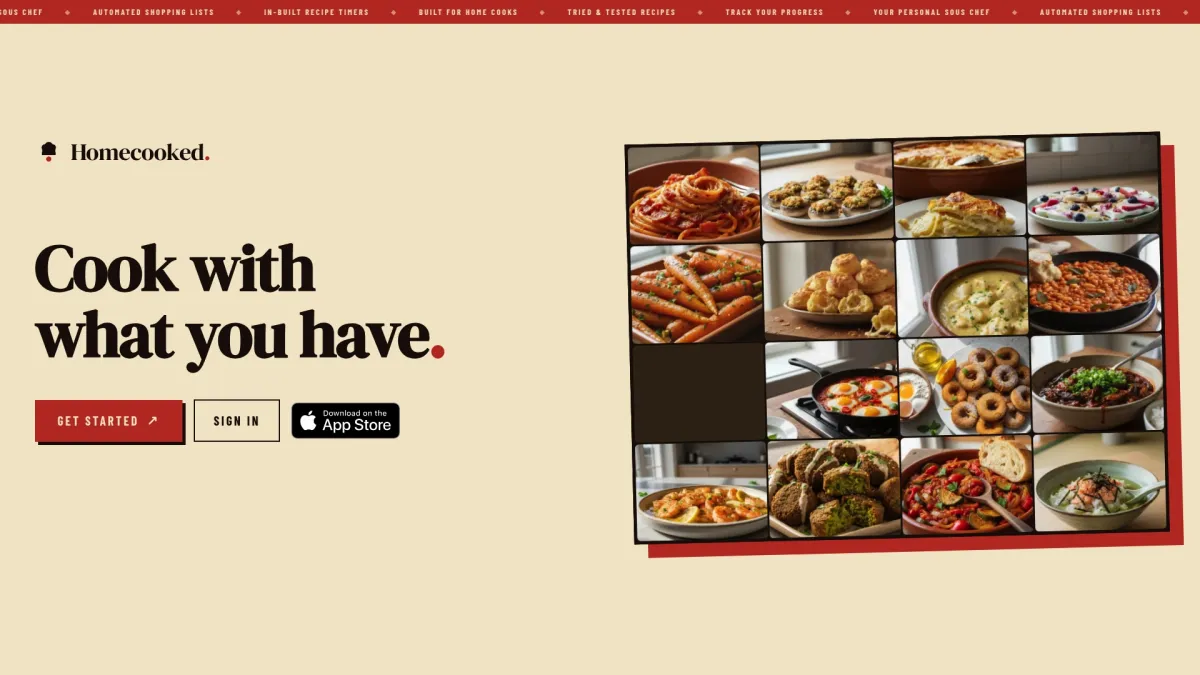
Enter your Whole30 preferences, and the app generates a full 7-day plan with a department-organized shopping list ready to use. Integrated timers and step-by-step guidance walk you through each recipe, so you are not guessing about cook times or sauce ratios. Pantry tracking means you always know what you have on hand, which cuts waste and speeds up week-two planning considerably. Start with a free trial of Homecooked Pro, and if it is not the right fit, you can cancel before you are charged. No long-term commitment required.
Sources
These are the most reliable resources for verifying Whole30 rules, finding compliant recipes, and building your first full-month plan.
- Meal Planning & Recipes - The Whole30® Program
- Whole30 Deconstructed Viral Dumpling Bake
- 30 Days of Whole30-Approved Meals - The Kitchn
- 7-Day Whole30 Diet Dinner Plan - EatingWell