
Start with this ready-to-use 7-day keto meal plan and automate it in minutes with Homecooked. You get a full week of meals, approximate daily macros, a consolidated grocery list, and swap options for allergies or preferences — all structured so you can follow it today or import it into Homecooked to auto-generate your shopping list and sync your pantry.
Here’s what this guide gives you:
- A copy-pasteable 7-day menu (breakfast, lunch, dinner, snack) with daily net-carb targets
- A grocery list grouped by category, derived directly from the plan
- Macro customization steps so the plan fits your calorie needs and activity level
- Meal-prep workflows and pantry systems to keep keto manageable week after week
- Safety notes and a dietitian supervision recommendation from Children’s Hospital of Philadelphia (CHOP) for anyone with medical conditions
Pro Tip: Before you cook a single meal, run through the grocery list below and check what you already have. Knowing your pantry gaps takes five minutes and saves two trips to the store.
Table of Contents
- What does a solid 7-day keto meal plan look like?
- What should you eat (and avoid) on keto?
- How do you calculate and customize your keto macros?
- Meal-prep workflows that make keto stick at home
- What to expect in the first weeks, and when to get help
- How Homecooked turns this template into your personal plan
- Key Takeaways
- Keto is more forgiving than most people think
- Your personalized keto plan is a few taps away
- Useful sources to go deeper
What does a solid 7-day keto meal plan look like?
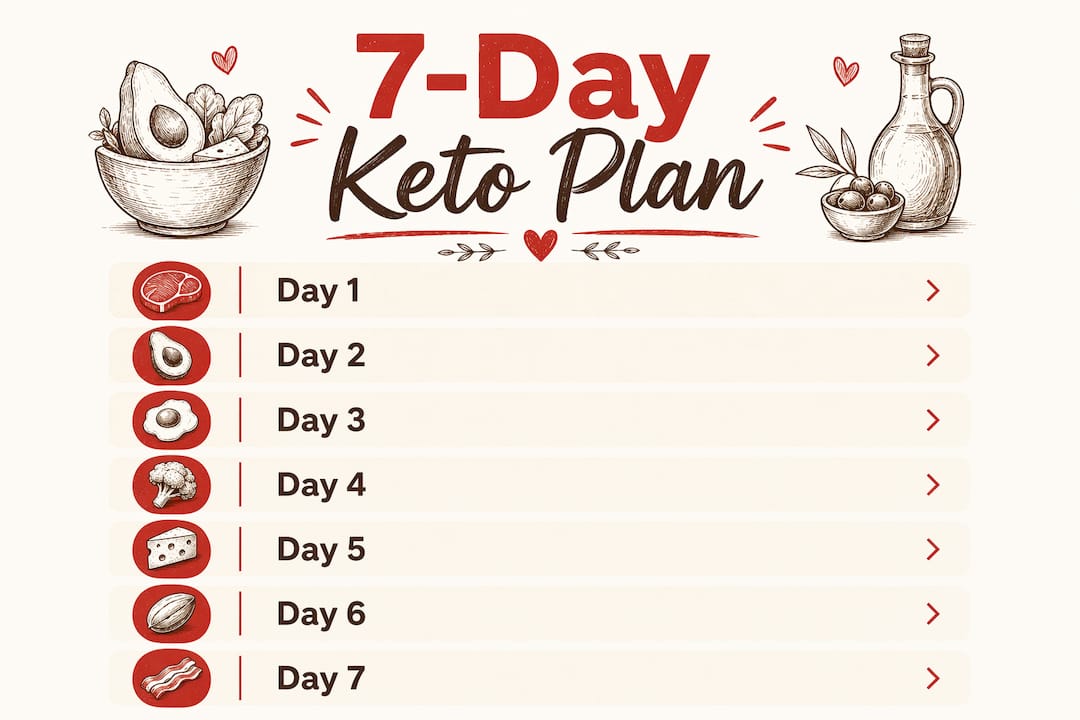
A structured 7-day plan removes daily decision-making, which is the single biggest reason people quit keto in week one. The template below uses a 1,900 kcal baseline with about 70% of calories from fat, 25% from protein, and 5% from net carbs daily, scaled to typical keto macronutrient ratios. Scale portions up or down to match your calorie target.

| Day | Breakfast | Lunch | Dinner | Snack | ~Net Carbs |
|---|---|---|---|---|---|
| Mon | Scrambled eggs + avocado + butter | Chicken lettuce wraps + mozzarella | Sheet-pan salmon + roasted broccoli | Celery + almond butter | 12.5 g |
| Tue | Bulletproof coffee + boiled eggs | Leftover salmon + mixed greens | Beef stir-fry + cauliflower rice | Macadamia nuts | 12.5 g |
| Wed | Spinach and cheese omelet | Tuna salad in avocado halves | Pork chops + sautéed zucchini | Cucumber slices + cream cheese | 12.5 g |
| Thu | Greek yogurt (full-fat) + flaxseeds | Grilled chicken + baby spinach salad | Ground beef taco bowls (no shell) | Hard-boiled egg | 12.5 g |
| Fri | Egg muffins with bacon + cheddar | Leftover taco bowl + shredded cabbage | Baked chicken thighs + asparagus | Olives + cheese | 12.5 g |
| Sat | Bacon + cherry tomatoes + avocado | Slow-cooker pulled pork + coleslaw | Shrimp + garlic butter + zucchini noodles | Handful of walnuts | 12.5 g |
| Sun | Smoked salmon + cream cheese + cucumber | Egg salad lettuce cups | Roasted chicken + Brussels sprouts | Pork rinds | 12.5 g |
Most days in this plan provide 12.5 g net carbs, well below the standard keto threshold to support ketosis.
Statistic to know: A practical 1,900 kcal keto baseline produces approximately 151 g fat, 128 g protein, and 12.5 g net carbs daily — a useful starting point before you personalize to your own calorie needs.
Grocery list (derived from the 7-day plan)
Proteins: salmon fillets, chicken thighs and breasts, ground beef, pork chops, pulled pork shoulder, shrimp, bacon, tuna (canned), smoked salmon, eggs
Produce: avocados, broccoli, zucchini, asparagus, Brussels sprouts, baby spinach, mixed greens, cherry tomatoes, cucumber, celery, cabbage, shredded coleslaw mix
Dairy and fats: butter, cream cheese, full-fat Greek yogurt, cheddar, mozzarella, heavy cream
Pantry staples: almond butter, macadamia nuts, walnuts, olives, flaxseeds, pork rinds, olive oil, garlic, sea salt, bone broth
Swap options: replace salmon with chicken thigh if needed; swap almond butter for sunflower seed butter for nut allergies; use coconut flour in place of almond flour for baking (use roughly 25% of the almond flour quantity — coconut flour absorbs far more liquid).
Once you have the plan, use Homecooked to build your grocery list automatically from the meals you select, mark pantry items you already own, and skip duplicate purchases.
What should you eat (and avoid) on keto?
The short answer: eat fat-forward whole foods, skip anything that spikes blood sugar fast. Here’s a practical reference you can tape to the fridge.
Stock these keto staples:
- Fatty fish (salmon, mackerel, herring), eggs, and poultry
- Avocados, olives, and coconut products for healthy fats
- Full-fat dairy: butter, cream cheese, hard cheeses, heavy cream
- Nuts and seeds: macadamia nuts, walnuts, almonds, chia seeds, flaxseeds
- Non-starchy vegetables: leafy greens, broccoli, cauliflower, zucchini, asparagus, peppers, mushrooms
- Healthy oils: olive oil, avocado oil, coconut oil
Limit or avoid:
- Grains and bread (even whole grain), rice, pasta, oats
- High-sugar fruits: bananas, grapes, mangoes, pineapple
- Starchy root vegetables: potatoes, sweet potatoes, parsnips, beets
- Sugar-sweetened beverages, fruit juice, and most commercial sauces
Quick swaps that actually work:
- Cauliflower rice for white rice — same texture, a fraction of the carbs
- Zucchini noodles (“zoodles”) for pasta, especially with cream-based sauces
- Almond or coconut flour for wheat flour in baking — both are keto-friendly, though energy-dense, so portion them carefully
For a deeper pantry checklist, the Homecooked keto food list covers what to eat and avoid with portion guidance.
How do you calculate and customize your keto macros?
Use the 70% fat / 25% protein / 5% net carbs split as your starting point, then adjust calories and protein to match your body weight and goals — not the other way around.
- Estimate your daily calorie target. Use your body weight, height, age, and activity level to find your maintenance calories, then subtract 300–500 kcal for fat loss or add 200–300 kcal for muscle gain.
- Set your net-carb ceiling first. Standard keto targets fewer than 20–25 g net carbs per day. Start at 20 g if you want faster ketosis; ease up to 25 g if you feel fatigued.
- Calculate protein in grams. Aim for 0.7–1.0 g of protein per pound of lean body mass. Strength training pushes you toward the higher end; sedentary days can sit lower.
- Fill remaining calories with fat. Once carbs and protein are set, fat makes up the rest. This is where most of your calories come from on keto.
- Adjust after 1–2 weeks. Track energy, sleep, and workout performance. If you’re losing muscle, raise protein slightly. If weight loss stalls, tighten the carb ceiling.
Pro Tip: When preserving muscle is the goal, prioritize protein adjustments before touching fat. Dropping fat too low too fast is the most common reason home cooks feel flat and fatigued on keto.
For higher-protein keto (strength training or older adults), shift the split toward 30–35% protein and reduce fat proportionally. Endurance athletes may tolerate slightly higher net carbs (up to 30–35 g) without leaving ketosis.
“The ketogenic diet is a significant metabolic shift. Medical supervision and tailoring the diet to individual clinical needs is strongly recommended — especially for people with existing health conditions or those on medications.” — Children’s Hospital of Philadelphia
Meal-prep workflows that make keto stick at home
Batch-cook proteins on Sunday and plan two or three ways to repurpose them across the week. That single habit cuts decision fatigue more than any other tactic.
- Sheet-pan proteins + roasted veg: Roast chicken thighs and broccoli together at 400°F. Eat half for Sunday dinner, shred the rest for Monday’s salad or lettuce wraps.
- One-pot braises for lunches: A slow-cooker pulled pork or beef stew takes 10 minutes of hands-on time and feeds you for three days.
- Fridge-ready no-cook plates: Keep hard-boiled eggs, sliced cheese, olives, and deli meat portioned in containers. On busy nights, that’s dinner.
- Pantry system: Group keto staples together on one shelf, label leftovers with the date and portion size, and keep a running note (phone or whiteboard) of what needs to be used first.
Digital meal planning tools take this further by syncing your pantry inventory to your weekly plan, so you only buy what you actually need.
Pro Tip: Schedule one “lazy keto” day each week — no cooking, just fridge-ready plates. It preserves adherence without adding prep time, and it gives you a mental reset.
What to expect in the first weeks, and when to get help
Expect an adjustment period. Most people feel some fatigue, mild headaches, or brain fog in the first three to seven days. These are normal responses to carb withdrawal, not signs something is wrong.
Manage early side effects:
- Drink at least 2–3 liters of water daily
- Add sea salt to meals and sip bone broth to maintain sodium and potassium balance — a simple, evidence-backed tactic for reducing keto flu symptoms
- Ease into the carb reduction gradually if symptoms feel severe (drop by 20–30 g net carbs per week rather than cutting to 20 g overnight)
Monitor these weekly:
- Energy and sleep quality
- Digestion and bowel regularity
- Workout performance
- Weight and body composition trends (use a 7-day rolling average, not daily weigh-ins)
- Blood sugar and medication effects if you’re diabetic or on relevant prescriptions
Seek medical guidance if you experience persistent dizziness, extreme fatigue, or heart palpitations. Keto is not appropriate without clinical oversight for people who are pregnant, breastfeeding, or on medications that affect electrolytes or blood sugar.
This article is general information, not medical advice. Confirm any significant dietary change with a registered dietitian or physician for your specific situation.
How Homecooked turns this template into your personal plan
Homecooked converts the 7-day template above into a personalized, automated plan in minutes. You enter your goals, activity level, and food preferences once — and the app handles the rest.
What the app does for you:
- Generates personalized macro targets based on your profile
- Builds a one-tap grocery list from your selected meals
- Tracks pantry inventory so you never buy duplicates
- Provides step-by-step guided recipes with integrated timers
- Logs progress and adjusts recommendations over time
Getting started takes four steps:
- Set your health goal (fat loss, muscle gain, maintenance) and activity level
- Confirm food preferences, allergies, and any foods you dislike
- Select the 7-day keto template and review the generated meal schedule
- Sync your pantry or mark on-hand ingredients to trim the grocery list automatically
Nutrition-tracking experts note that real-time macro tracking and pantry sync turn a demanding dietary regime into a manageable weekly routine. Homecooked is built around exactly that workflow. Browse the keto dinner recipe collection to see the kind of meals the app draws from when building your plan.
Key Takeaways
A ready-to-use 7-day keto meal plan, personalized macros, and app-based automation are the three things that separate people who stick with keto from those who quit by day five.
| Point | Details |
|---|---|
| Start with the 7-day template | Follow the plan as written, then import it into Homecooked to auto-generate your grocery list. |
| Net-carb ceiling matters most | Keep daily net carbs under 20–25 g to maintain ketosis; most days in the plan land at 12.5 g, as shown in the plan table. |
| Customize protein, not just fat | Set protein at 0.7–1.0 g per pound of lean mass, then fill remaining calories with fat. |
| Batch-cook two proteins this week | Sheet-pan chicken and slow-cooker beef cover lunches and dinners for three to four days each. |
| Homecooked automates the hard parts | The app generates macros, shopping lists, and pantry sync from your preferences in minutes. |
Keto is more forgiving than most people think
The loudest keto voices online tend to make it sound like an all-or-nothing discipline — one gram of extra carbs and you’ve failed. That framing burns people out fast, and it’s not how sustainable home cooking works.
What actually matters is keeping your weekly average net carbs low enough to stay in or near ketosis, eating enough protein to hold onto muscle, and building a rhythm that fits your real schedule. A Saturday dinner out doesn’t undo six days of solid eating. A keto-friendly baked good made with almond flour is a fine occasional treat — just not a daily staple, because those substitutes remain energy-dense and can quietly stall progress if you treat them like free food.
The biggest practical shift I’d recommend: stop trying to make keto feel exactly like your old diet. Cauliflower rice isn’t rice — it’s its own thing, and it’s genuinely good when seasoned well. Zucchini noodles with a rich cream sauce are satisfying in a different way than pasta. Once you stop comparing and start cooking for the flavors keto actually does well, adherence gets much easier. An app like Homecooked helps because it removes the mental math and keeps the recipe variety high enough that you’re not eating the same three meals on rotation.
Your personalized keto plan is a few taps away
Homecooked builds your personalized keto plan and grocery list in minutes — no spreadsheets, no manual macro math. You enter your goals and preferences, pick the 7-day template, and the app generates an editable meal schedule with a synced shopping list and pantry tracker.
Start your free trial, upload your preferences, and get a full week of keto-friendly meals tailored to your calorie target. Edit any meal, swap ingredients, and scale portions with a tap. Your grocery list updates automatically. Try Homecooked free at homecooked.fun.
Useful sources to go deeper
| Source | Why it’s worth reading |
|---|---|
| Children’s Hospital of Philadelphia — Ketogenic Diet | Clinical guidance on medical supervision, macro tailoring, and cautions around keto desserts |
| Diet Doctor — 7-Day Keto Plan | Detailed meal repetition strategy and shopping list approach for keeping net carbs under 20 g |
| Keto Diet Tracker — 7-Day Plan with Macros | Full macro breakdowns using a 1,900 kcal baseline; also covers electrolyte management |
| Verywell Fit — 7-Day Keto Meal Plan | Beginner-friendly structure with prep notes and shopping list guidance |
| BBC Good Food — Ketogenic Recipes | Practical recipe collection covering staple swaps and keto-friendly cooking techniques |
| Homecooked — Keto Food List | Expanded pantry checklist with portion guidance for what to eat and avoid |
For medical advice specific to your situation, consult a registered dietitian or physician before making significant changes to your diet.