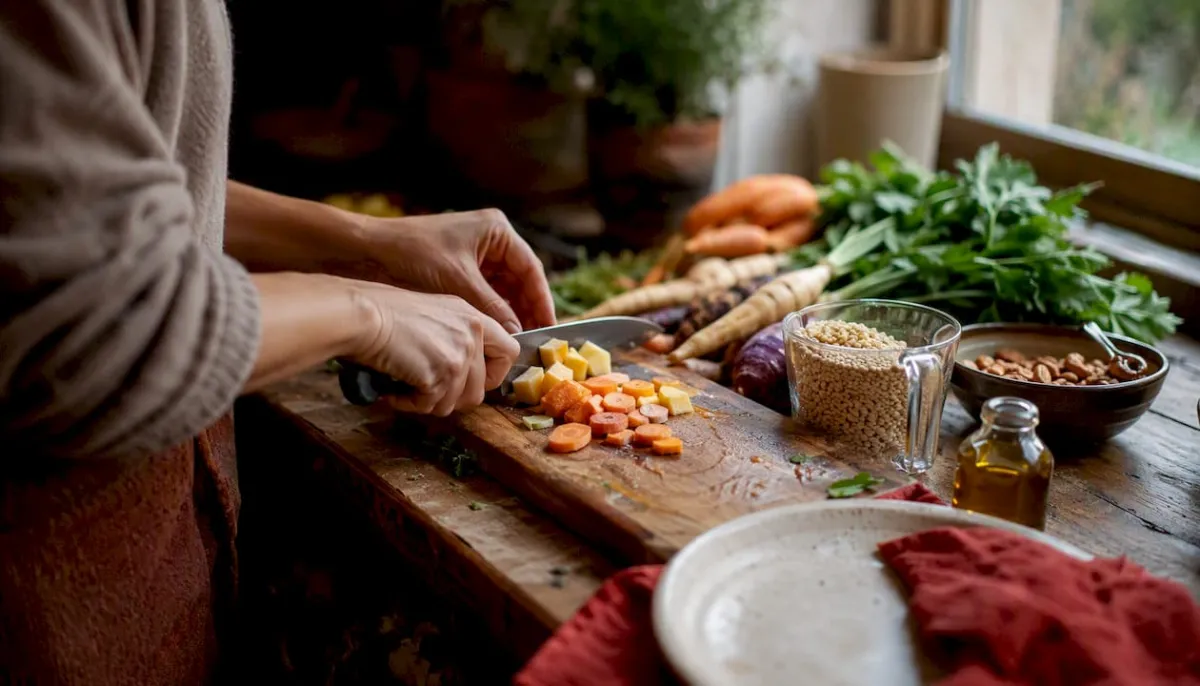
A PCOS-friendly meal plan comes down to one repeatable idea: build every plate around protein, high-fiber low-glycemic carbs, and a little healthy fat, so your blood sugar stays steady through the day. Do that consistently and you work on the root of most PCOS symptoms without cutting out food groups or counting calories.
If you have PCOS, food is one of the few levers you fully control. Insulin resistance affects most people with PCOS, and it drives the cravings, energy crashes, stubborn weight, and hormone swings that make the condition hard to manage. Steadying your blood sugar blunts the glucose spikes that raise insulin, which over time eases androgen levels, cravings, and cycle irregularity. You won’t feel it overnight — but many people notice steadier energy and fewer cravings within a couple of weeks, with cycle and skin changes over a few months.
This guide walks through exactly how to do it: the plate method and the targets behind it, a sample day and a full week, the foods to lean on and limit, the science of why it works, and how to make it stick in a real week.
What’s in this guide
- The PCOS plate method — the formula, plus protein, fiber, and timing targets
- A day on the plan — a full sample day + recipes that fit it
- A flexible 7-day plan
- A simple meal-prep routine
- Best foods for PCOS, and what to limit
- Your PCOS grocery list
- Why these food choices help
- Making it realistic
- When to see a dietitian or clinician
- FAQ
The PCOS plate method
The plate method gives you a formula you can repeat at any meal without weighing anything. Divide the plate into three zones, plus a fat:
- Half the plate — non-starchy vegetables. Leafy greens, broccoli, cauliflower, zucchini, peppers, asparagus, tomatoes. This is the fiber and volume that slows everything down.
- One quarter — lean protein. Chicken, turkey, eggs, fish, tofu, legumes, Greek yogurt, cottage cheese.
- One quarter — a smart carb. Intact whole grains and legumes (quinoa, barley, brown rice, lentils, sweet potato) — not refined ones.
- Plus a healthy fat. A drizzle of olive oil, a few slices of avocado, a small handful of nuts.
Two numbers make the plate work harder. Aim for roughly 25–35g of protein per meal (and 8–10g at snacks), and about 30g of fiber a day. You don’t have to track: a palm-sized piece of chicken or fish is about 25–30g of protein, and two eggs are only ~12g, so pair them with Greek yogurt or cottage cheese to close the gap. On fiber, a cup of lentils, a cup of berries, and your non-starchy vegetables get you most of the way there without effort.
Spacing matters too. Eat every 3–5 hours. Very long fasting windows can raise cortisol in some people with PCOS, which works against insulin resistance rather than for it — so a protein-and-fiber snack between meals (apple with almond butter, hummus with carrots) does more good than pushing through on an empty stomach.
A day on the plan
Here’s what the plate method looks like across a real day. This one lands at roughly 100g of protein and close to 30g of fiber — protein, a smart carb, and a healthy fat at every meal.
- Breakfast (~28g protein): Two scrambled eggs with sautéed spinach, half an avocado, one slice of whole-grain toast.
- Mid-morning snack (~10g): ¾ cup plain Greek yogurt with blueberries.
- Lunch (~27g): A large salad with 4 oz grilled chicken, ½ cup chickpeas, cucumber, tomatoes, olive-oil-and-lemon dressing, and a small whole-grain roll.
- Afternoon snack (~8g): Apple slices with almond butter.
- Dinner (~30g): 5 oz baked salmon, roasted broccoli and zucchini, ½ cup farro.
Notice the pattern rather than the exact foods — swap the salmon for tofu, the farro for quinoa, the chicken for lentils, and the day still works. The recipes below are built on exactly this formula, with the macros already worked out.
 Carne Asada Protein Bowl
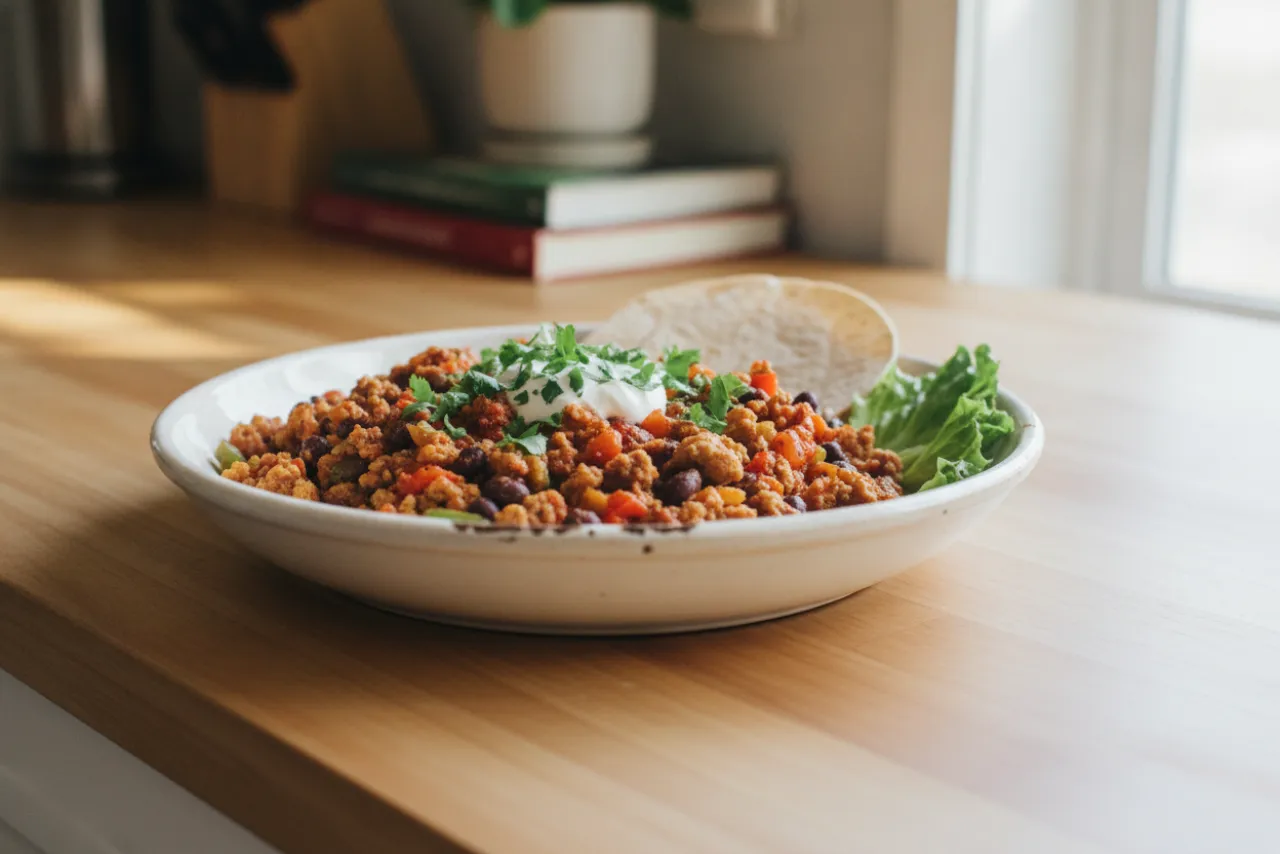 Turkey Taco Skillet
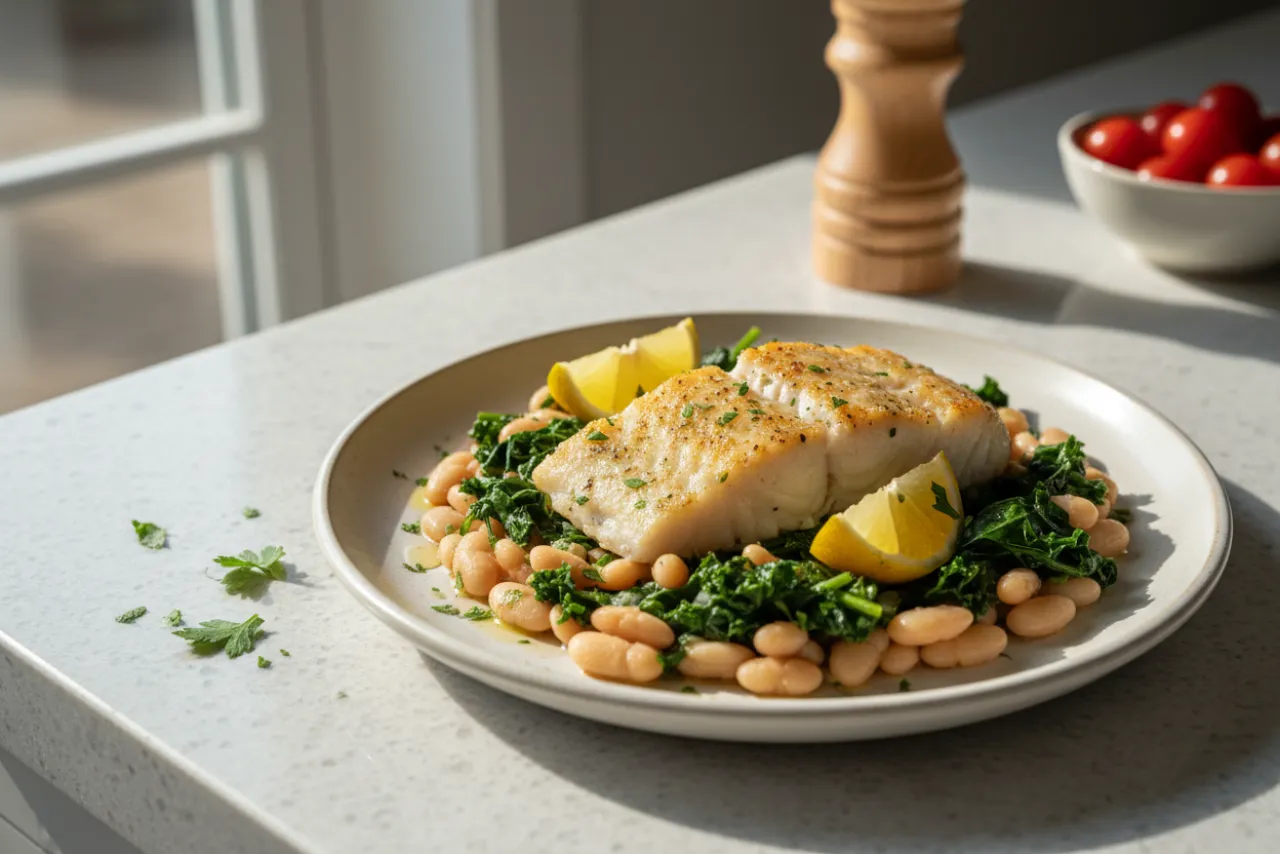 Baked Cod with Greens
 Tuscan White Bean & Chicken Stew
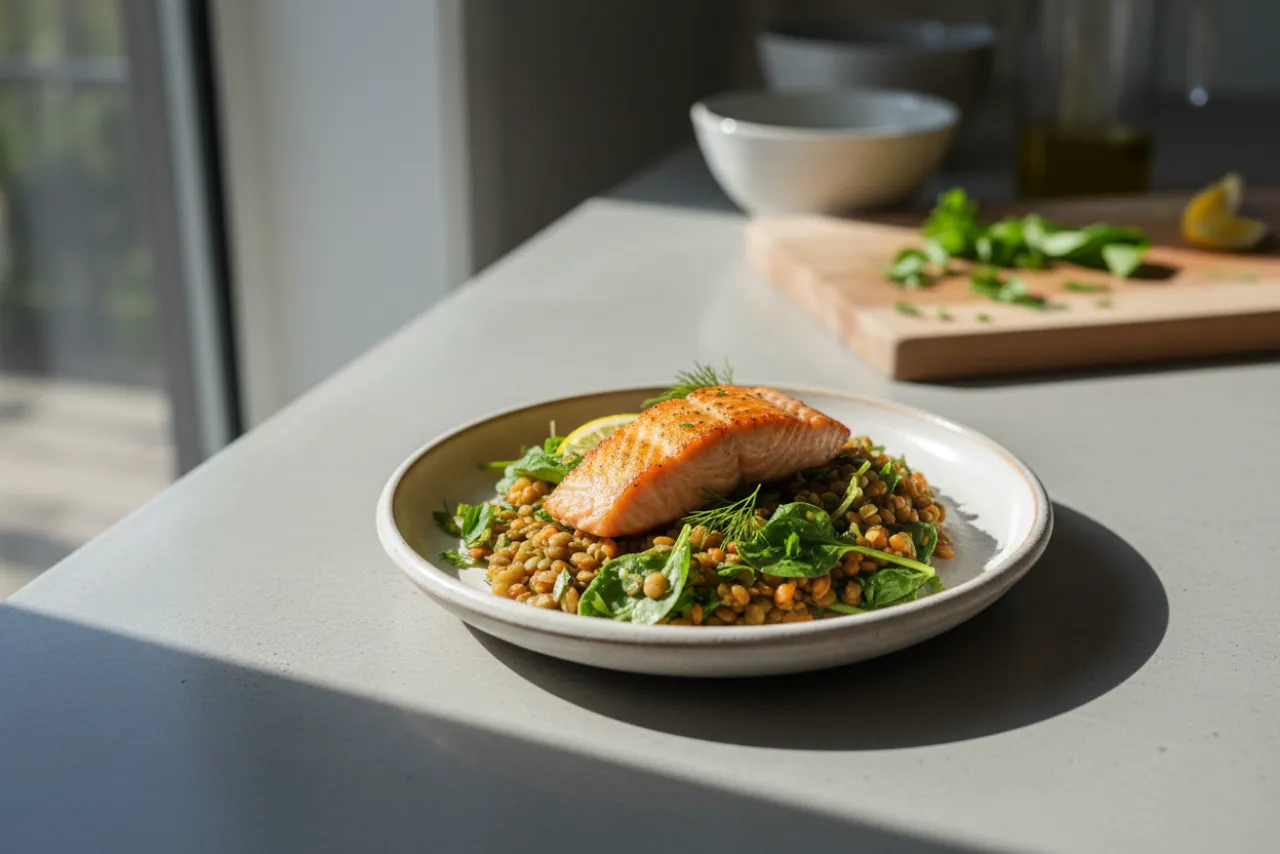 Salmon over Lentils
 Garlic Soybean & Veg Stir-Fry
A flexible 7-day plan
Use this week as a starting point, not a rulebook. Every day follows the same plate formula, so you can move meals around or swap in the recipes above without breaking it.
| Day | Breakfast | Lunch | Dinner | Snack |
|---|---|---|---|---|
| Monday | Egg and veggie scramble, whole-grain toast | Lentil soup, side salad | Baked salmon, farro, roasted broccoli | Greek yogurt + berries |
| Tuesday | Overnight oats with chia and berries | Grilled chicken salad, chickpeas | Turkey and veggie stir-fry, brown rice | Almonds + apple |
| Wednesday | Cottage cheese bowl, fruit, flaxseed | Tuna wrap, whole-grain tortilla, greens | Shrimp tacos, corn tortillas, cabbage slaw | Hummus + carrots |
| Thursday | Smoothie: spinach, protein powder, frozen berries | Quinoa bowl, black beans, roasted veg | Chicken thighs, sweet potato, green beans | Hard-boiled egg + cucumber |
| Friday | Whole-grain waffles, almond butter, berries | Leftover chicken, grain, veg | Baked cod, barley, asparagus | Walnuts + pear |
| Saturday | Veggie omelet, avocado, whole-grain toast | Mediterranean-style grain bowl | Lamb or turkey meatballs, zucchini noodles | Greek yogurt + nuts |
| Sunday | Smoked salmon on whole-grain crackers, eggs | Big batch salad, lentils, feta | Roast chicken, roasted root veg, quinoa | Nut butter + celery |
Make it your own: to go vegetarian, replace the meat and fish with lentils, tofu, tempeh, or eggs. After a hard workout, bump the grain to ¾ cup cooked; on a lighter day, trade the grain for extra vegetables and a bit more fat.
The plan gets easier if you cook once and eat several times. Roast a sheet pan of vegetables and cook a batch of grains and one protein on the weekend, and you’ve got the base of Monday through Wednesday’s lunches and dinners already done — the table above is designed to reuse the same handful of components.
A simple PCOS meal-prep routine
The plan gets far easier if you cook a few base components once and reuse them all week. You’re not batch-cooking seven different dinners — you’re prepping the parts that show up again and again in the plate method, then assembling. About an hour on the weekend covers most of Monday through Wednesday:
- A grain and a protein. Cook a pot of quinoa or barley and roast a tray of chicken thighs or a side of salmon. Between them, that’s the ¼-protein and ¼-carb of half a dozen plates.
- A tray of vegetables. Roast whatever’s in the fridge — broccoli, zucchini, peppers — to cover the “half the plate” part without cooking each night.
- Grab-and-go protein. Hard-boil a few eggs and portion some Greek yogurt or cottage cheese, so the protein-and-fiber snack between meals is a reach, not a decision.
From there, dinner is assembly: grain + protein + the vegetables + a fat and a sauce. A tahini-lemon or olive-oil-and-herb dressing keeps the same components from feeling repetitive. Cooked protein keeps about four days in the fridge and grains about five, so a single prep session realistically carries the first half of your week.
Best foods for PCOS, and what to limit
The plate method points you at the same short list of foods every week — which also makes it your grocery list. Lean on these:
- Fatty fish (salmon, sardines, mackerel) for omega-3s and their anti-inflammatory effect.
- Legumes (lentils, chickpeas, black beans) — protein, fiber, and low glycemic index in one.
- Non-starchy vegetables — the more, the better.
- Intact whole grains (quinoa, barley, oats, farro, brown rice).
- Berries for fiber and antioxidants without a big sugar hit.
- Nuts and seeds (almonds, walnuts, chia, flaxseed) for healthy fat, fiber, and magnesium.
- Olive oil, eggs, and plain Greek yogurt or cottage cheese.
And go easy on the things that spike blood sugar or inflammation: sugary drinks, refined carbs (white bread and rice, pastries, most cereals), fried and fast food, processed meats, and high-sugar snacks including flavored yogurts. You don’t have to ban any of them — the higher-impact move is swapping the refined version for a high-fiber one:
| Instead of | Try this |
|---|---|
| White rice | Quinoa, barley, or cauliflower rice |
| Soda or juice | Sparkling water with lemon or lime |
| Flavored yogurt | Plain Greek yogurt with fresh berries |
| Potato chips | A small handful of almonds or walnuts |
| White pasta | Whole-grain pasta or lentil pasta |
A note on extremes. You don’t need to cut carbs to zero — Johns Hopkins guidance advises against it, and very-low-carb diets are hard to sustain. Aggressive intermittent fasting can stress the adrenal system in some people with PCOS. And if you’re on metformin or a GLP-1 medication, talk to your clinician before making big changes to carb intake or meal timing.
Your PCOS grocery list
Because the plate method keeps pointing you at the same foods, your shopping list barely changes week to week. Keep these staples on hand and most of the plan builds itself:
Fridge & freezer: eggs, plain Greek yogurt, cottage cheese; chicken, salmon, shrimp, canned tuna; spinach, kale, broccoli, zucchini, peppers, asparagus; berries (fresh or frozen), apples, pears; hummus and almond butter.
Pantry: quinoa, barley, farro, rolled oats, brown rice; canned chickpeas, black beans, and lentils; olive oil, apple cider vinegar, Dijon; whole-grain bread and tortillas; almonds, walnuts, chia, flaxseed; canned tomatoes and low-sodium broth.
Buying frozen vegetables and canned legumes keeps the cost down and the waste low — both are just as nutritious as fresh for this purpose, and they’re there when you need them.
Why these food choices actually help
PCOS is an endocrine disorder with strong metabolic links, and insulin resistance sits at the center of it — which is why steadying blood sugar is the throughline of nearly all dietary guidance. Choosing low-glycemic, high-fiber carbs slows digestion and blunts the post-meal glucose spikes that push insulin up.
Clinical guidance from Johns Hopkins recommends Mediterranean- and DASH-style eating for PCOS, both of which are associated with better insulin sensitivity, lower androgen levels, and more regular ovulation — partly because they’re varied enough to actually stick with. A review of clinical studies on PubMed backs the benefit of low-glycemic, fiber-rich patterns for metabolic outcomes, while noting no single diet wins on every measure.
Adjusting the plan for your situation
- Weight loss: shrink the grain portion and grow the vegetables rather than dropping a food group.
- Trying to conceive: prioritize folate-rich foods (leafy greens, lentils, fortified grains) and ask your OB-GYN about folic acid.
- Acne and androgens: some people find cutting back on dairy and high-glycemic foods helps — worth tracking, results vary.
- On metformin: take it with food and keep fiber steady to ease the GI side effects.
- On a GLP-1: appetite drops, so eat the protein first to still hit your target.
- Bloating or IBS alongside PCOS: a low-FODMAP approach can find triggers without abandoning the plate rule.
A few micronutrients are worth raising with your clinician too: vitamin D (often low in PCOS), inositol (studied for insulin and ovulatory support), iron (heavy periods deplete it), and magnesium (supports insulin signaling and sleep). This is general information, not a substitute for personalized medical advice — especially if you’re on medication or trying to conceive.
Making it realistic
The gap between knowing the plate rule and living it is usually logistics, not willpower. A few things help it stick:
Fix breakfast first. It’s the highest-leverage single change. Trading a bowl of cereal for two eggs with spinach, or a cottage cheese bowl with berries and flaxseed, takes your breakfast protein from about 4g to 20+g and cuts the mid-morning cravings that derail the rest of the day. That one change tends to pull the other meals into better shape on its own.
PCOS breakfast ideas that hold blood sugar
Breakfast is where blood sugar is easiest to get wrong — cereal, pastries, or fruit alone spike glucose first thing and set up cravings for the rest of the morning. The fix is protein first. A few options that each land around 20–30g of protein:
- Two eggs scrambled with spinach and half an avocado on whole-grain toast.
- A cottage cheese bowl with berries and a spoon of flaxseed or chia.
- Overnight oats made with Greek yogurt (not just milk) and chia, topped with nuts.
- A quick smoothie with protein powder, frozen berries, spinach, and a tablespoon of nut butter.
All four take five minutes or less, and any of them can be prepped the night before — which is what makes the “fix breakfast first” habit actually stick on a weekday.
It doesn’t have to be expensive. Canned lentils, frozen vegetables, eggs, and oats are among the cheapest foods in any store — and they’re exactly what this plan runs on. Fresh salmon every night and specialty grains are optional; the effective version isn’t costly.
Plan for the week before your period. Luteal-phase cravings are real and metabolically driven — progesterone rises and slightly increases your calorie needs. Instead of fighting it, add a bigger protein-and-complex-carb snack (oatmeal with almond butter, a small grain bowl) so the craving passes through a fed body, not a depleted one.
When to see a dietitian or clinician
This guide covers the general approach, but some situations call for professional support. See a registered dietitian, endocrinologist, or reproductive specialist if:
- Your symptoms (irregular cycles, acne, hair loss, fatigue) haven’t improved after 8–12 weeks of consistent changes.
- You’re trying to conceive and haven’t had a cycle in more than 90 days.
- Your fasting glucose is above 100 mg/dL or HbA1c above 5.7% (prediabetes territory).
- You’re on medication and unsure how to eat around it.
- You have a history of disordered eating and need a weight-neutral approach.
To get the most from the appointment, bring data: a weekly weight trend, a cycle log, any recent glucose or HbA1c labs, and a 3-day food record including a weekend day.
PCOS meal planning: frequently asked questions
How many carbs should you eat a day with PCOS?
There’s no single number, but most PCOS guidance lands at 50–130g net carbs per day, or under about 40% of calories — emphasizing intact whole grains, legumes, and fiber-rich produce over refined carbs. Johns Hopkins advises against cutting carbs entirely; quality and fiber matter more than an aggressive limit.
Is a 1,200-calorie meal plan good for PCOS?
Usually not. Very low intakes are hard to sustain and can raise cortisol, which works against insulin resistance. Most PCOS plans sit around 1,500–1,800 calories, prioritizing protein and fiber over calorie-cutting. Larger vegetable portions and smaller grain portions do more than slashing calories.
What foods should you avoid with PCOS?
Sugary drinks, refined carbs (white bread, white rice, pastries, most cereals), fried and fast food, processed meats, and high-sugar snacks. You don’t have to eliminate any food group — swapping refined carbs for high-fiber ones is the higher-impact move.
Can you lose weight with PCOS without counting calories?
Yes, for many people. The plate rule — half vegetables, a palm of protein, a quarter whole grains, a little healthy fat — naturally moderates calories while keeping blood sugar steady. Steady blood sugar and adequate protein reduce the cravings that drive overeating.
Do you have to cut out dairy and gluten for PCOS?
Not necessarily. Neither is off-limits for everyone. Some people find reducing dairy helps acne or bloating, but results vary — it’s worth testing for yourself rather than cutting them by default.
How long until a PCOS diet shows results?
Give consistent changes 8–12 weeks. Blood-sugar and energy shifts can come sooner; cycle and androgen changes take longer. If symptoms haven’t improved after 8–12 weeks, see a dietitian or endocrinologist.
Let Homecooked build the plan for you
Knowing the plate rule is one thing. Having it built into your weekly plan, your grocery list, and your recipes before you even open the fridge is another.
Homecooked builds a personalized weekly meal plan around health goals that line up closely with PCOS eating — anti-inflammation, debloating, fibermaxxing, blood-sugar-friendly, and weight loss — plus your taste and dietary preferences. Every plan is protein-forward and fiber-rich, the same principles in this guide. The app generates your grocery list automatically, tracks what’s already in your pantry, and walks you through each recipe with step-by-step timers, so there’s no guesswork at 6 PM on a Tuesday. Start with a cottage cheese protein bowl for a high-protein breakfast, then let the app fill out the rest of your week. Try Homecooked free and see how quickly a week of meals becomes a shopping list you can actually use.
Recommended reading
More guides that pair well with a PCOS meal plan — blood-sugar, protein, and anti-inflammatory eating.
 High Protein Meal Plan: Build Muscle and Lose Weight
 Weight Loss Meal Planning: Your Expert Guide for 2026
Anti-Inflammatory Diet Meal Plan (7 Days)
Weight Loss Meal Planning: Your Expert Guide for 2026
Anti-Inflammatory Diet Meal Plan (7 Days)
 Low Carb Meal Planning: Your Practical Weekly Guide
 Your Practical Diabetes Meal Plan: 7-Day Template
 Mediterranean Meal Planning: Your Practical 2026 Guide
Sources
The guidance in this article draws on the following clinical and patient-education sources:
- PCOS Diet — Johns Hopkins Medicine
- Dietary Composition and PCOS — NCBI / PMC
- Nutrition for PCOS (Patient Education) — U.S. Dept. of Veterans Affairs
- PCOS: Sample Menus and Recipes — Center for Young Women’s Health
- What Is the Glycemic Index? — Academy of Nutrition and Dietetics
- PubMed — clinical studies on low-glycemic, high-fiber diets in PCOS