A solid heart healthy meal plan isn’t about eating bland food or counting every calorie obsessively. It’s a structured way of eating that keeps your cardiovascular system running well, built around a few non-negotiable targets. According to the American Heart Association, daily sodium should stay under 1,500 mg, total fat within 25–35% of daily calories, and saturated fat below 7% of calories. Beyond those numbers, the pattern looks like this:
- Prioritize whole grains (oats, brown rice, whole wheat bread) at most meals
- Fill half your plate with vegetables and fruits at lunch and dinner
- Choose lean proteins like fish, skinless poultry, legumes, and tofu over processed meats
- Use healthy fats from olive oil, avocado, nuts, and seeds instead of butter or lard
- Aim for soluble fiber of 10–25 grams daily and plant stanols/sterols of 2 grams daily to support cholesterol control
- Limit processed foods high in sodium, refined carbs, and trans fats
This framework aligns closely with the DASH eating plan (Dietary Approaches to Stop Hypertension), which the National Heart, Lung, and Blood Institute has validated for lowering blood pressure and LDL cholesterol.
Your sample 7-day heart-healthy meal plan
The menu below is built around a typical daily calorie amount and targets a heart-healthy level of sodium intake. Adjust portion sizes up or down based on your energy needs.
| Day | Breakfast | Lunch | Dinner | Snack |
|---|---|---|---|---|
| Monday | Apple cinnamon oatmeal, 1 cup blueberries | Lentil soup, whole grain roll | Baked salmon, roasted broccoli, brown rice | Handful of walnuts |
| Tuesday | Greek yogurt with flaxseed and banana | Tuna salad on whole wheat, side salad | Chicken stir-fry with bok choy and quinoa | Apple with almond butter |
| Wednesday | Whole grain toast, avocado, poached egg | Black bean and vegetable wrap | Grilled cod, steamed spinach, sweet potato | Low-sodium hummus with carrots |
| Thursday | Overnight oats with chia seeds and berries | Chickpea and kale salad, olive oil dressing | Turkey meatballs, whole wheat pasta, marinara | Orange and a small handful of almonds |
| Friday | Smoothie: spinach, banana, flaxseed, almond milk | Veggie and brown rice bowl, tahini drizzle | Shrimp tacos, corn tortillas, cabbage slaw | Plain popcorn, light seasoning |
| Saturday | Oat pancakes, fresh strawberries | Lentil and vegetable soup | Bibimbap with lean beef, mixed vegetables | Pear and walnuts |
| Sunday | Apple cinnamon oatmeal, sliced almonds | Grilled chicken salad, balsamic vinaigrette | Baked chicken thighs, roasted asparagus, farro | Low-fat cottage cheese with cucumber |
Nutritional snapshot (daily averages)
| Nutrient | Daily Target | Approximate Daily Total |
|---|---|---|
| Calories | — | — |
| Sodium | Under 1,500 mg | 1,500 mg |
| Soluble fiber | 10–25 g | 10–25 grams |
| Saturated fat | Under 7% of calories | below 7% of calories |
| Protein | 25–35% of daily calories | 25–35% of daily calories |
Weekly grocery list
- Produce: spinach, kale, broccoli, bok choy, asparagus, sweet potatoes, carrots, cabbage, avocados, bananas, blueberries, strawberries, apples, oranges, pears
- Proteins: salmon fillets, cod, shrimp, skinless chicken thighs and breasts, lean ground turkey, canned tuna (low sodium), eggs
- Grains: rolled oats, brown rice, quinoa, farro, whole wheat bread, whole wheat pasta, corn tortillas
- Legumes and nuts: canned lentils (no salt added), canned chickpeas, black beans, walnuts, almonds, almond butter, tahini
- Dairy and alternatives: plain Greek yogurt, low-fat cottage cheese, unsweetened almond milk
- Pantry: olive oil, flaxseed, chia seeds, low-sodium marinara, low-sodium hummus, balsamic vinegar
Pro Tip: Batch-cook grains like brown rice, quinoa, and farro on Sunday. Hidden sodium in processed foods is one of the biggest obstacles to staying under 1,500 mg daily, and having cooked staples on hand makes it far easier to skip the convenience shortcuts.
What the nutritional guidelines actually say
The DASH eating plan requires no special or expensive ingredients. Its power comes from the overall dietary pattern, not any single superfood. Harvard Health confirms that no single food drives heart wellness; consistent patterns rich in fiber, potassium, calcium, and magnesium do.
| Nutrient | Daily Recommendation | Why It Matters |
|---|---|---|
| Sodium | A restricted amount supportive of reducing blood pressure | |
| Total fat | A moderate portion of total calories | Supports healthy lipid balance |
| Saturated fat | Limited intake to support heart health | Lowers LDL cholesterol |
| Soluble fiber | A beneficial range daily | Blocks cholesterol absorption |
| Plant stanols/sterols | A helpful daily intake | Further reduces LDL |
| Omega-3 fatty acids | 2 servings of fatty fish/week | Lowers triglycerides |
The MedlinePlus cholesterol guidelines add that cholesterol intake should stay under 200 mg per day for those actively managing LDL. Whole grains, legumes, nuts, and fortified foods like certain orange juices and margarines are reliable sources of plant stanols and sterols.
Which foods should you eat, and which should you avoid?
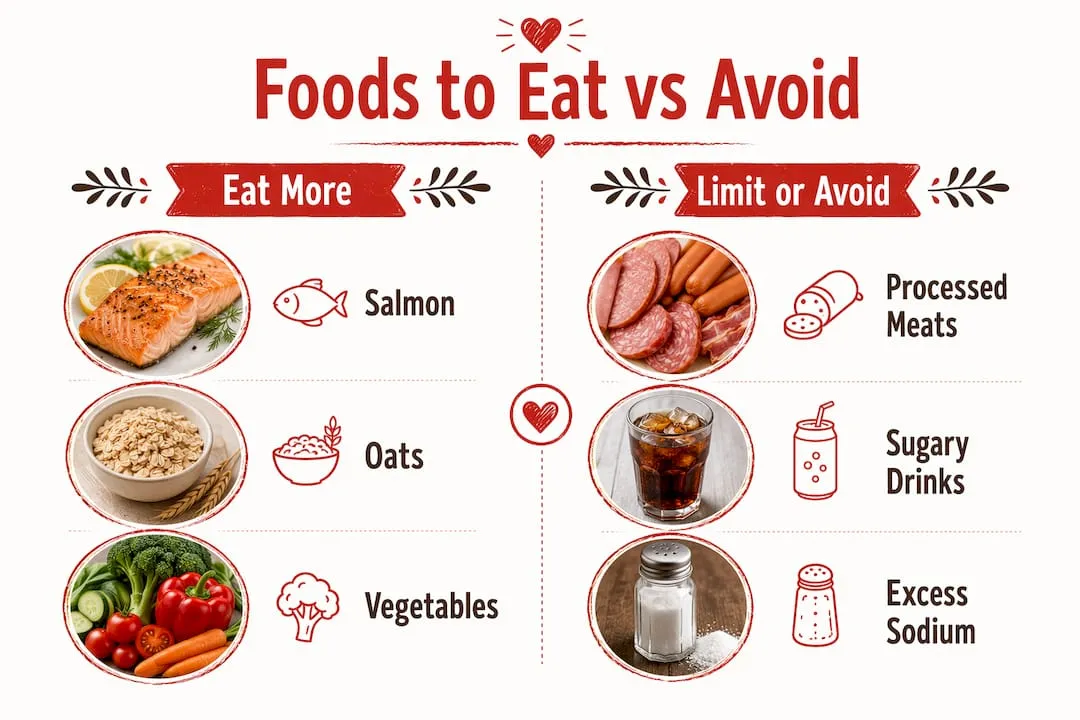
| Eat More | Limit or Avoid |
|---|---|
| Salmon, mackerel, sardines | Processed deli meats, bacon, sausage |
| Oats, barley, brown rice | White bread, pastries, sugary cereals |
| Lentils, chickpeas, black beans | Canned soups with high sodium |
| Walnuts, almonds, flaxseed | Butter, lard, coconut oil (in large amounts) |
| Olive oil, avocado oil | Fried foods, fast food |
| Leafy greens, berries, citrus | Sugary drinks, soda, sweetened juices |
Roasting and grilling vegetables and proteins keeps meals flavorful without relying on salt or unhealthy fats. Herbs like rosemary, thyme, garlic, and cumin do more for a dish than most people expect.
A few practical swaps worth making:
- Replace butter with olive oil or avocado oil when sautéing
- Swap white rice for brown rice, farro, or quinoa
- Choose no-salt-added canned beans and tomatoes
- Use plain Greek yogurt instead of sour cream
- Pick low-calorie snack options like plain popcorn over chips
For vegetarians, swap fish and poultry for tofu, tempeh, lentils, or edamame. For gluten-free needs, replace wheat-based grains with certified gluten-free oats, brown rice, quinoa, or buckwheat. The NHLBI’s gradual substitution approach works well here: change one or two ingredients at a time rather than overhauling your entire pantry at once.
What does a cardiac diet actually do for your body?
The benefits are measurable and well-documented. The DASH eating plan is scientifically proven to lower blood pressure and improve other cardiovascular markers. Modest weight loss in overweight individuals also improves cholesterol levels, making structured meal planning a direct tool for reducing cardiovascular risk.
Beyond cholesterol and blood pressure, consistent heart-healthy eating tends to support steadier energy levels, better weight management, and reduced inflammation. These aren’t side effects. They’re part of why this dietary pattern has stayed at the center of cardiac nutrition guidance for decades.
Practical strategies to keep the plan going
Sustainability matters more than perfection. A few habits make the difference between a one-week experiment and a lasting shift.
Pro Tip: Meal prepping lunches on the weekend, even just grains and roasted vegetables, cuts the temptation to grab high-sodium takeout on busy weekdays.
- Prep a large batch of grains and legumes twice a week
- Keep cut vegetables in the fridge for quick snacking and stir-fries
- Stock your pantry with no-salt-added canned goods as a baseline
- Read nutrition labels for sodium, saturated fat, and added sugars before buying
- Use the high-fiber meal ideas from Homecooked to hit your daily soluble fiber target without overthinking it
- Adjust portion sizes rather than skipping meals when calorie needs change
Portion guidance is straightforward: a serving of cooked grains is about half a cup, a protein serving is roughly 3–4 oz, and vegetables can fill the plate generously since they’re low in sodium and calories. Eating at regular intervals, roughly every 3–4 hours, helps maintain steady blood sugar and prevents the kind of hunger that leads to poor food choices.
What should you drink on a heart-healthy plan?
Water is the foundation. Aim for at least 8 cups daily, more if you’re active. Unsweetened green tea and black coffee in moderate amounts are both associated with cardiovascular benefits in observational research. Sparkling water with a squeeze of lemon or lime works well as a substitute for soda.
Limit alcohol to no more than one drink per day for women and two for men, per MedlinePlus guidelines. Sugary drinks, including fruit juices with added sugar, spike triglycerides and add empty calories without any fiber benefit. Low-fat milk and unsweetened plant-based milks like almond or oat milk fit naturally into a low sodium meal plan.
Heart-healthy cooking methods that actually work
How you cook matters almost as much as what you cook. High-heat frying adds calories and oxidizes fats in ways that aren’t ideal for cardiovascular health.
The most reliable methods for a cardiac diet meal plan:
- Baking and roasting: Concentrates flavor without added fat; works beautifully for fish, chicken, and root vegetables
- Grilling: Lets excess fat drip away from proteins while adding a satisfying char
- Steaming: Preserves water-soluble nutrients like potassium and folate better than boiling
- Sautéing in olive oil: A small amount of olive oil at medium heat is fine; avoid high-heat smoking
- Poaching: Ideal for eggs and fish, zero added fat required
Avoid deep frying and pan-frying in butter or lard. If a recipe calls for cream-based sauces, a blend of low-fat Greek yogurt and a small amount of olive oil often delivers a similar richness with far less saturated fat.
Key Takeaways
A heart-healthy meal plan built around the DASH framework, with sodium under 1,500 mg, soluble fiber of 10–25 grams daily, and saturated fat below 7% of calories, directly lowers blood pressure and LDL cholesterol.
| Point | Details |
|---|---|
| Sodium target | Keep daily sodium under 1,500 mg by choosing no-salt-added products and cooking at home. |
| Fiber and stanols | Aim for 10–25 g of soluble fiber and 2 g of plant stanols/sterols daily to reduce LDL. |
| Fat quality over quantity | Total fat can reach 25–35% of calories, but saturated fat must stay below 7%. |
| Batch cooking | Prepping grains and vegetables twice a week reduces reliance on high-sodium convenience foods. |
| Gradual swaps | Replacing one or two ingredients at a time, like butter for olive oil, builds lasting habits. |
Ready to put this into practice without the planning headache? Homecooked builds a personalized cardiac diet meal plan around your health goals, dietary preferences, and schedule, complete with automated shopping lists and step-by-step guided recipes. Try the apple cinnamon oatmeal as your first heart-healthy breakfast, or explore low-calorie dinner ideas to round out your week. Visit Homecooked to start your free trial.
Recommended
- Mediterranean Diet Meal Plan (7 Days) · Homecooked
- Anti-Inflammatory Diet Meal Plan (7 Days) · Homecooked
- 7-Day Anti-Inflammatory Meal Plan + Smart Shopping List
- Healthy Meal Prep Ideas: 24 Recipes · Homecooked
Heart-healthy recipes for the plan
1Three-Bean Chili
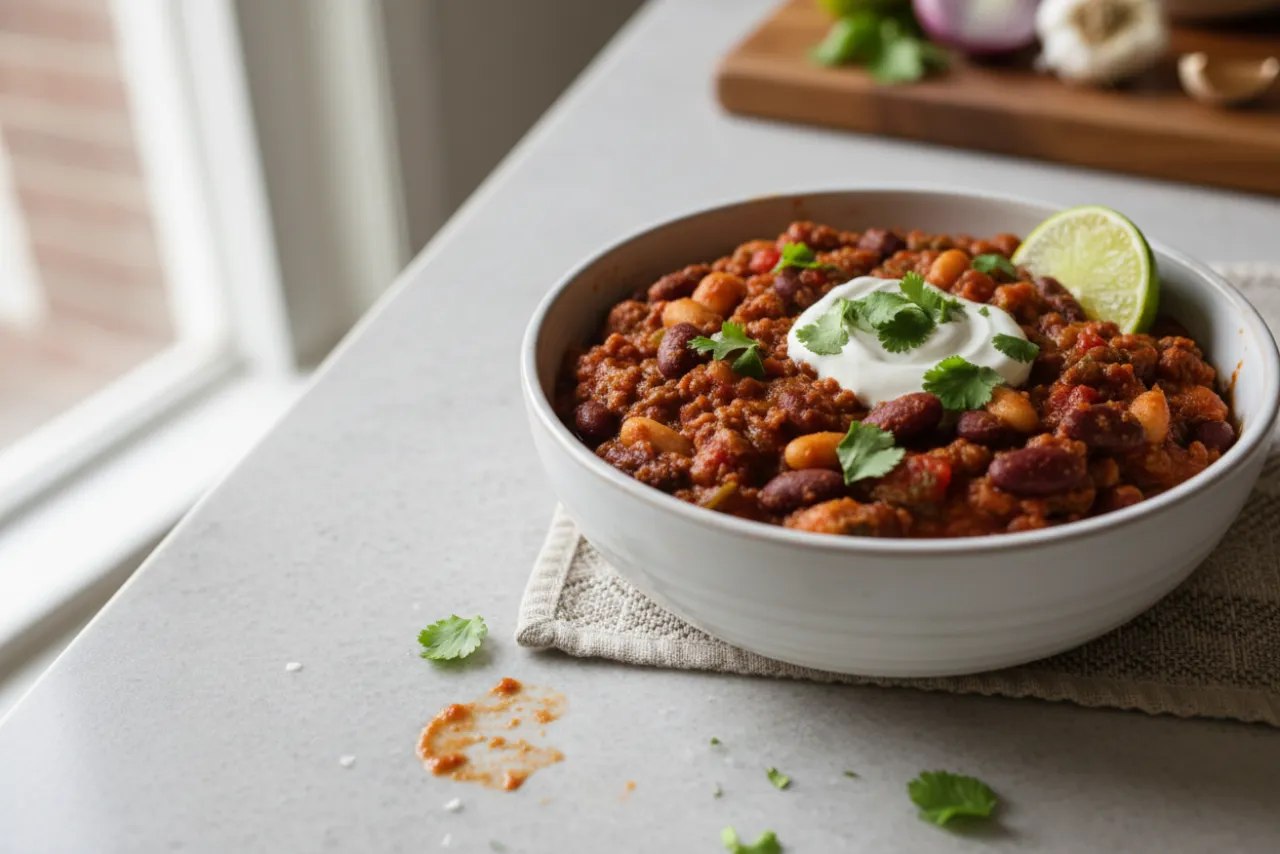
Mexican40 min19g fiber19g protein
Three kinds of bean simmered with tomato and warm spices into a thick, smoky chili — a vegan main with over twenty grams of fiber a bowl.
View recipe →2Salmon & Broccoli Traybake
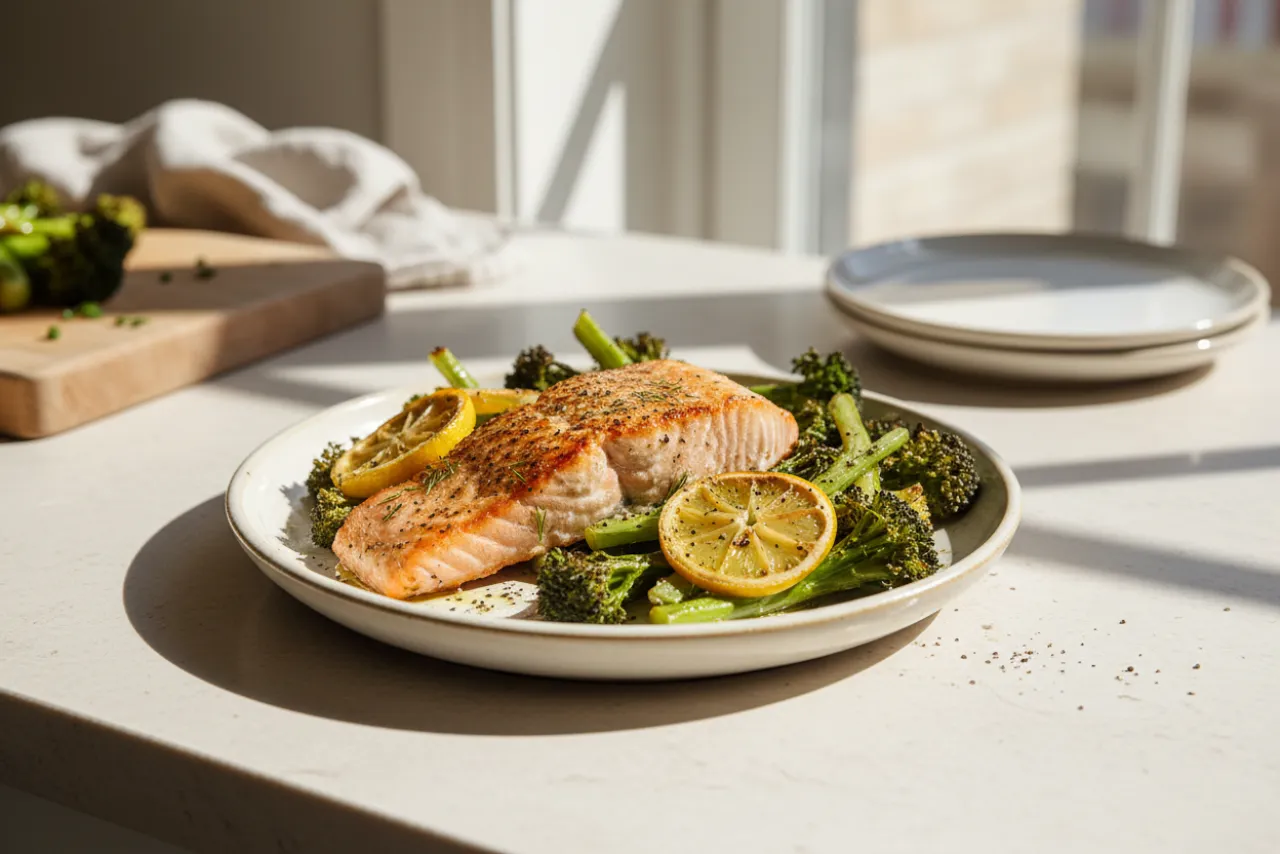
American25 min7g fiber43g protein
Salmon fillets roasted on one tray with broccoli and lemon — a thirty-five-gram-protein dinner with almost no washing up.
View recipe →3Baked Cod with Greens
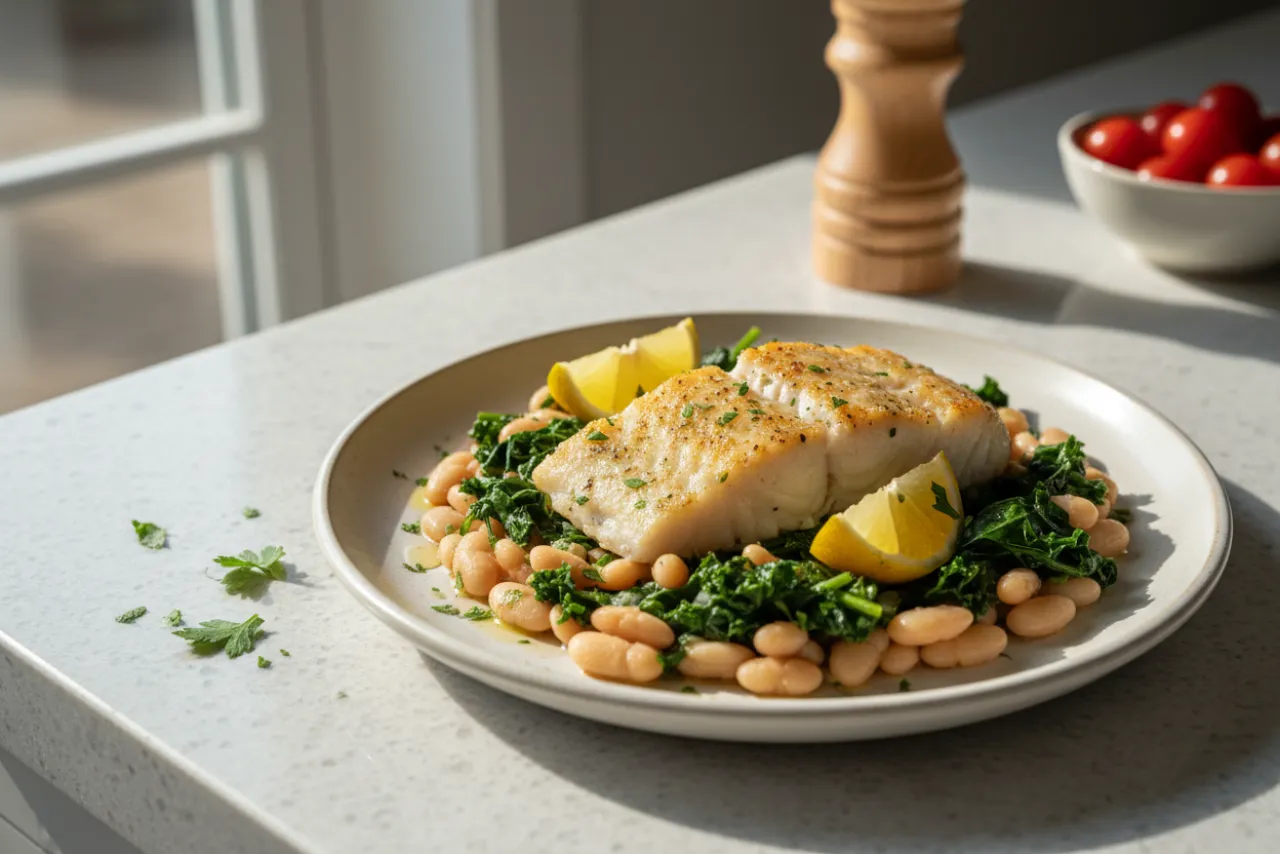
Mediterranean25 min10g fiber39g protein
A small cod fillet baked with white beans and wilted greens — lean protein and fiber in a light, low-grease dinner.
View recipe →4Chana Masala
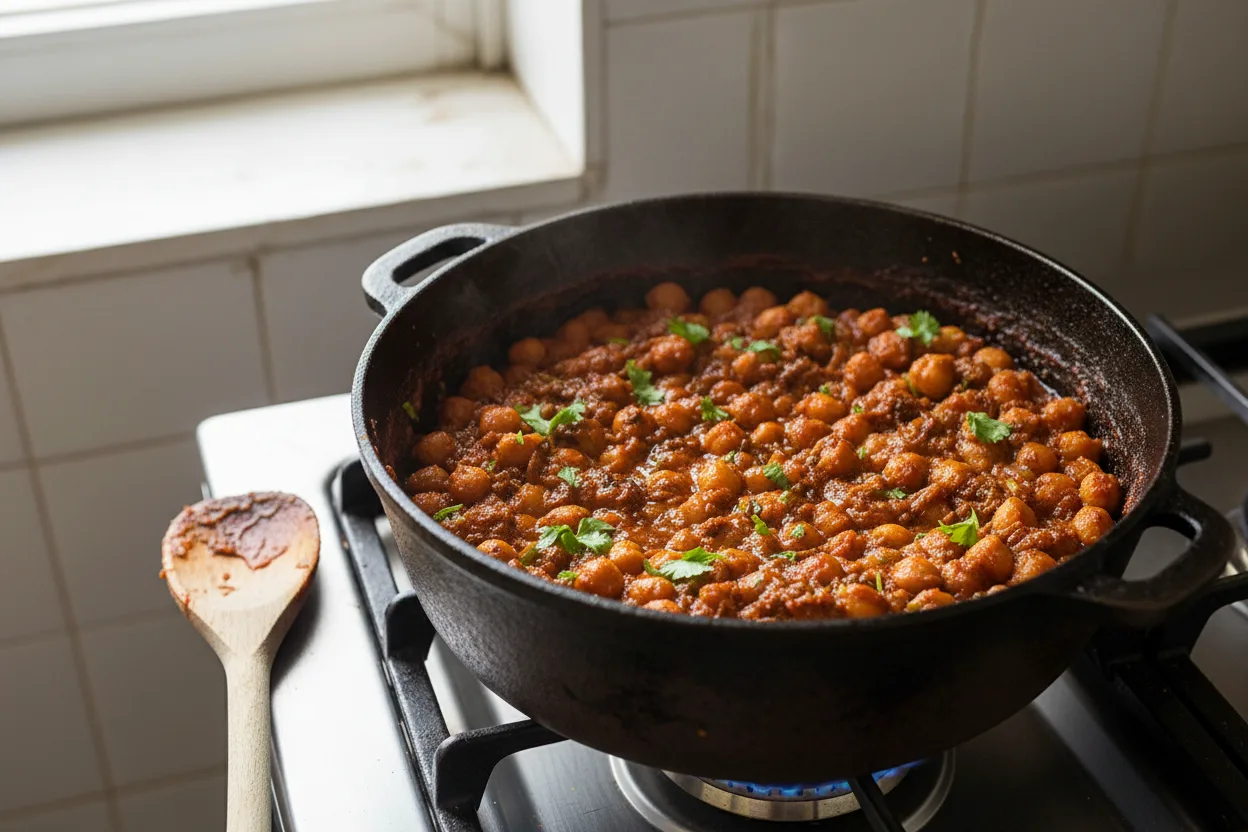
Indian50 min14g fiber18g protein
Chickpeas braised in an onion-tomato masala sharpened with amchur and a quick tadka.
View recipe →5Menestra de Verduras (Navarran Vegetable Medley)

Spanish45 min19g fiber18g protein
A braise of artichoke, peas, favas, and carrot bound in a light garlic sauce. Spring vegetables, deep fiber.
View recipe →6Crispy Chickpea Buddha Bowl
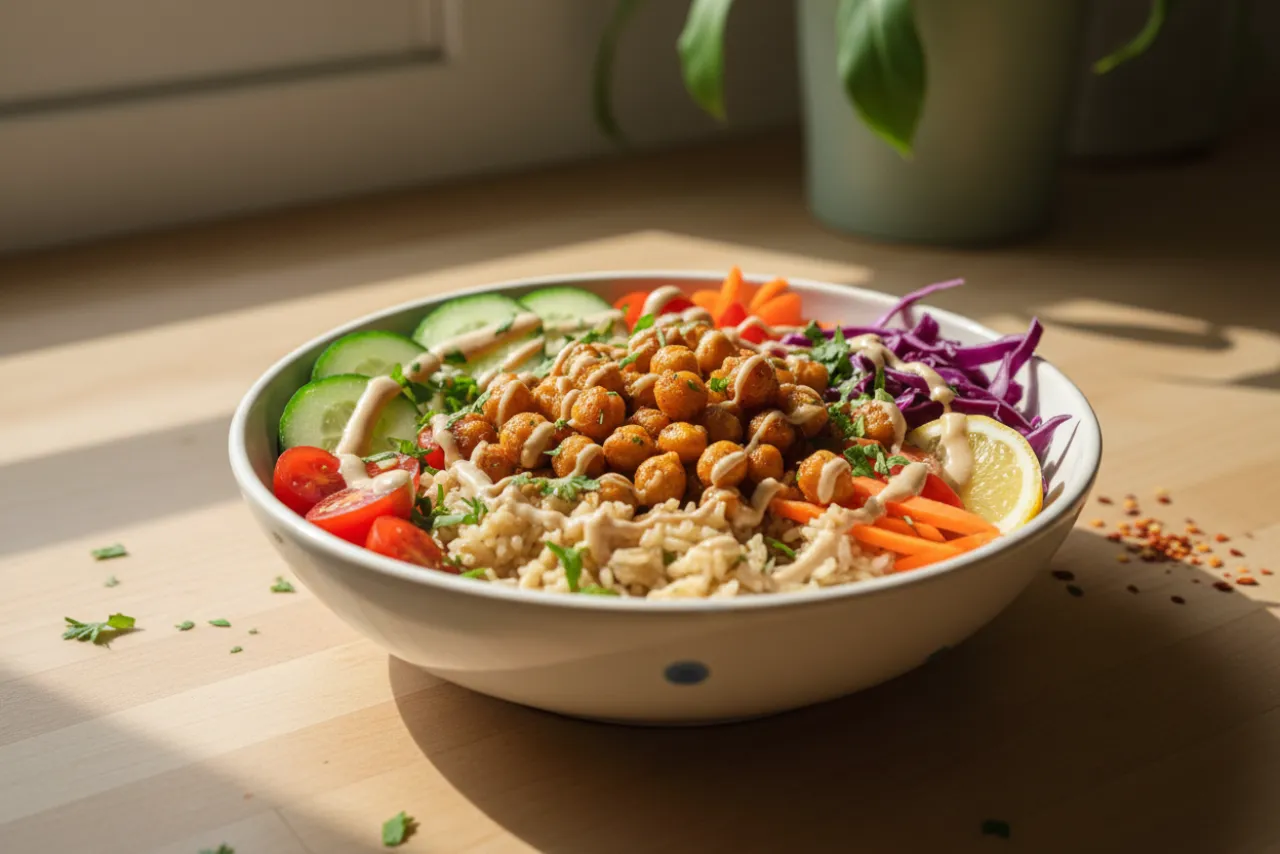
Mediterranean45 min18g fiber22g protein
Roasted chickpeas, brown rice, and raw vegetables with a tahini drizzle — a colorful, plant-based bowl packed with fiber.
View recipe →7Koshari (Egyptian Lentils, Rice & Pasta)

Middle Eastern25 min14g fiber27g protein
Egypt's national street food — lentils, rice, and pasta under spiced tomato and crisp onions. A carb-and-fiber monument.
View recipe →8Salmon & Lentil Traybake
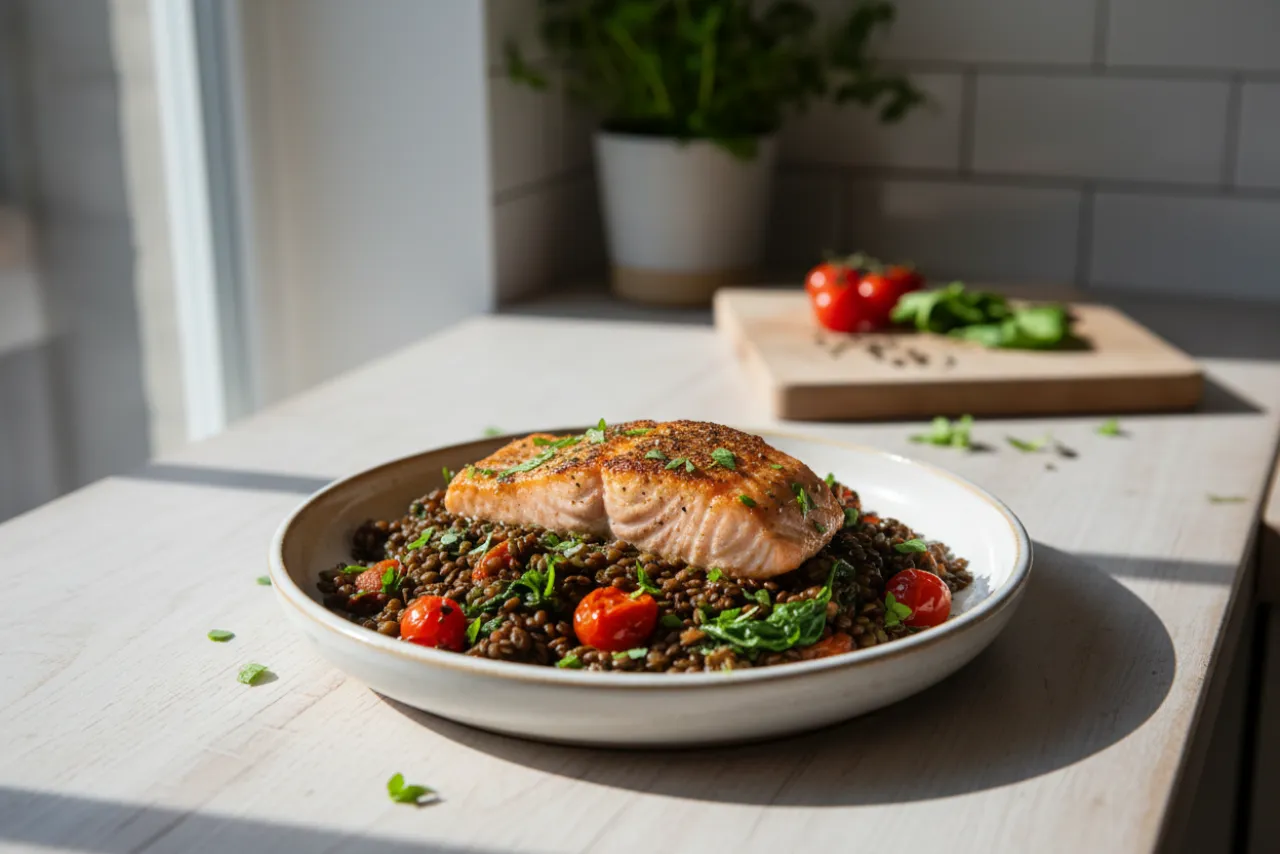
Mediterranean35 min9g fiber53g protein
Salmon roasted over tomatoes and lentils with olive oil and herbs — omega-3, legumes, and greens on one tray.
View recipe →9Farro & Roasted Vegetable Bowl
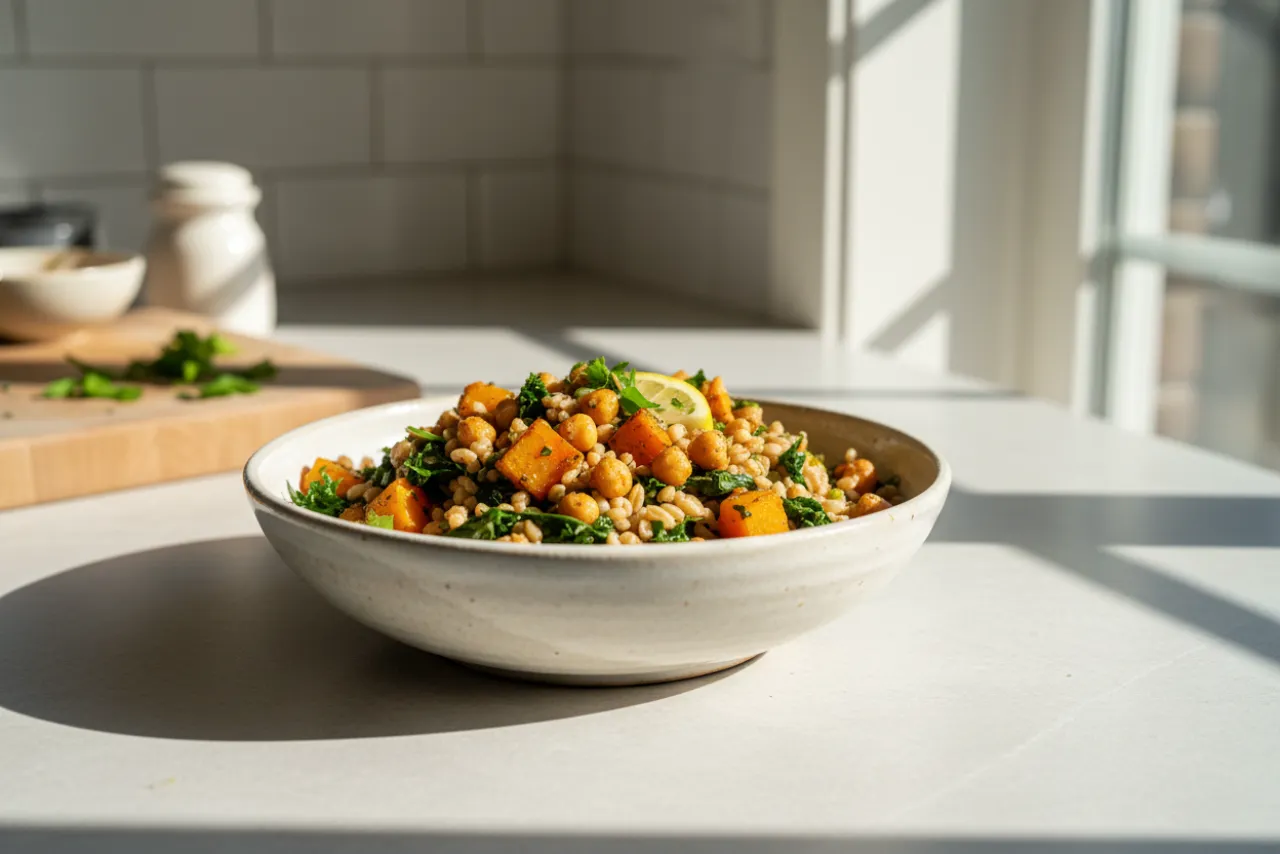
Mediterranean40 min18g fiber21g protein
Nutty farro tossed with roasted squash, chickpeas, and greens — a whole-grain bowl heavy on fiber and built for the lunchbox.
View recipe →10Greek Chicken Quinoa Bowl

Greek24 min6g fiber46g protein
Lemon-oregano chicken with a chopped Greek salad and tzatziki over quinoa — high in fibre and protein, easy on the blood sugar.
View recipe →11Misal
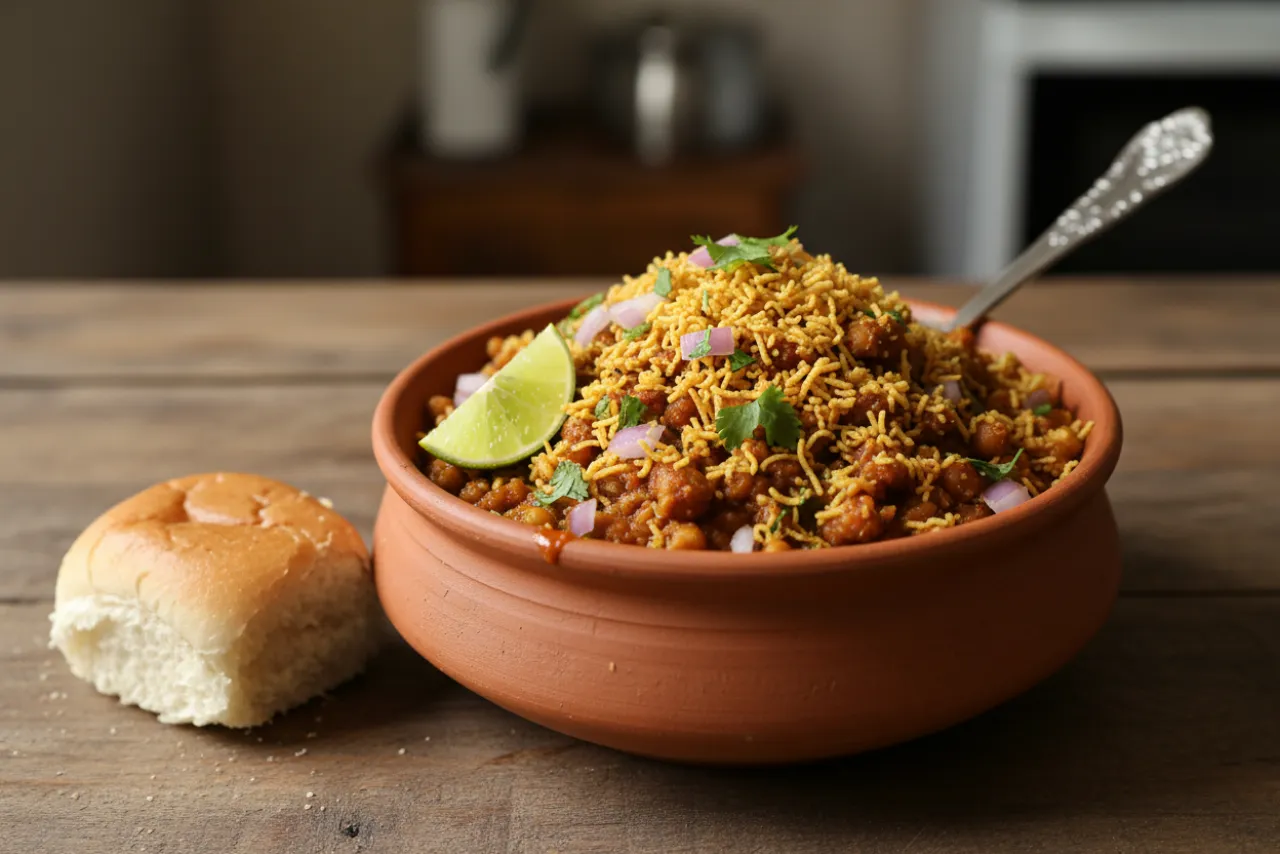
Indian40 min15g fiber20g protein
Spicy sprouted bean curry topped with crunchy farsan.
View recipe →12Chickpea & Spinach Curry
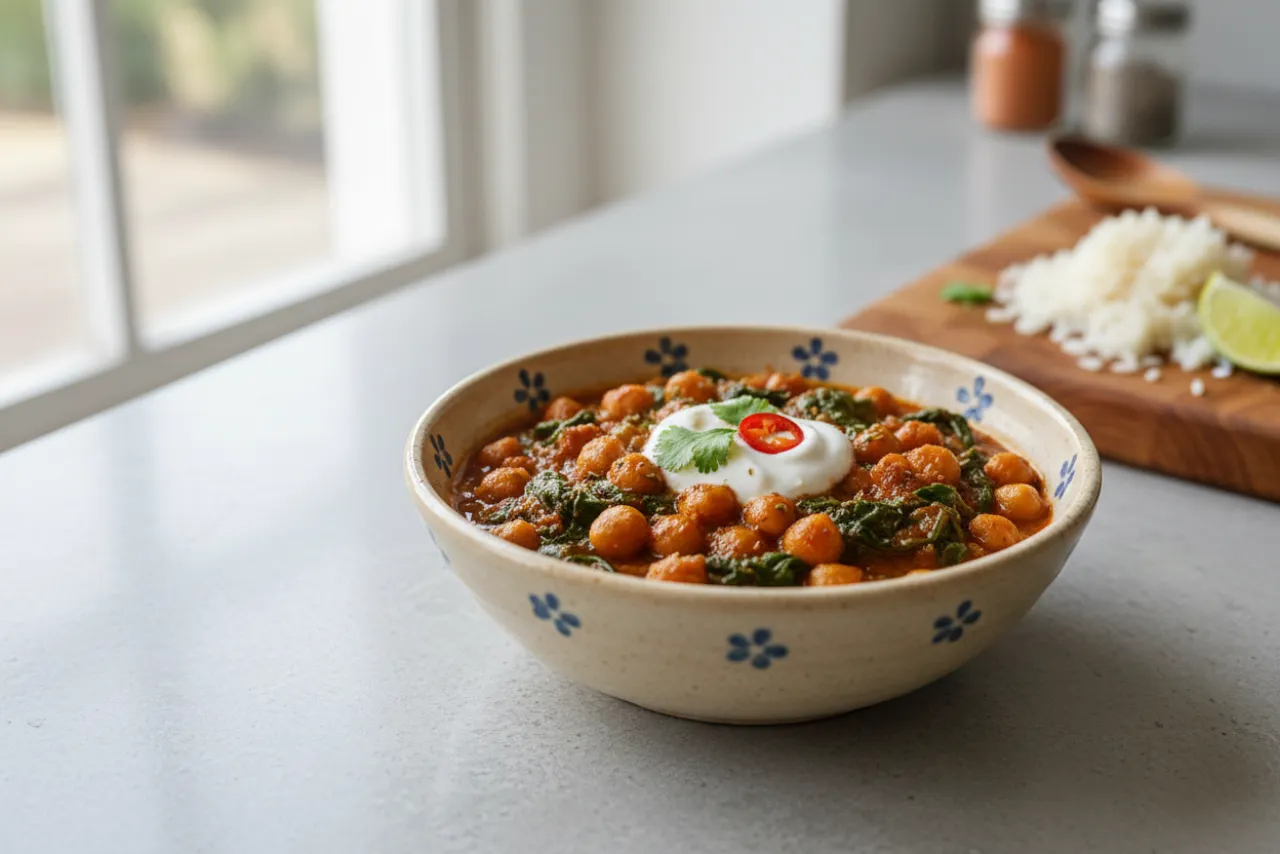
Indian25 min18g fiber24g protein
Chickpeas simmered with tomato, spinach, and warm spices — a vegan main with twenty grams of protein and a load of fiber.
View recipe →